
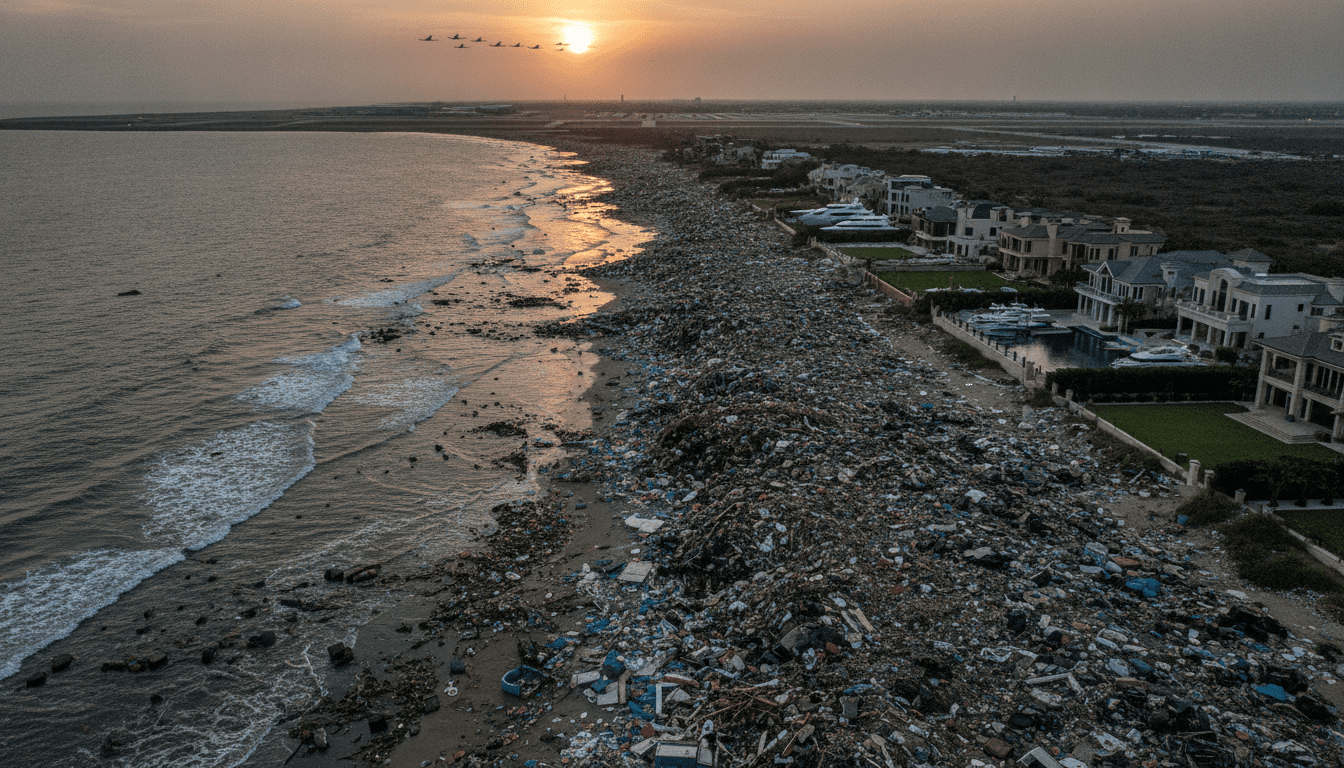
Richest ten percent responsible for $1.7–$5.7 trillion in annual environmental damage, study finds
Researchers say the richest ten percent cause $1.7–$5.7 trillion in yearly environmental damage, driven largely by biodiversity loss and climate impacts.
The richest ten percent of the global population are disproportionately responsible for environmental destruction, according to a new study by researchers at Leiden University and the University of Oxford. The analysis estimates annual environmental and climate damages attributable to this group at between $1.7 trillion and $5.7 trillion, and highlights the outsized role of luxury consumption in driving harm. Lead author Inge Schrijver and co-authors argue the figures underscore both the scale of the problem and the policy options available to hold major emitters and consumers accountable.
Leiden and Oxford study quantifies damage by richest ten percent
The research isolates the environmental impacts of consumption by the wealthiest tenth of humanity and translates those effects into economic damages. The authors place their findings in the peer-reviewed journal Communications Sustainability and stress that the totals are conservative in scope. Their approach maps consumption patterns onto environmental endpoints to produce a monetary estimate intended to reveal responsibility and inform policy.
Biodiversity loss accounts for nearly half of recorded harm
Between 47 and 56 percent of the damages calculated in the study stem from biodiversity loss, including species extinctions and habitat destruction. Climate change represents the second-largest share, responsible for roughly 36 to 45 percent of the overall impact. Smaller but measurable contributions come from nitrogen enrichment (6–8 percent), phosphorus enrichment (about 2 percent), and freshwater consumption (about 2 percent).
Consumption drivers include luxury goods, frequent flying and large homes
The investigators attribute much of the damage to high-impact consumption choices common among the wealthiest households, such as ownership of large motor vehicles and frequent air travel. Land and energy demands tied to sizable residences and luxury properties also feature prominently in the damage accounting. The study deliberately focused on selected environmental parameters and therefore excludes some pathways such as ocean acidification and certain land-use changes, which suggests the true total may be higher.
Geographic disparity: US and EU households account for most of the impact
The paper finds that roughly 60 percent of the people who belong to the global richest ten percent reside in the United States and the European Union. Per-capita damage estimates vary greatly by country: the average annual environmental harm per rich person is about $38,000 in the United States, roughly $10,000 in Germany, and between $410 and $1,400 for members of the richest ten percent in India. On a global per-person average across that decile, the study reports damage of approximately $2,300 to $7,500 each year.
Economic toll rivals funding needs for climate and biodiversity funds
Study authors note that the upper-bound damages they calculate exceed the sums estimated to be necessary for international climate and biodiversity funds. That comparison is used to argue that redirecting resources from damage-causing activities toward remediation and conservation could make a material difference. The researchers emphasize that assigning economic values to environmental harm is intended to clarify choices about who should pay and how much financial mobilization is required.
Policy recommendations: environmental levies and wealth-based measures proposed
The paper calls for stronger regulatory measures and financial instruments targeted at high-impact consumption, including environmental taxes and proposals described as a form of wealth or prosperity levy. The authors suggest that if those responsible paid for the harms they cause and that revenue were deployed for mitigation and restoration, the effect could be substantial. They also point to previous analyses that attribute roughly two-thirds of global warming to the richest ten percent as additional evidence for differentiated policy responses.
The study’s authors acknowledge methodological limitations, including geographic data gaps and the exclusion of several environmental pathways, and urge further research to refine estimates. They present their monetary figures as a tool for policymakers to design interventions that more directly target the consumption patterns and wealth concentrations driving the largest environmental harms. The researchers recommend combining regulation, pricing mechanisms and public investment to both reduce high-impact consumption and fund restoration efforts.
The findings add to a growing policy debate about responsibility, redistribution and climate justice by quantifying how concentrated environmental harm is within the global affluent population. Policymakers and international institutions now face a clearer fiscal and ethical question: whether to adopt targeted taxes, stricter regulation, or other measures to ensure that those with the greatest environmental footprint contribute proportionally more to solutions.
