
German housing market faces acute shortage as construction collapses and policy fights escalate
Germany’s housing shortage worsens as the German housing market sees soaring urban demand, a 30% collapse in new construction since 2023, and political battles over solutions.
Cities swell, countryside empties
Urban centers are attracting far more residents while rural areas continue to lose population, putting intense pressure on the German housing market in major cities. Household sizes have shrunk steadily for decades, creating nearly six million additional households since 1992 and amplifying demand for existing flats. The result is a simultaneous glut in some regions and an acute shortage in city markets where new units are most needed.
Population shifts and household fragmentation have changed where homes are required, not just how many. That geographic mismatch helps explain why empty properties coexist with booming rental demand and triple-digit applicant numbers for some city apartments.
New building activity plunges
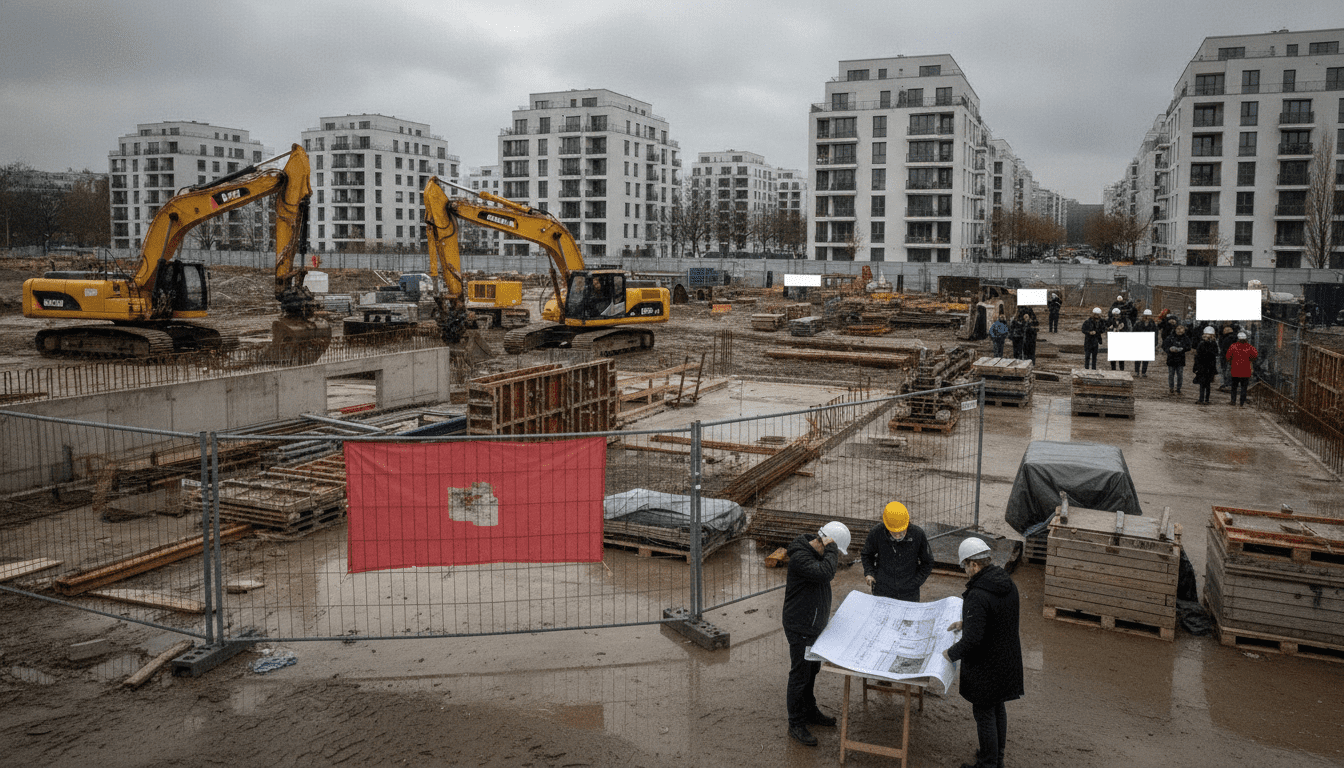
Construction output has tumbled, deepening the supply crisis in the German housing market. Starts and completions have fallen sharply: new-build activity slipped by roughly 30 percent since 2023, and only 206,600 apartments were completed in 2025—the lowest annual total since 2012. Rising material and labor costs have been a major factor, with effective construction prices rising substantially over the past decade.
Higher costs and regulatory hurdles are squeezing developers and dampening investment appetite. When producing new units becomes significantly more expensive, fewer projects break ground and fewer homes reach the market, which in turn drives rents and prices higher where demand is concentrated.
Policy proposals stoke political fight in Berlin
The housing shortage has become a central issue in Berlin politics, where proposals range from aggressive public acquisitions to renewed rent caps. One plan under discussion would transfer roughly 220,000 apartments into public ownership and pair the move with a city-wide rent cap. Berlin’s senate has warned that large-scale expropriation could trigger compensation bills in the tens of billions of euros, money that could otherwise be deployed for new construction.
Critics argue that policies aimed at redistribution rather than increasing supply will only rearrange scarcity, leaving prospective tenants worse off over time. Supporters counter that stronger public control and tighter rent limits would immediately relieve households squeezed by rising rents. The debate has shifted public attention away from supply-side failures and toward redistribution as the primary remedy.
Investor confidence and market signals at risk
Proposals for below-market compensation and long-term bonds as payment mechanisms risk chilling investor interest in housing across Germany. If property rights and expected returns are perceived as unstable, institutional and private capital may retrench, reducing the pool of funds available for new developments. That could aggravate the construction shortfall and hinder refurbishment projects in the existing stock.
Even modest withdrawals of rental supply from the market—through conversions to short-term rentals or voluntary exits by small landlords—have outsized effects. A loss of just one percent of the rental stock would be equivalent to about 200,000 apartments, roughly the output of a full year of new construction under current weak completion rates.
Supply-focused reforms proposed by economists
Economists and market analysts increasingly call for measures that lower the cost of producing housing rather than layered subsidies that can inflate project budgets. Suggested reforms include loosening overly prescriptive building standards for basic apartment types, reducing mandatory quotas for expensive social-housing components in some projects, and offering targeted tax relief for first-time buyers. Those measures aim to make development financially viable again and encourage densification.
The existing housing stock also contains potential capacity: adding floors to large single-family homes, splitting oversized units, and reactivating underused properties could add thousands of usable apartments if regulations and returns align. Reviving small-scale rental incentives may be critical to unlocking these quieter sources of supply.
Budget trade-offs and long-term impacts
Large-scale redistribution measures carry significant fiscal costs and present opportunity costs for housing supply. Estimates cited in political debates suggest that compensation for mass municipalization could consume funds that would otherwise finance tens of thousands of new units. The trade-off raises a strategic question for policymakers: invest in building and unlocking capacity, or pursue redistribution that preserves existing tenants’ rents but risks stalling construction and investment.
How Berlin and federal authorities balance near-term tenant relief with long-term supply expansion will shape the German housing market for years. Choices made now will influence investment flows, development pipelines, and whether the shortage becomes entrenched or slowly eased.
If policymakers prioritize measures that reduce building costs and incentivize supply, the housing market may start to stabilise as projects again become viable and underused stock is converted. Conversely, policies that signal abrupt shifts in property rights or heavy-handed price controls could deter capital and deepen the shortage, with consequences for affordability and economic competitiveness.
