
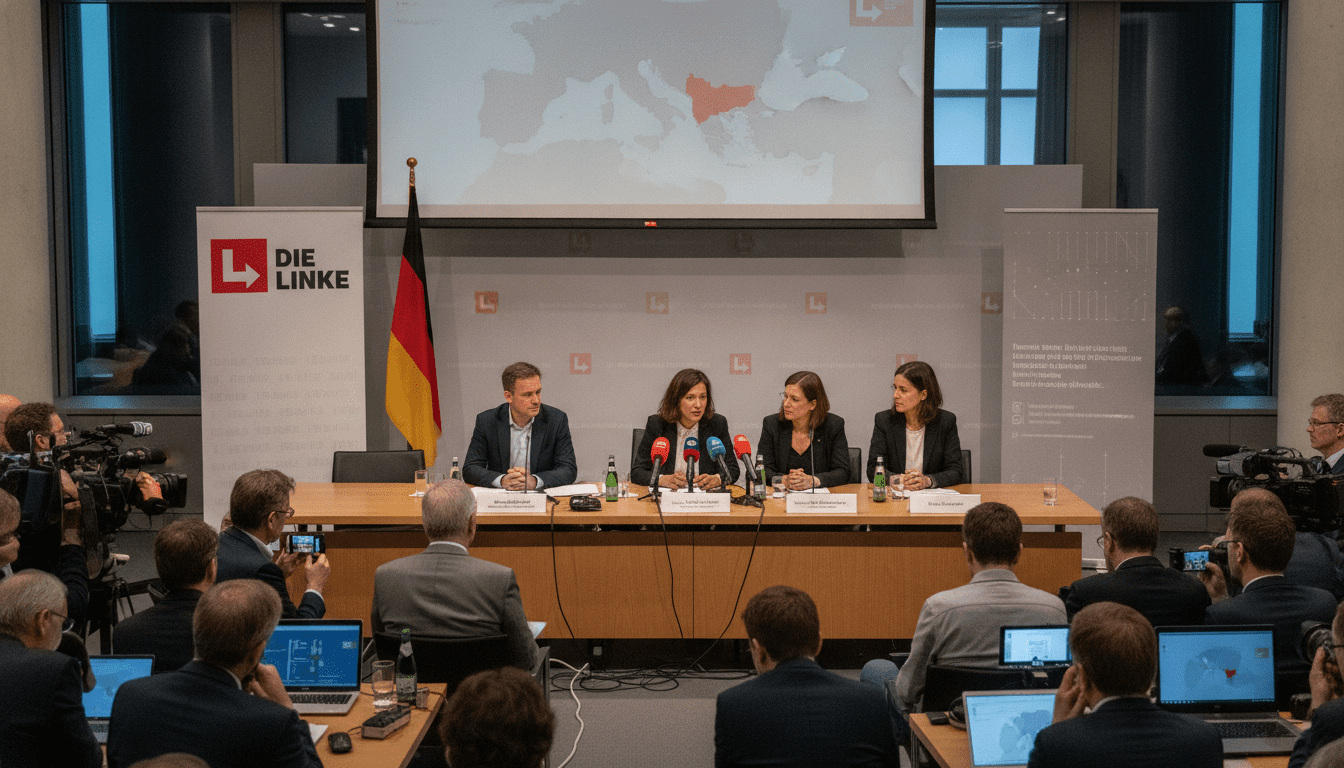
Die Linke declares Gaza war a ‘genocide’ at party congress
June 20, 2026: Die Linke voted to call Israel’s war in Gaza a “genocide”, adopting a compromise affirming a two‑state solution and Israel’s right to exist.
Die Linke’s leadership announced on June 20, 2026, that the party will describe Israel’s military campaign in Gaza as a “genocide”, a move that crystallized a tense compromise and deepened divisions within the party. Party chair Jan van Aken unveiled the shift late Friday at the congress in Potsdam, saying the new position bundles three central commitments: support for a two‑state solution, recognition of Israel’s right to exist, and the formal use of the term “genocide” for the Gaza campaign. The declaration drew both sustained applause and sharp dissent on the floor, signaling further internal clashes over the party’s Middle East policy.
Van Aken announces change during heated closing session
Jan van Aken presented the compromise after prolonged negotiations between competing wings of Die Linke, telling delegates that the package represented a political balance the party could live with. He framed the decision as a response to mounting pressure from the party base and months of internal debate over how to address the violence in Gaza. Delegates reacted with a mixture of cheering and critical shouting, underscoring the difficulty of reconciling moral condemnation with foreign policy commitments.
Three‑point compromise formally adopted by delegates
The resolution adopted at the congress sets out three explicit commitments: a public endorsement of a two‑state solution, an affirmation of Israel’s right to exist, and a stipulation that the party will refer to the conflict in Gaza as a “genocide”. Party officials described the wording as the result of bargaining designed to avert a complete rupture between internationalist and more hardline factions. The text, as presented, leaves open how the party will operationalize those commitments in parliamentary votes, public statements, and international forums.
Immediate reactions split along ideological lines
Within minutes of the vote, responses circulated across the congress hall and beyond, with some delegates hailing the language as long overdue and others warning that the move would alienate potential allies. Moderates argued the compromise maintained a realistic diplomatic posture by combining recognition of Israel’s existence with a strong condemnation of civilian suffering. Hardliners and some local activists said the inclusion of “genocide” still did not go far enough in demanding accountability, while critics worried about the legal and political ramifications of the label.
Palestine activists and party base remain divided
The decision deepened existing fault lines among Palestine activists aligned with Die Linke, where some saw the vote as moral clarity and others viewed it as a tactical retreat. Grassroots organizers who had pushed to single out Israel’s actions with the strongest possible language expressed cautious satisfaction that the term “genocide” was adopted. At the same time, factions that prioritize sustained campaigning for broad diplomatic solutions said the compromise could fracture coordinated efforts and complicate movement‑level messaging.
Implications for German parliamentary politics and alliances
Analysts and party strategists noted that Die Linke’s new stance may complicate interactions with other parties in Germany, especially those that have urged restraint in rhetoric around the Israel‑Gaza conflict. The resolution could make cooperation on foreign policy matters more contentious in coalition talks or parliamentary committees where Die Linke seeks influence. Observers also flagged potential diplomatic repercussions if the party pressurizes federal institutions to adopt similar terminology in international forums.
Legal, diplomatic and operational questions remain
While the term “genocide” carries significant moral weight, it also raises legal and diplomatic questions that the party did not immediately resolve at the congress. Determinations of genocide typically rely on specific legal criteria and adjudication processes, and Die Linke’s political declaration does not substitute for those mechanisms. Party leaders acknowledged the complexity, saying future steps would include calls for investigations and demands for humanitarian access, but they stopped short of outlining a binding legal strategy.
The decision adopted at the Potsdam congress reflects a party wrestling with competing imperatives: moral condemnation of civilian suffering, commitment to a negotiated two‑state outcome, and a desire to retain broad electoral and parliamentary relevance. In the coming weeks Die Linke will face pressure both to translate its new language into concrete policy proposals and to manage continuing dissent among members and allied activists.
