
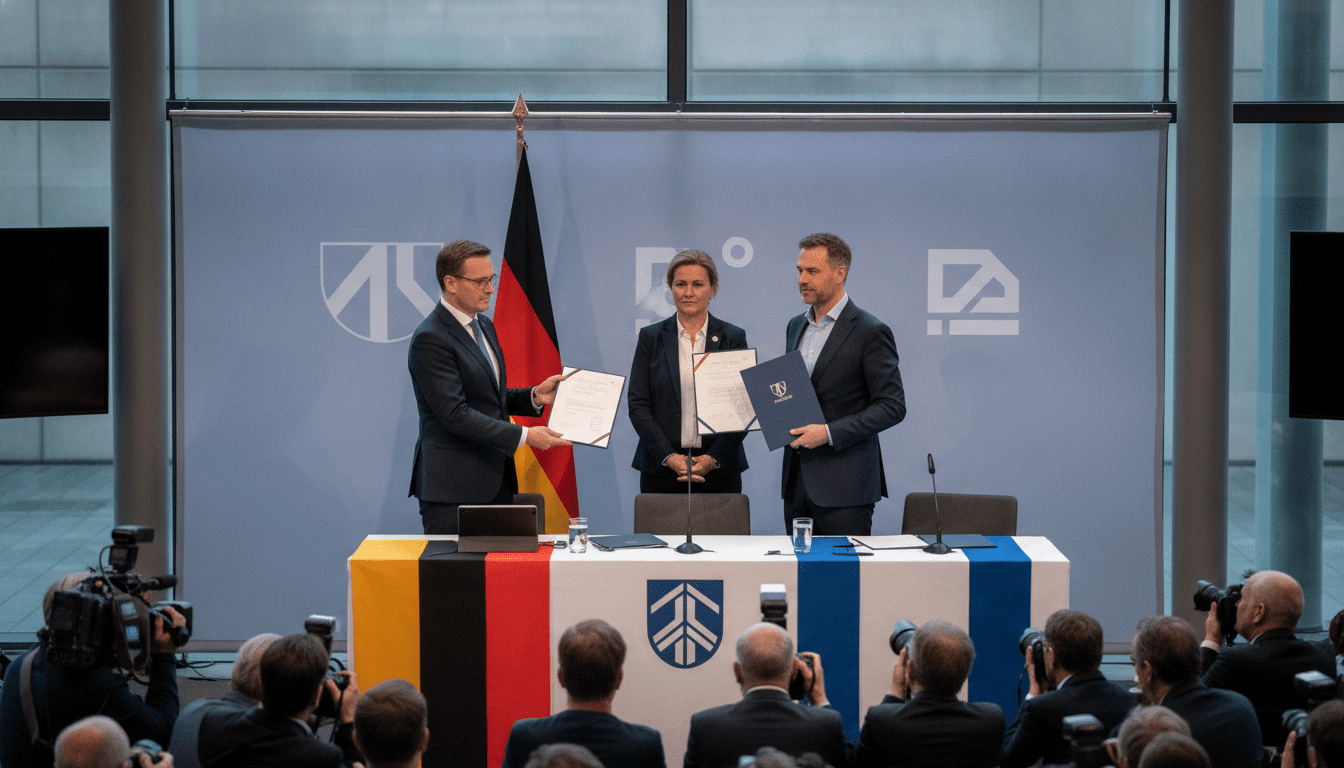
Northvolt battery plant in Schleswig-Holstein sold to start-up Lyten after project collapse
Swedish battery maker Northvolt’s failed Northvolt battery plant in Schleswig-Holstein has been taken over by start-up Lyten, after the large-scale project collapsed despite substantial state funding.
Project ambition and regional promise
The Northvolt battery plant in Schleswig-Holstein was conceived as a major industrial investment intended to secure domestic battery production for Germany and Europe. Planners pitched the facility as a strategic link in clean-energy and electric-vehicle supply chains, promising hundreds of jobs and sizeable local economic activity.
Regional officials and national bodies backed the plan with substantial public support, viewing the factory as a long-term anchor for green manufacturing in northern Germany. The scale of the project and the level of government involvement made it one of the most closely watched battery initiatives in the region.
State support and public expectations
German state and federal agencies provided generous funding and incentives to accelerate construction and attract Northvolt’s technology to Schleswig-Holstein. The financial backing reflected a broader industrial policy goal: to reduce dependence on foreign suppliers and develop an integrated European battery industry.
Public statements and planning documents emphasized job creation, technology transfer, and regional regeneration as key benefits of the investment. Those expectations helped build political momentum behind the project and framed the factory as a flagship for Germany’s energy transition.
Collapse and company insolvency
Despite the early momentum, the Northvolt project ran into insurmountable difficulties that culminated in the company’s insolvency proceedings for the German facility. Construction stalled, planned production never reached commercial scale, and the venture ultimately failed to meet financial and operational milestones.
The collapse left unfinished facilities and equipment on the site and prompted urgent questions from local authorities and stakeholders about recovery of public funds and future use of the location. For many in the affected communities, the abrupt end of the project marked a sharp reversal of expectations.
Lyten steps in to acquire assets
Following the insolvency, start-up Lyten agreed to acquire the remaining assets of the failed plant for a fraction of the money initially invested in the project. The purchase transfers ownership of physical infrastructure, spare parts and certain development rights to the buyer, while leaving unresolved liabilities with the insolvency estate.
Lyten has positioned the deal as an opportunity to scale its business by repurposing existing manufacturing capacity rather than building from scratch. Officials involved in the transfer described the sale as a pragmatic way to salvage industrial value from the site and preserve some employment prospects.
Industry and political reactions
Industry groups reacted to the transfer with mixed assessments, welcoming the prospect of continued industrial use but warning that the episode exposes risks in large-scale industrial planning. Critics raised questions about due diligence, project oversight, and whether state funding mechanisms adequately protected taxpayers.
Politicians from parties across the spectrum demanded clearer explanations about how public money was allocated and sought assurances that the new ownership would honor local commitments. Several local representatives called for a full audit of the subsidies and contracts tied to the original Northvolt plan.
Economic and supply-chain implications
The takeover shifts the calculus for regional supply chains: while the Lyten acquisition may restore some manufacturing activity, the original goal of a domestically controlled, large-volume battery supply from the Northvolt plant is unlikely to be realized as planned. The change in ownership will require supply-chain partners and automakers to reassess procurement and long-term sourcing strategies.
Economists noted that repurposing existing assets can be faster and less expensive than initiating new builds, but the technology, workforce skills and supplier networks required for battery production may not transfer seamlessly. The long-term impact on competitiveness depends on Lyten’s ability to scale and integrate the site into broader industrial plans.
Local workforce and community outlook
For workers and communities around the site, the sale offers a measure of relief tempered by uncertainty. Some employees may find roles with the new operator, but the scale and permanence of jobs will hinge on Lyten’s investment decisions and market performance.
Local businesses that had geared operations to supply the Northvolt project face a transitional period. Municipal leaders emphasized the importance of retraining programs, support for local suppliers and active engagement with Lyten to maximize the chances of economic stabilization.
The transfer of the Northvolt battery plant in Schleswig-Holstein to Lyten closes one chapter in Germany’s push to build a national battery industry while opening another that will test how public policy, private investment and regional planning can better align in future projects.
