
German defence ministry denies plan to abolish Landeskommandos amid state protests
Government says it will not abolish Landeskommandos; Bavarian and Baden-Württemberg leaders warn cuts would weaken civil-military coordination.
The German Defence Ministry has denied plans to abolish the Landeskommandos after letters from state leaders raised alarms about possible cuts. Defence Minister Boris Pistorius told colleagues at the recent interior ministers’ meeting that there is no ministry plan to eliminate the regional state commands, while signaling a shift in how the Bundeswehr and federal states will provide mutual aid in crises. The letters from Bavaria and Baden-Württemberg prompted renewed attention to the role of Landeskommandos in coordinating civil-military tasks at the regional level.
Pistorius rejects abolition claims
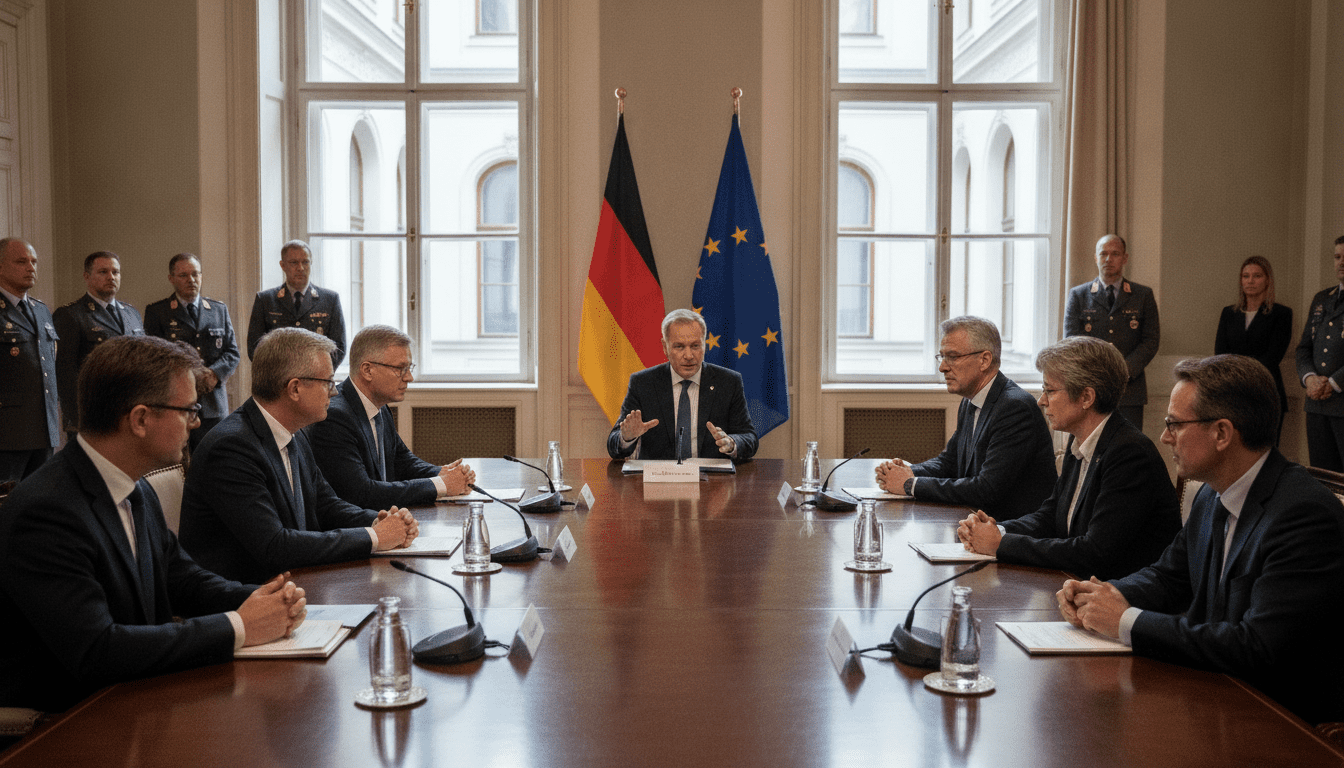
At the interior ministers’ conference Pistorius repeatedly rejected suggestions that the ministry intends to dismantle the Landeskommandos, saying such an outcome is not on the table. He stressed that the Bundeswehr remains committed to cooperation with state authorities but noted that the nature of support will evolve as Germany focuses more on territorial and alliance defence responsibilities. The minister emphasized that in a major crisis or defence scenario the armed forces would also rely on assistance from states and municipalities, reversing the historic pattern of mostly unilateral military aid to civilians.
State leaders urge protection of regional commands
Bavarian Prime Minister Markus Söder and Baden-Württemberg Interior Minister Manuel Hagel wrote to the defence minister expressing strong concern about rumored changes and requesting that the Landeskommandos be preserved. Söder warned that weakening those commands would undermine cross-level civil-military coordination and could reduce national resilience, while Hagel cautioned against shifting responsibilities to distant federal offices. Both letters framed the Landeskommandos as vital links between federal defence structures and state-level crisis management, and they urged the ministry not to pursue any measures that would reduce those capacities.
Ministry and commands express puzzlement
Officials inside the Defence Ministry and commanders at several Landeskommandos reported surprise and confusion about the basis for the state leaders’ anxieties, saying no formal proposal to cut the regional offices has circulated. The ministry and regional staff pointed out that the Bundeswehr has been undergoing an intensive realignment since 2022 toward territorial and alliance defence, and that this process has revealed gaps in civilian regional planning rather than a plan to scale back military presence. Commanders described their offices as critical nodes for situational awareness and liaison with state authorities, a role that has become more prominent as defence planning intensifies.
Operational realities of command and control
Currently the Landeskommandos do not have permanently subordinated combat units; troop assignments are made by the services—army, navy or air force—based on operational requirements and the situation at hand. That long-standing practice, officials noted, has worked for overseas deployments and during major domestic incidents such as the pandemic, when temporary subordination allowed flexible use of forces. Some state leaders have pressed for giving Landeskommandos direct command of units to strengthen regional control, a proposal that has surprised ministry staff as an attempt to influence military organizational structure at a detailed level.
Gaps in civil structures and exercise participation
Military planners have also flagged limited participation by certain regional civilian bodies in joint crisis exercises, which has exposed weaknesses in local capacity to handle large-scale emergencies in coordination with the Bundeswehr. The ministry’s regional commands say this reluctance makes it harder to build integrated civil-military response patterns that match the Bundeswehr’s new focus on defending the territory alongside allies. State officials counter that many municipalities lack the resources to close civilian preparedness gaps, creating a pressing need for clearer roles and funding rather than simply altering military command arrangements.
The exchange between Berlin and the state capitals has underlined a broader tension as Germany pivots from the Bundeswehr’s long-standing overseas focus to a posture prioritising territorial defence and interoperability with NATO partners. Against that backdrop, the debate over Landeskommandos reflects both institutional anxieties about command architecture and practical concerns about maintaining effective crisis management across federal and state levels.
Looking ahead, the ministry has signalled it will continue coordinating with state governments to clarify responsibilities and to develop mutual-aid arrangements that reflect the Bundeswehr’s changing mission set. State leaders want guarantees that the regional commands will remain intact and better resourced for their liaison and planning roles, while the Defence Ministry argues for a flexible model of force allocation tied to operational demands. The coming weeks are likely to see more detailed discussions between federal and state officials aimed at reconciling those positions and ensuring that regional civil-military cooperation is sustained as Germany adapts its defence posture.
