
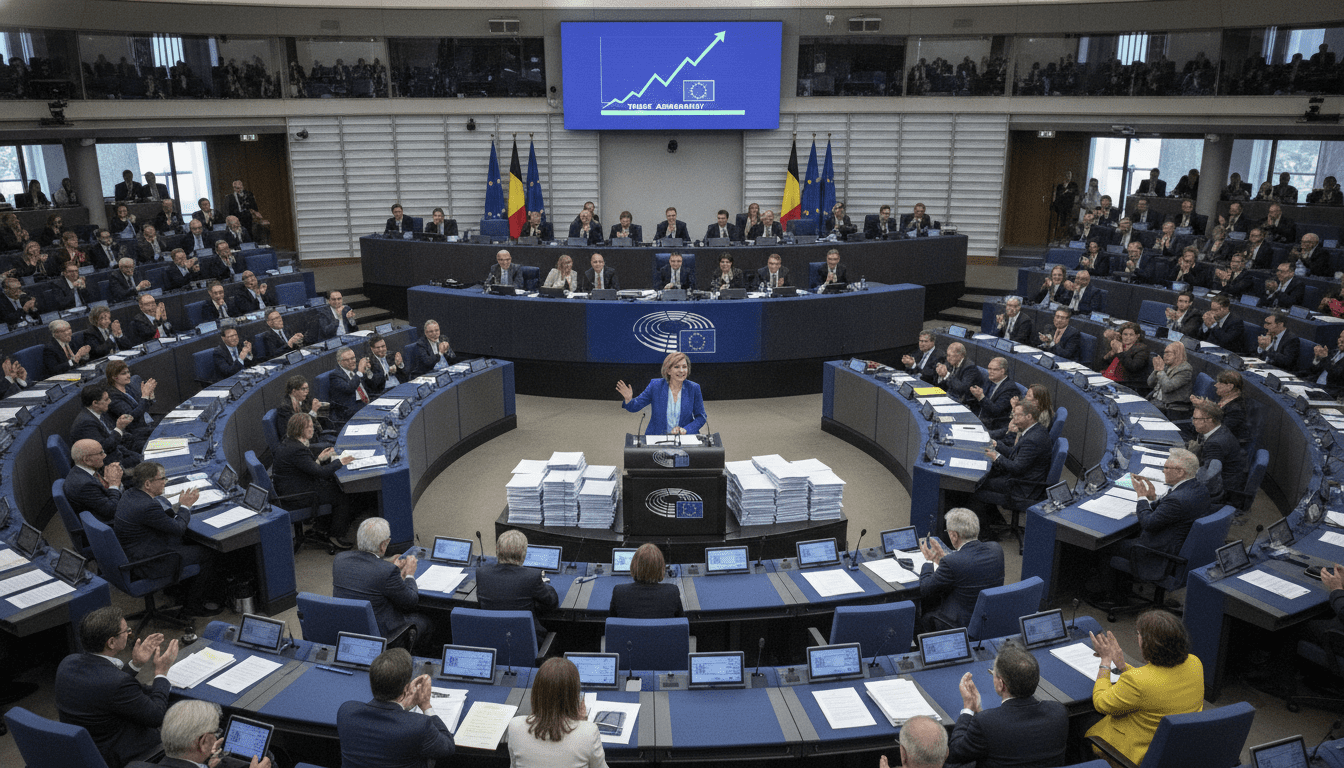
EU lifts tariffs on US industrial goods after European Parliament vote, Council expected to ratify before July 4
EU tariffs on US industrial goods will be temporarily removed under a deal ratified by the European Parliament, clearing a major hurdle in the implementation of last year’s agreement with the United States. (europarl.europa.eu)
Parliament approves temporary tariff removal
The European Parliament voted to eliminate most EU tariffs on US industrial goods, endorsing legislation that implements the tariff elements of the EU–US Joint Statement reached in 2025. The measure targets a wide range of industrial products, including automobiles and machinery, and moves the bloc closer to fulfilling its side of the Turnberry agreement. (europarl.europa.eu)
Lawmakers framed the vote as necessary to avert a wider transatlantic trade clash and to provide predictable market access for US exporters. The text approved by MEPs includes provisions that the Commission will monitor implementation and the effects on EU industries. (europarl.europa.eu)
Council to give final green light before US deadline
After Parliament’s vote, the dossier now awaits formal approval by the Council of the European Union, representing member states, which is widely expected to follow suit. EU officials signalled that the Council’s endorsement is likely to be completed in time to meet a deadline set by US President Donald Trump. (consilium.europa.eu)
President Trump had publicly pressed the EU to implement its commitments by the US national holiday on July 4, warning that failure to do so would prompt higher American tariffs. Brussels says it is moving to avoid a sudden rise in trade tensions while preserving legal safeguards. (investing.com)
Key terms of the von der Leyen–Trump agreement
The political deal first announced in July and clarified in August 2025 set a reciprocal framework: the EU will remove tariffs on most US industrial imports while the US will apply a single, all‑inclusive tariff ceiling of 15% on many EU exports. The EU legislation specifies preferential access for some agricultural and seafood products alongside the industrial tariff changes. (squirepattonboggs.com)
The tariff carve‑outs are time‑limited: the temporary tariff removal on US industrial goods is slated to run until 31 December 2029, giving both sides a multi‑year window to assess effects and renegotiate if necessary. That sunset clause was part of the compromise that made the deal politically acceptable in Brussels. (elpais.com)
Emergency clause and suspension mechanism
The implementing texts include an emergency clause that allows the European Commission, with member‑state backing, to suspend the tariff removal if the United States breaches the agreement. That mechanism is designed as a safeguard rather than an automatic trigger, requiring political decisions in Brussels. (europarl.europa.eu)
A related safeguard concerns US steel and aluminium duties: if Washington persists with punitive tariffs above the 50% level on products containing steel or aluminium beyond 2026, the EU can seek to reinstate protective measures. The measures aim to balance openness with protection for vulnerable European producers. (euronews.com)
Delays, legal questions and industry consequences
Implementation of the tariff legislation was delayed several times amid legal uncertainty in the United States and political pressure from Washington. European lawmakers pointed to US Supreme Court rulings on executive trade powers and at times coercive rhetoric from the White House as reasons for caution. (europarl.europa.eu)
Industry bodies have voiced mixed reactions: exporters of US machinery and vehicles welcome the removal of duties, while European producers of steel‑intensive goods and some agricultural sectors have pressed for robust monitoring and temporary trade remedies. Brussels has committed to tracking import levels and allowing targeted suspension if imports threaten serious harm. (medtecheurope.org)
Next steps and monitoring after adoption
If the Council grants formal approval, the regulations will enter into force according to the timelines set out in the implementing texts and the Commission will begin monitoring market impacts immediately. The Commission’s surveillance role includes the power to propose temporary countermeasures where necessary. (consilium.europa.eu)
Officials stress that the package is political and time‑bound: it aims to stabilise trade relations through 2029 while leaving room for future negotiation, adjustments and legal review in line with EU law and international commitments. Observers say the measures will shape transatlantic commerce for the remainder of the decade. (squirepattonboggs.com)
The European Parliament’s vote clears the main legislative obstacle, setting the stage for the Council’s expected approval and the rapid implementation of the tariff changes once formalities are completed. (europarl.europa.eu)
