
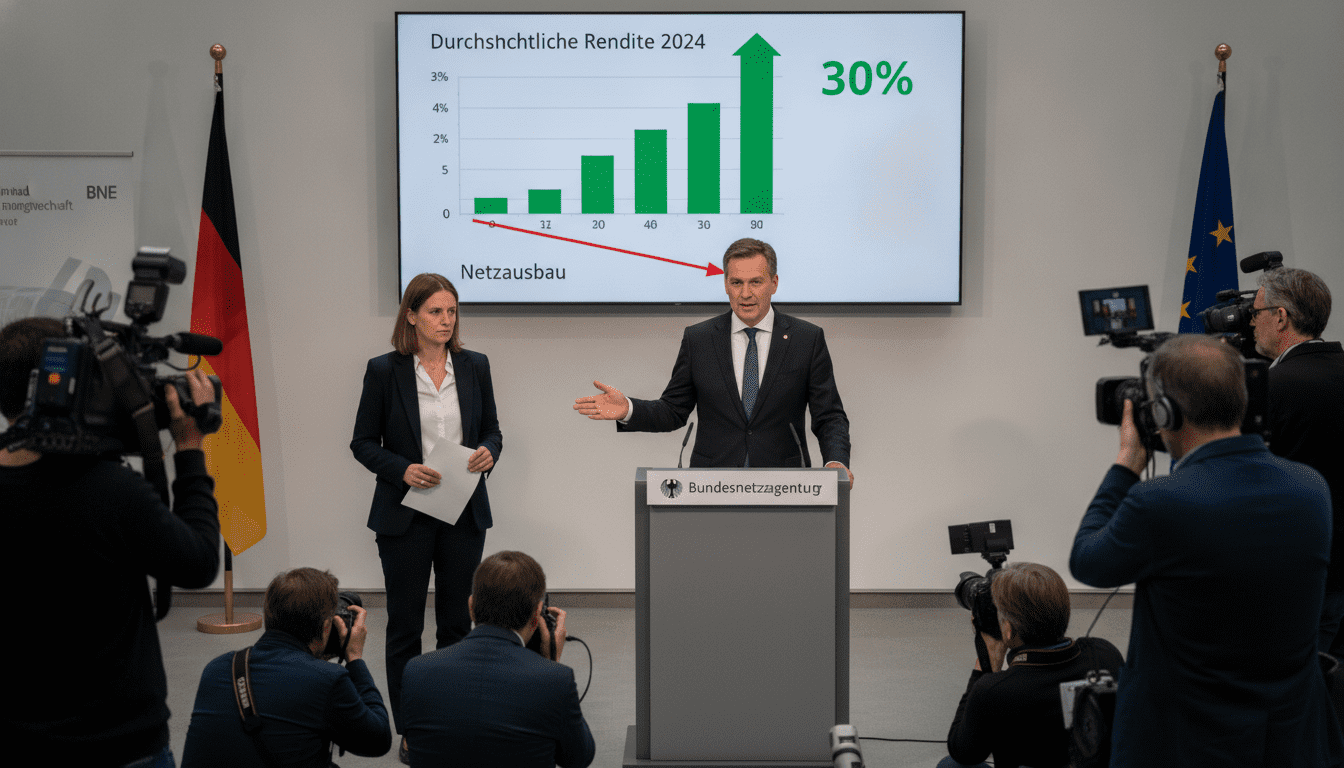
German distribution network operators earned a 30.1% average return on equity in 2024, BNE analysis shows
BNE analysis finds Germany’s 18 largest distribution network operators earned a 30.1% average return on equity in 2024, prompting calls for stricter oversight.
The Bundesverband Neue Energiewirtschaft (BNE) analysis shows that Germany’s distribution network operators posted an average return on equity of 30.1% in 2024, up from 16.6% in 2023, a jump that has drawn scrutiny from consumer advocates and regulators. The 18 companies covered by the study supply roughly half of German households and businesses, and the BNE says the profits were concentrated in firms with strong regional market positions. Policymakers and industry actors are now debating whether tighter regulation and greater transparency are needed to protect consumers and support the energy transition.
BNE finds 30.1% average return in 2024
The BNE’s review measured returns on equity across the 18 largest distribution network operators, calculating an average of 30.1% for 2024 compared with 16.6% in 2023. The association says the figures reflect accounting and capital structures as well as pricing allowed under current regulatory frameworks. Measured against the capital deployed, several distribution network operators ranked among the most profitable companies in Germany, according to the analysis.
The association warned that without changes the high yields could persist, and it highlighted the need to reassess allowed returns and the methods used to calculate them. Regulators typically set revenue caps and return allowances, and the BNE argues those mechanisms are currently producing outcomes that warrant review.
Highest returns concentrated in regional monopolies
The analysis identifies several operators with particularly steep returns: EWE Netz reported about 61% return on equity, Westnetz about 45%, Mitteldeutsche Netzgesellschaft Strom about 43% and Bayernwerk Netz around 38%. The BNE says those firms benefit from de facto regional monopolies where competition is limited and market pressures on prices are low. That concentration of profits in a small group of regional players is a central concern in the report.
Industry observers say regional franchise structures for distribution networks can generate efficiencies, but they also create opportunities for outsized returns if regulatory oversight is insufficient. The BNE highlighted the connection between market position and profitability as evidence that structural and regulatory reforms should be considered.
Consumers report long processing times and limited transparency
Alongside the profit data, the BNE points to consumer complaints about long lead times for grid connections, slow administrative processes and a lack of transparency over fees and costs. The association said many household and business customers experience delays when applying for new connections or upgrades, slowing projects for housing, industry and renewable energy installations. Those operational shortcomings, the BNE argues, undermine confidence in the distribution sector even as companies deliver strong financial results.
Industry representatives and consumer groups have also noted a digitalisation gap in network operations, saying legacy systems and fragmented procedures contribute to inefficiency. Faster, clearer processes for connection requests and more accessible information on charges are among the measures stakeholders say would improve customer experience and facilitate the energy transition.
Regulator faces limits in influencing network firms
The BNE report stresses that the Federal Network Agency (Bundesnetzagentur) faces challenges in exerting effective control over some distribution companies, particularly those with regional political influence. The association suggests the regulator’s current toolbox may not be sufficient to compel structural changes or to enforce more aggressive reductions in allowed returns. The Bundesnetzagentur sets tariffs and monitors compliance, but the BNE and other observers say stronger instruments or clearer statutory mandates may be needed.
The BNE called on the Federal Ministry for Economic Affairs to apply greater pressure and coordinate with the regulator to ensure that distribution network operators carry out their public-service responsibilities. Any shift in supervisory approach would likely trigger regulatory reviews and could prompt legal and political debates over the balance between investor returns and consumer protection.
Reform proposals: transparency, tighter regulation and uniform procedures
The BNE recommends several reforms aimed at realigning incentives and improving service quality. Key proposals include stricter regulation of allowed returns, mandatory transparency on costs and profits, and the introduction of faster, nationwide uniform procedures for grid connections. The association estimates that reducing excessive returns to a more appropriate level could ease the burden on network customers by up to €3 billion per year in the medium term.
The suggested measures are intended to both lower costs for households and businesses and to accelerate grid access for renewable projects and electrification initiatives. Industry stakeholders and regulators will need to discuss specific implementation mechanisms, including how to calculate a new permitted return and what enhanced reporting would entail.
The BNE’s findings have injected new urgency into ongoing policy conversations about how to balance investment incentives with consumer protection and the infrastructure needs of Germany’s energy transition. As regulators and the ministry consider next steps, consumers and market participants will be watching for concrete proposals that address both high profitability and service deficiencies.
