
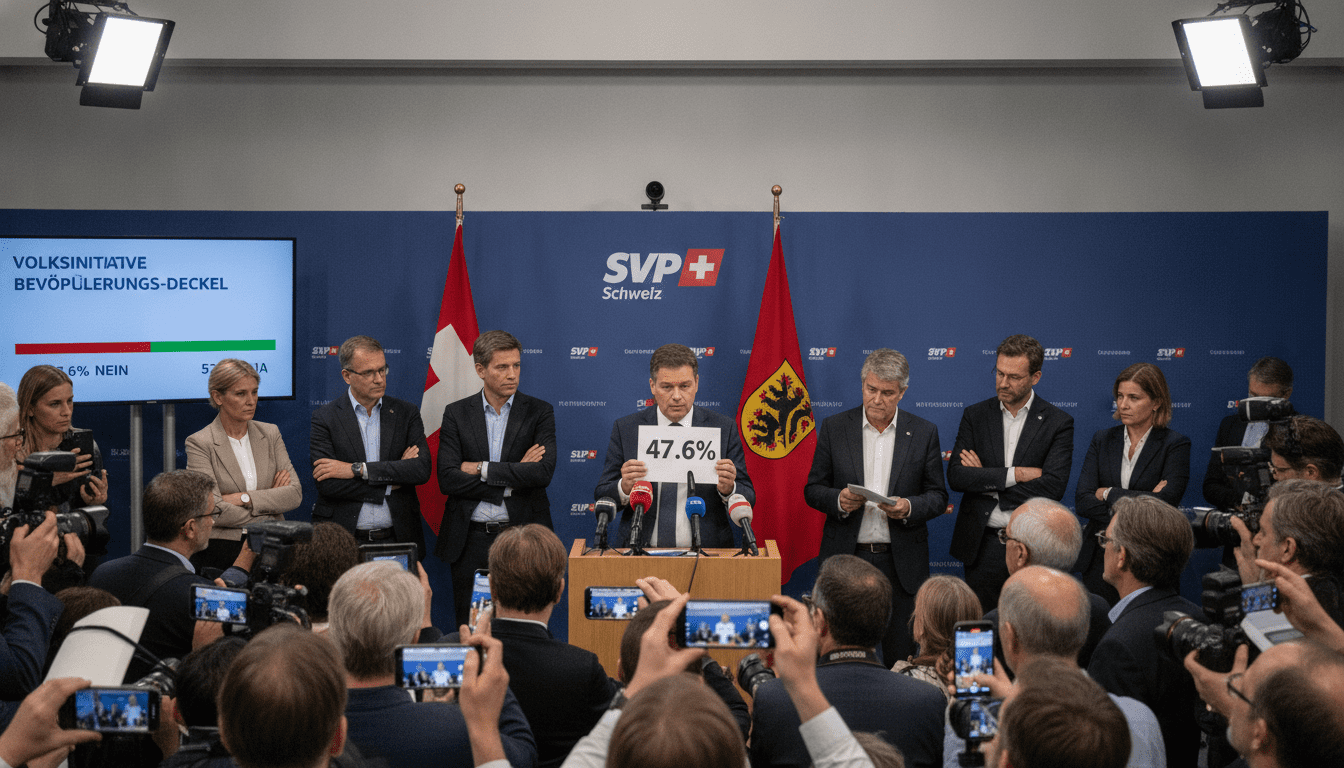
Swiss population cap referendum rejected as voters turn down SVP’s 10‑million plan
Swiss voters reject proposal to cap population at 10 million by 2050, rejecting a bid that would have threatened free movement and reshaped treaty ties.
The Swiss population cap referendum — a proposal by the right‑wing Swiss People’s Party (SVP) to limit the country’s population to 10 million by 2050 — was rejected by voters in Sunday’s national ballot, according to public broadcaster projections and early returns. Partial tallies during the day had shown a close split among the electorate, but final projections indicated a clear rejection of the initiative by a margin that left opponents claiming a decisive win. (swissinfo.ch)
Close midday returns and the initiative’s terms
Partial counts released during voting showed the initiative winning the support of roughly half of those casting ballots at certain points, reflecting how sharply divided the country was over the proposal. The SVP’s measure would have enshrined a constitutional cap on permanent residents that advocates said was needed to control growth and protect services, while critics warned it would force dramatic legal and economic steps. Switzerland’s population today stands at about 9.1 million, meaning the 10‑million ceiling would have come into play only after continued growth. (mappr.co)
Potential fallout for EU accords and international treaties
Backers acknowledged that implementing a rigid population ceiling could trigger the termination of the free movement of persons agreement with the European Union, with knock‑on effects for numerous bilateral treaties. Government officials and many legal analysts cautioned that enforcing the cap could lead to a cascade of treaty disputes and require renegotiations with Brussels, raising the specter of wider diplomatic and legal uncertainty. Opponents framed that prospect as a key reason to reject the initiative, arguing the costs would far exceed any perceived short‑term gains. (investing.com)
Campaigns, political alignment and public messaging
The SVP ran a campaign that blended environmental and housing arguments with appeals to voters worried about immigration and social change. Opposing forces included the Federal Council, most of Parliament, the country’s major business groups and a broad cross‑section of political parties, which emphasized economic risk and international isolation as likely outcomes of a “yes” vote. Polls ahead of the ballot had shown a nation closely split, but organizing by mainstream institutions and business bodies coalesced around rejection. (swissinfo.ch)
Economic stakes and labour market concerns
Economists and industry representatives warned that a constitutional ceiling on population could stunt growth, aggravate labor shortages and disrupt sectors that rely on foreign workers, from healthcare to manufacturing. Switzerland’s low unemployment and export‑led economy depend heavily on cross‑border and immigrant labor, making any disruption to free movement particularly consequential for employers who already flag recruitment difficulties. Opponents also argued the measure would increase costs for consumers and investors by constraining workforce flexibility. (mappr.co)
Social fault lines and voter motivations
Supporters of the initiative characterized their move as a defense of public services, local communities and the Alpine environment, saying rapid population growth has strained housing and transport in some cantons. Critics countered that the proposal played on cultural fears and risked undermining Switzerland’s reputation for openness and pragmatic international cooperation. Analysts noted that the debate cut across traditional left‑right lines, drawing voters motivated by sustainability and those driven by concerns about immigration. (swissinfo.ch)
Regional implications and Europe’s broader trend
Observers in neighbouring countries watched the vote closely, noting that Switzerland’s direct‑democracy system can amplify populist measures that other democracies reject in representative systems. While a number of European states have tightened immigration rules in recent years, analysts said Switzerland’s referendum was unprecedented in its proposal to constitutionalize a population ceiling and thereby potentially force treaty withdrawals. The outcome will factor into broader conversations across Europe about migration, sovereignty and the limits of national control in interconnected economies. (european.express)
Looking ahead, opponents framed the result as an affirmation of Switzerland’s existing treaty framework and economic model, while the SVP signalled it would continue to press migration and asylum issues at the ballot box and in cantonal politics. Policymakers in Bern now face the task of addressing the underlying pressures that fuelled the initiative—housing, transit and public services—without resorting to measures that would jeopardize international ties. The debate exposed deep divisions about identity and policy, and it is likely to resurface in future referendums and parliamentary debates.
