
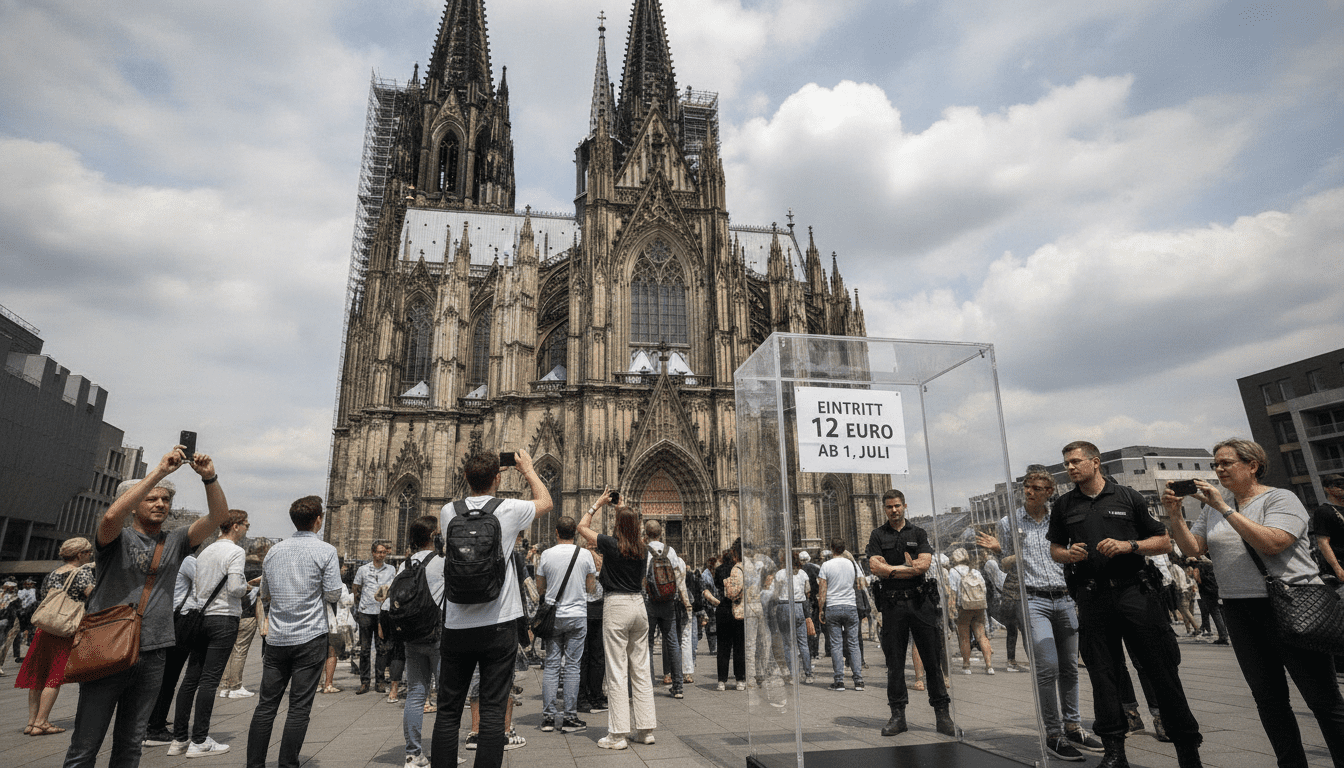
Cologne Cathedral entry fee sparks debate as Domkapitel sets €12 charge from July 1, 2026
Cologne Cathedral entry fee begins July 1, 2026: Domkapitel will charge €12 (€6 reduced); worshippers keep free access while critics warn against commodifying a sacred public good.
The Cologne Cathedral entry fee announced by the cathedral’s Domkapitel will take effect on July 1, 2026, setting a standard ticket price of €12 and a reduced rate of €6 for students. The Domkapitel says regular attendees of the roughly 2,000 annual services will continue to enter free of charge, and access to votive candles and designated quiet-prayer areas will remain unrestricted. The decision immediately revived a broader debate about how to reconcile the cathedral’s spiritual mission with rising maintenance costs and mass tourism.
Domkapitel formalizes admission policy
The Domkapitel approved the new admission policy to address mounting operating and conservation expenses at the cathedral, the institution responsible for its upkeep. The price structure — full fare €12, reduced €6 — is intended to begin on July 1, 2026, with explicit exemptions for those attending services. Officials argue the measure provides a direct revenue stream to cover security, cleaning, staffing and restoration needs that have grown with visitor numbers.
The administration frames the fee as a practical response to an economic shortfall, not a change to the cathedral’s liturgical role. Visitors arriving specifically for worship will still be admitted without charge, while those entering as tourists will be asked to pay.
Sacred space collides with tourist attraction
The Cologne Cathedral functions simultaneously as a place of worship and one of Germany’s most visited landmarks, creating tensions when access is monetized. For believers, the structure is a religious site for prayer and sacraments; for many tourists it is a monument, gallery and quiet refuge drawing millions annually.
The introduction of a ticket booth makes that duality more visible and forces a practical question at the entrance: who is here to pray, and who is here to sightsee? Cathedral staff must now apply a policy that distinguishes devotional intent from cultural visitation, a distinction critics say is difficult and potentially intrusive.
Visitor numbers and financial realities
The cathedral receives several million visitors each year, numbers that impose significant recurring costs for conservation and daily operations. Annual upkeep and operating expenses are commonly estimated in the low tens of millions of euros, funded today through a mix of church taxes, donations and public subsidies. The Domkapitel, which holds legal responsibility for maintenance, says declining congregational revenues and constrained public budgets have widened the funding gap.
Projections circulated internally considered scenarios in which a substantial share of tourist arrivals pays the new fee, producing a material boost to annual income for the cathedral’s care. Even so, officials acknowledge that admission revenue will not erase the need for targeted fundraising and public support for major restorations.
Arguments for the user-pays approach
Proponents of the Cologne Cathedral entry fee emphasize fairness and sustainability, arguing that tourists who derive cultural and aesthetic benefit from the site should contribute to its preservation. The policy mirrors international precedents where heavily visited heritage sites introduced visitor charges or tourism levies to manage flows and finance maintenance.
Economists have proposed refinements such as time-based pricing to align cost with duration of stay, a measure intended to discourage short, high-volume visits and to favor genuinely engaged visitors. Supporters contend that clearer cost allocation will protect the building over the long term without shifting the financial burden disproportionately onto parishioners.
Concerns over commodifying a public good
Opponents counter that the cathedral is more than a cultural asset and should remain a non-commercial public good accessible to residents and visitors alike. Former cathedral architects and long-standing caretakers have warned against converting sacred spaces into pay-to-enter attractions, arguing that spiritual and communal functions risk being undermined by market mechanisms.
Critics also worry about practical enforcement and the dignity of worship: verifying a visitor’s purpose at the door could lead to awkward interactions and may incentivize evasive behavior. There is a broader civic argument that national and local heritage should remain open, with volunteer programs and public funding favored over gate fees.
Implementation challenges and potential compromises
Operationalizing the new charge will require clear signage, staff training and safeguards to protect worship access and vulnerable visitors. Cathedral stewards will need protocols for identifying those attending services without imposing burdensome checks or turning confessionals and prayer naves into ticketed zones. Time-based or tiered pricing, special exemptions for local residents, and off-peak discounts are among options under discussion to soften the policy’s impact.
The coming weeks are likely to see further clarifications from the Domkapitel about exemptions, enforcement and how revenues will be audited and earmarked for conservation. Stakeholder meetings with parish groups, heritage experts and municipal authorities are expected before the charge becomes operational.
The Cologne Cathedral entry fee crystallizes a broader dilemma for historic religious sites: how to preserve architectural and spiritual heritage while accommodating mass tourism that strains resources. The Domkapitel’s move seeks a sustainable funding model, but it confronts deep civic and ethical questions about access to sacred public goods that will shape public debate in the months ahead.
