
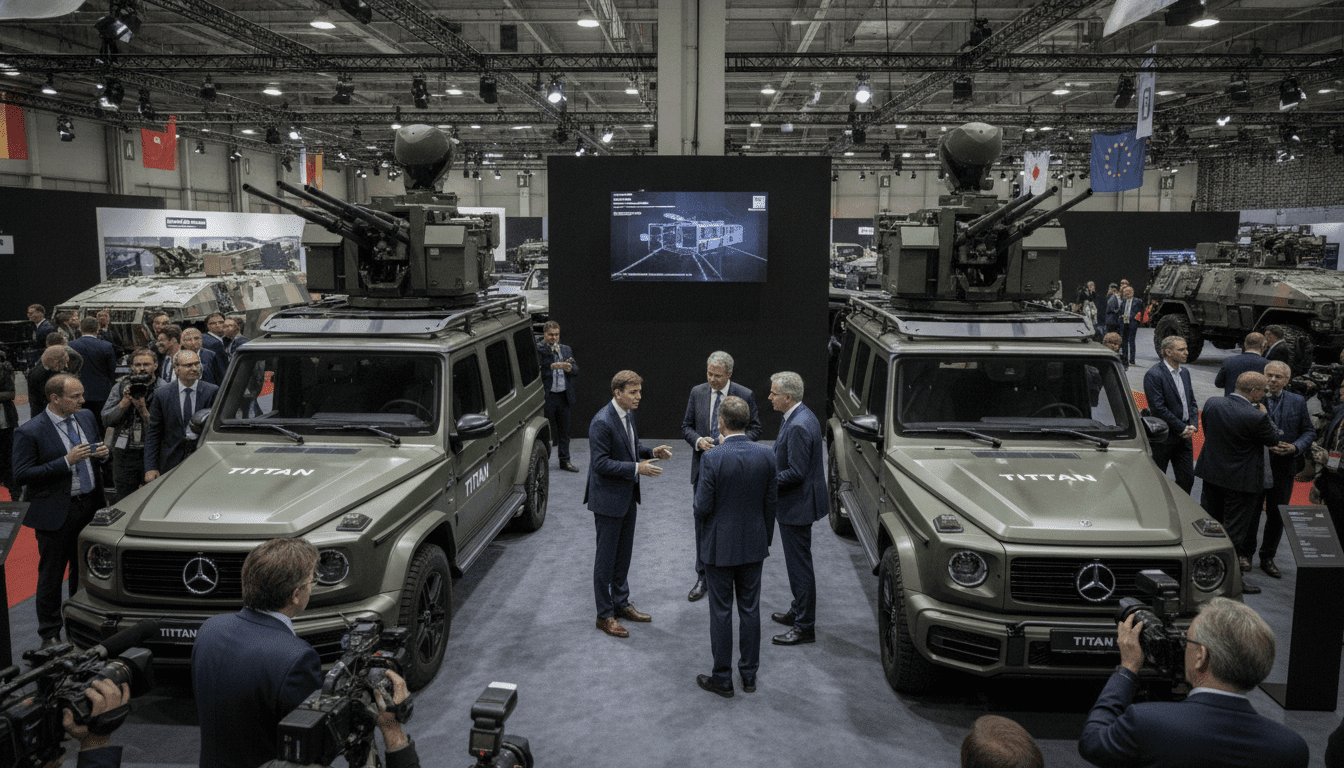
Mercedes drone defense system unveiled at Eurosatory as Sprinter and G‑Class prototypes debut
Mercedes unveils a new drone defense system with Munich startup Tytan at Eurosatory, pairing Sprinter command units and armed G‑Class platforms to protect infrastructure.
Mercedes and Munich-based Tytan presented prototypes of a new Mercedes drone defense system at the Eurosatory defense exhibition in Paris, showing a convoy made up of Sprinter command vehicles and modified G‑Class launch platforms. The system couples a mobile command center built into a Sprinter van with G‑Class off‑road vehicles equipped with radar masts and launch boxes that dispatch intercepting drones. Mercedes executives said the collaboration leverages the automaker’s vehicle expertise and Tytan’s drone, sensor and mission technologies to respond to growing threats against critical infrastructure.
Prototype convoy revealed in Paris
The prototypes were displayed together as a coordinated unit at the Paris arms fair, marking the first public showing of the joint project. A Sprinter van serves as the command hub, issuing launch orders for drones that take off from the G‑Class and seek, collide with and neutralize hostile aerial targets. Mercedes has enlisted specialist supplier Binz to provide the vehicle bodies and integration work for the defensive package.
How the Drone Defender operates
The platform is designed around a distributed architecture: the Sprinter hosts operators, communications and control systems while the G‑Class vehicles carry radars, sensors and drone launch containers. Intercepting drones are intended to locate and physically ram or otherwise disable hostile small unmanned aerial systems, according to descriptions provided by the partners. Mercedes and Tytan emphasize agility and interoperability, saying the system is meant to be rapidly deployable to protect sites under short‑notice threats.
Intended deployment sites and possible combat use
Developers describe the system’s primary mission as defending civilian and military critical points such as airports, stadiums, festivals, barracks, power plants and electrical substations. Company representatives also acknowledged the platform could be adapted for wartime operations, expanding its mission beyond domestic protection. Tytan’s chief framed the initiative as a response to a daily reality of overflights near European infrastructure, arguing that modular, mobile defenses are increasingly necessary.
Mercedes’s expanding defense footprint
The drone program comes amid a broader uptick in Mercedes’s defense activity, though the business remains a small share of the group’s revenue. Mercedes executives have publicly signaled willingness to play a larger role in Europe’s defense industrial base as geopolitical risks persist. The automaker already produces military variants of civilian models and supplies chassis to defense integrators that mount weapon systems, logistics platforms and specialized equipment.
Wolf 2 and larger procurement context
Alongside the Drone Defender display, Mercedes also exhibited the Wolf 2 military vehicle, a hardened variant of the G‑Class specifically configured for military use. In mid‑2024 the German armed forces signed a framework agreement to acquire up to 5,800 Wolf 2 vehicles, with the first tranche of 1,500 currently being delivered under a contract valued at roughly €1.3 billion. Mercedes and related truck manufacturers also figure in recent Baltic procurement: Lithuania has agreed to buy military vehicles from Mercedes and Daimler Truck in a deal reported to be worth about €1 billion, with a significant portion of that volume attributed to Daimler Truck models.
Industrial and regional implications around Ludwigsfelde
Mercedes is reconfiguring production footprints that could affect sites such as Ludwigsfelde south of Berlin, where Sprinter assembly currently takes place. The company plans to move some production to Jawor in Poland by 2030, and regional officials have discussed the prospect of defense contractors or other firms occupying available capacity. Local political leaders have said discussions are ongoing but that no firm decisions have been reached regarding potential partnerships with established defense manufacturers.
The public debut of the Mercedes drone defense system underscores growing crossover between commercial vehicle makers and the defense sector, as companies adapt existing platforms for new security roles while responding to shifting demand for mobile, scalable protection of critical infrastructure.
