
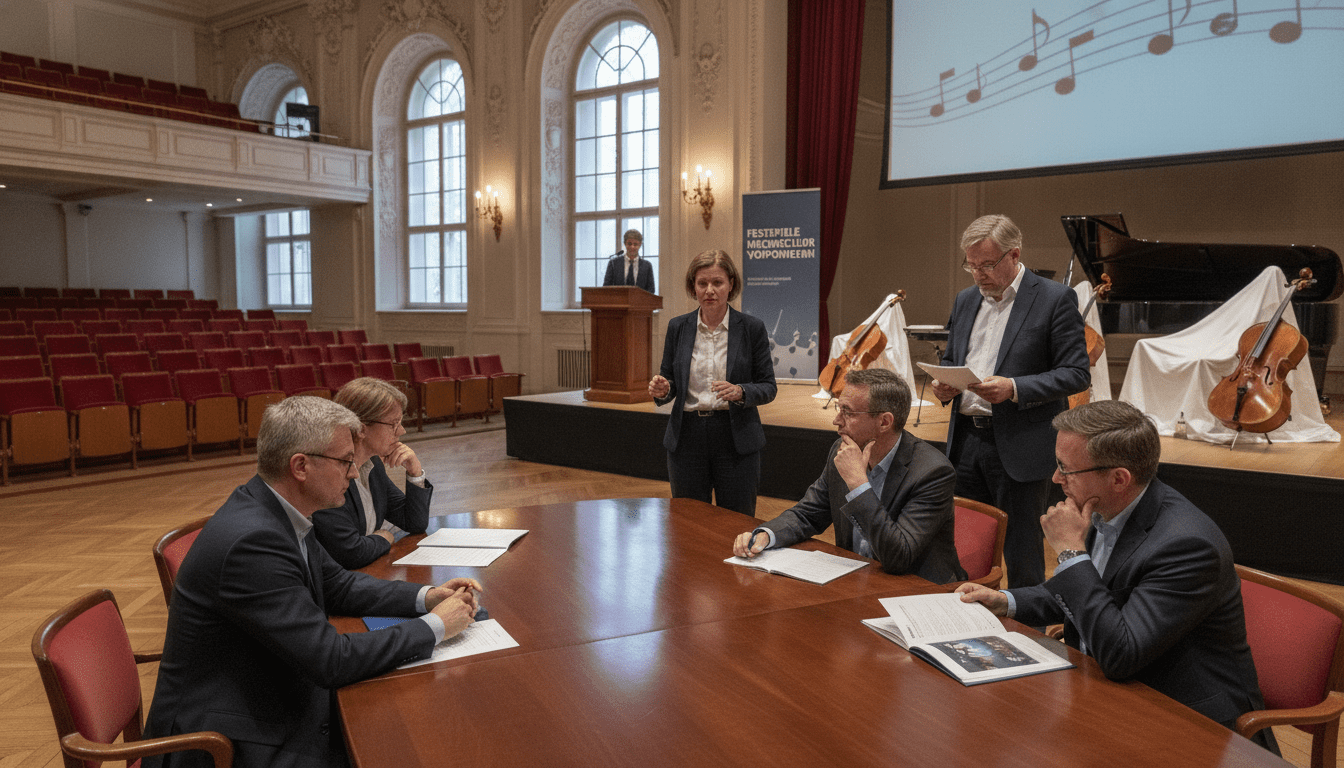
Festspiele Mecklenburg-Vorpommern Faces Funding Strain as 600 Children Attend Shipboard Concert
Festspiele Mecklenburg-Vorpommern faces funding pressure as 600 children attended a cruise-ship concert on June 13; organizers now race to secure longer-term sponsors.
The season-opening children’s concert aboard the Aidamar brought music and motion to Cruise Center Warnemünde on June 13, when about 600 pupils took part in the Festspiele Mecklenburg-Vorpommern outreach program. The event combined classical repertoire and interactive beats under the festival’s family series, aiming to introduce young audiences to orchestral music in an unusual setting. Teachers, festival staff and AIDA crew coordinated class-by-class boarding, photos and guided ship tours alongside the performance.
Children’s Program Combines Classical Repertoire with Hands-On Activities
Aboard the 252-metre ship, pupils practiced rhythmic patterns and learned short texts tied to familiar melodies, while a two-piece band and professional musicians alternated classical excerpts with modern beats. The Mäck & Pomm family concerts are designed to make music accessible and memorable for children who might not otherwise encounter live orchestral sound. After the concert the program included a captain’s Q&A, a ship inspection and communal lunch—small-scale elements intended to convert curiosity into long-term interest.
Intendant Ursula Haselböck Frames Festivals as Community Investment
Festival director Ursula Haselböck, who leads the organization from Schwerin and originally hails from Vienna, presents the Festspiele as more than a concert series: it is a tool for social cohesion and local identity-building. Haselböck has overseen the expansion of outreach projects that place classical music in unconventional venues and that mobilize volunteer networks in rural communities. Though hired for artistic direction, she says a major portion of her role has become fundraising and relationship management to keep the festival operating.
Festival Budget Reveals Heavy Private Funding and Shortfalls
The Festspiele operate on an annual budget of roughly €5.6 million, with public funds contributing only about 16 percent and largely on a project basis. By contrast, a 2025 festival study showed regional classical festivals typically rely on public subsidies closer to 40 percent. According to the festival’s plans, ticket sales account for more than half of projected income this season, a dependence that makes cash flow vulnerable to attendance changes and short-term sponsor decisions. Recent cutbacks by long-standing backers have underscored the fragility of this funding model.
Corporate Sponsors and Local Businesses Provide Critical Support
AIDA Cruises remains the festival’s most visible commercial partner, providing sponsorship and collaboration on events such as the Aidamar concert; Mercedes-Benz serves as mobility partner and regional banks and utilities participate as steady contributors. In addition to national brands, about 200 local companies and philanthropists support specific projects or supply in-kind services, from pianos to transport. Those relationships are often personal and generational, yet several major donors have shifted priorities, reducing predictable multi-year commitments and increasing uncertainty for the festival’s planners.
Political Context and September State Election Add Financial Uncertainty
Organizers are watching the political landscape closely as state elections approach in September, warning that an altered government composition could affect both public funding decisions and private sponsor behavior. Festival leaders say a shift in regional politics might deter some corporate and tourist support, with knock-on effects for programming and outreach. Such concerns are amplified by the region’s demographic and economic profile: Mecklenburg-Vorpommern has a small population spread over a large area and depends heavily on tourism and agriculture, factors that already limit the local donor base.
Programming Strategy Extends to Rural Halls, Reithalls and Civic Spaces
Despite fiscal challenges, the Festspiele continue to stage about 120 concerts in 90 venues across the state, from grand reithalls and manor houses to churches, factories and even the Schwerin plenary chamber. Production teams regularly build temporary concert spaces, sometimes converting riding arenas or small village halls into performance venues, so that even communities with a few dozen seats can host high-calibre artists. The festival’s outreach aim is pragmatic: seed appreciation among new audiences and provide cultural experiences that bind volunteers, local institutions and audiences together.
The Aidamar concert illustrated both the festival’s strengths and its vulnerabilities: memorable artistic moments on an unconventional stage, anchored by committed partners but exposed to the instability of short-term funding and shifting political winds. Organizers now face a dual task—securing sustainable financial support while maintaining the wide geographic reach that has made the Festspiele Mecklenburg-Vorpommern a central cultural lifeline for the region.
