
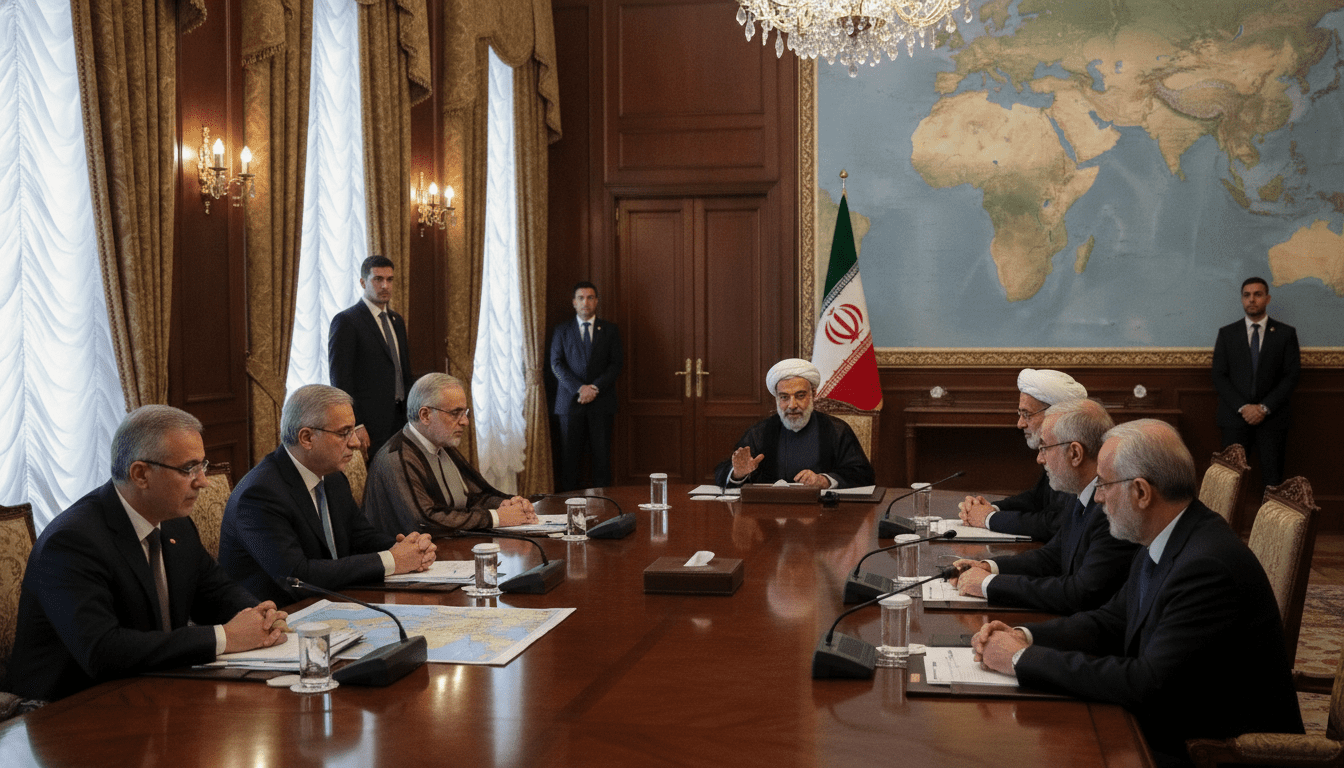
Iranian Regime Confidence Rises Amid Chaotic Cross-Border Strikes and Fleeting Ceasefires
Rising Iranian regime confidence reshapes a volatile regional conflict marked by intermittent strikes, aborted U.S. threats, brief ceasefires and fragile talks.
The conflict between Iran, the United States and Israel has folded into a pattern of sudden strikes, rapid reprisals and diplomatic U-turns that has left the region off-balance. Iranian regime confidence has become a defining factor in the latest phase, visible in both battlefield posture and public rhetoric. Incidents ranging from a burning tanker to a downed helicopter have punctuated a campaign that alternates between escalation and temporary restraint. Negotiations and threats have circulated in public statements, then been withdrawn or denied, deepening uncertainty about what comes next.
Cycle of Strikes and Counterstrikes
The past weeks have seen a persistent back-and-forth of military activity that defies simple categorization. Tehran, Washington and Tel Aviv have each been credited with launches or responses at different moments, producing a mosaic of attacks and counterattacks. Maritime incidents and aerial losses have become recurring features, raising the prospect of broader spillover even as no side has yet committed to all-out war.
Analysts describe the pattern as deliberately calibrated: steps designed to signal resolve without triggering uncontrollable confrontation. That calibration, however, is brittle. Single incidents — a tanker on fire in international waters, an aircraft crashing under contested circumstances — can quickly ripple into wider operations or politicized blame games. The dynamic feeds strategic ambiguity that both conceals intentions and raises miscalculation risks.
Unstable Ceasefires and Diplomatic Fluctuations
Ceasefire declarations have followed the same unpredictable logic, often announced amid apparent progress only to unravel days later. Each truce has been temporary and fragile, offering short windows for diplomacy while leaving substantive issues unresolved. The frequent oscillation between fighting and negotiation has made it difficult to establish durable confidence-building measures.
Public claims about talks have become part of the contest itself. Proposals presented as near-final by one side have been dismissed or denied by another, eroding trust before agreements can be tested. This pattern has put mediators and regional actors in a reactive role, scrambling to preserve diplomatic openings when tactical setbacks occur on the ground or at sea.
U.S. Statements and Retracted Threats
Washington’s posture in recent episodes has added another layer of unpredictability. Strong public warnings and threats of major strikes have at times been announced and later rescinded, a sequence that has sowed confusion among allies and adversaries alike. Such reversals have both signaled strategic restraint and revealed internal debate over escalation thresholds and political costs.
Observers note that the oscillation in U.S. messaging can boost the resolve of opponents who interpret retractions as opportunity. At the same time, public moves toward restraint are often framed by officials as deliberate de-escalatory choices intended to preserve broader stability. The net effect is a political atmosphere where rhetoric and action diverge, making it harder for outside audiences to parse true intentions.
Signals of Growing Iranian Assertiveness
Beyond battlefield events, a more fundamental shift appears underway in Tehran’s political posture: an increase in what officials and commentators describe as the regime’s self-confidence. This confidence manifests in several ways, including a willingness to publicly claim responsibility for operations, to reject outside narratives about negotiation progress, and to frame military actions as legitimate state defense rather than proxy adventurism.
That shift alters bargaining dynamics. A more assertive Tehran is less likely to accept tamped-down outcomes that would be read domestically as defeat, and more likely to push terms that consolidate prestige at home. Rivals watching this posture must decide whether to test that resolve or seek alternative arrangements that acknowledge Iran’s new public posture without rewarding escalation.
Implications for Regional Security and Diplomacy
The interplay of military friction and heightened Iranian regime confidence carries significant implications for neighboring states and international stakeholders. The risk of miscalculation increases when tactical incidents occur against a backdrop of amplified rhetoric and public grandstanding. Trade routes, energy markets and regional military deployments can all become entangled in the cycle of strikes and statements.
Diplomacy faces the challenge of translating episodic ceasefires into durable settlements while accounting for Tehran’s changed posture. Mediators will need mechanisms that reveal commitments and reduce incentives for dramatic gestures. Absent such mechanisms, the pattern of short-lived truces and rapid reversals is likely to continue, extending instability across a wide geographic area.
The evolving posture also pressures domestic politics across the region; leaders must weigh the costs of appearing weak against the real dangers of misjudged escalation. For external powers, the calculus involves balancing deterrence with avenues for negotiation that recognize both security concerns and the political capital Tehran seeks to protect.
The recent sequence of incidents — attacks at sea, aircraft losses and alternating public statements about both negotiation breakthroughs and denials — demonstrates how force and narrative are now intertwined. As parties trade strikes and statements, Iranian regime confidence has emerged as a central variable shaping decisions on the battlefield and at the negotiating table. Observers and policymakers will be watching whether that confidence leads to a new status quo of calibrated coercion or to sudden, unintended escalation that redraws regional fault lines.
