
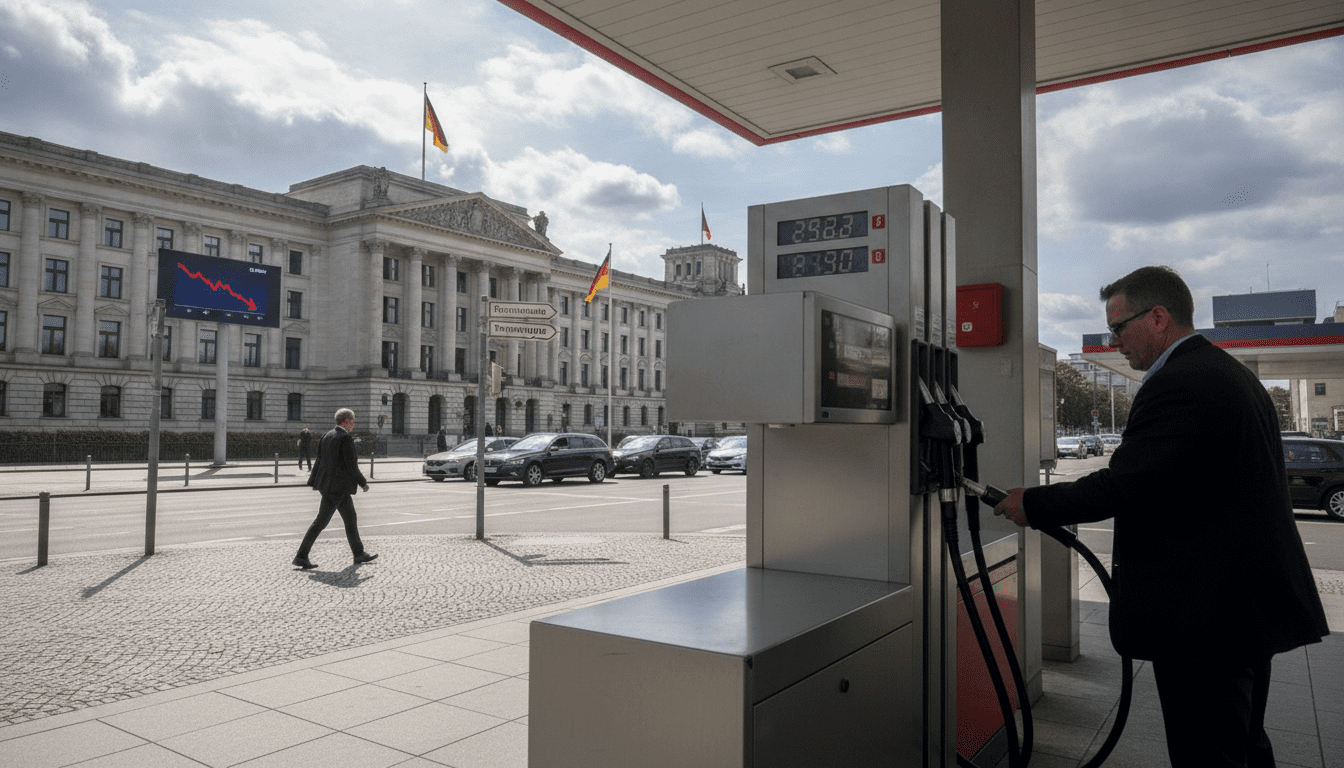
Tankrabatt Helps Cool Germany’s Inflation to 2.6% in May
Germany’s Tankrabatt eased inflation to 2.6% year-on-year in May, according to the Federal Statistical Office, as lower pump prices helped moderate energy-driven price pressures. The government fuel tax cut and falling month-on-month prices combined to push headline inflation down from April’s 2.9% reading.
May headline inflation and monthly change
The Federal Statistical Office reported that consumer prices in Germany were 2.6% higher in May 2026 than a year earlier, marking a slowdown from April’s 2.9% increase. On a month-on-month basis, prices actually fell by 0.2% between April and May, reflecting easing pressures in several sectors.
Officials and analysts have pointed to the temporary Tankrabatt — a state-ordered reduction in the energy tax on petrol and diesel — as a significant factor in the moderation of price growth for energy and headline inflation. The statistics office highlighted energy’s smaller contribution to overall inflation in May compared with April.
Energy inflation and the role of the Tankrabatt
Energy prices were 6.6% higher year-on-year in May, substantially lower than the 10.1% rise recorded in April. The decline in the energy component’s contribution was attributed in part to the Tankrabatt, which came into force on May 1 and cut the per‑litre tax on gasoline and diesel by roughly €0.17.
Ruth Brand, president of the Federal Statistical Office, said the Tankrabatt likely helped restrain energy inflation even as global oil markets remained volatile following geopolitical tensions. Policymakers now face a narrowing window in which the temporary relief is in effect — the measure is scheduled to expire at the end of June.
Food and consumer goods: mixed price movements
Food prices rose only modestly in May, increasing 0.4% year-on-year, which helped contain headline inflation. Despite the overall modest rise, some categories saw notable shifts: fish prices climbed by 3.7% and sugar and other confectionery rose by 3.6%, while fruit and meat also recorded increases.
At the same time, several staples became markedly cheaper compared with a year earlier. Butter prices plunged by 29.1%, olive oil and potatoes fell by about 15.3%, and broader dairy products declined by 6.4%. These mixed movements left aggregate food inflation subdued in May.
Geopolitical risks and forecast uncertainty
Economists warn that future inflation dynamics depend heavily on developments in the Middle East, particularly the situation in Iran and its impact on oil markets. Rising energy, production, and transport costs could prompt firms to pass higher costs on to consumers, reversing recent moderation.
Market observers note that the temporary nature of the Tankrabatt adds uncertainty to the near-term outlook: if global oil prices rise while the tax cut lapses, headline inflation could rebound. Forecasts therefore hinge on both external commodity developments and domestic policy choices.
Monetary response and implications for households
The European Central Bank has stepped up its policy responses to higher inflation in the euro area. On Thursday the ECB raised the deposit rate from 2.00% to 2.25%, the bank’s first rate increase in almost three years, signaling a willingness to keep policy tighter if price pressures persist.
Higher interest rates weigh on borrowing costs but can help cool demand and inflation over time, a trade-off that will influence household budgets. Despite slowing headline inflation compared with the previous year, higher overall price levels mean consumers still face reduced purchasing power relative to pre‑pandemic norms.
Overall, the May data underline a fragile respite: headline inflation has eased for now, helped by the Tankrabatt and lower month-on-month prices, but underlying risks remain from volatile energy markets and the imminent end of the temporary fuel tax cut.
The near-term inflation path will therefore depend on oil market developments, whether the government extends or replaces the Tankrabatt, and how quickly core price pressures respond to tighter monetary policy.
