
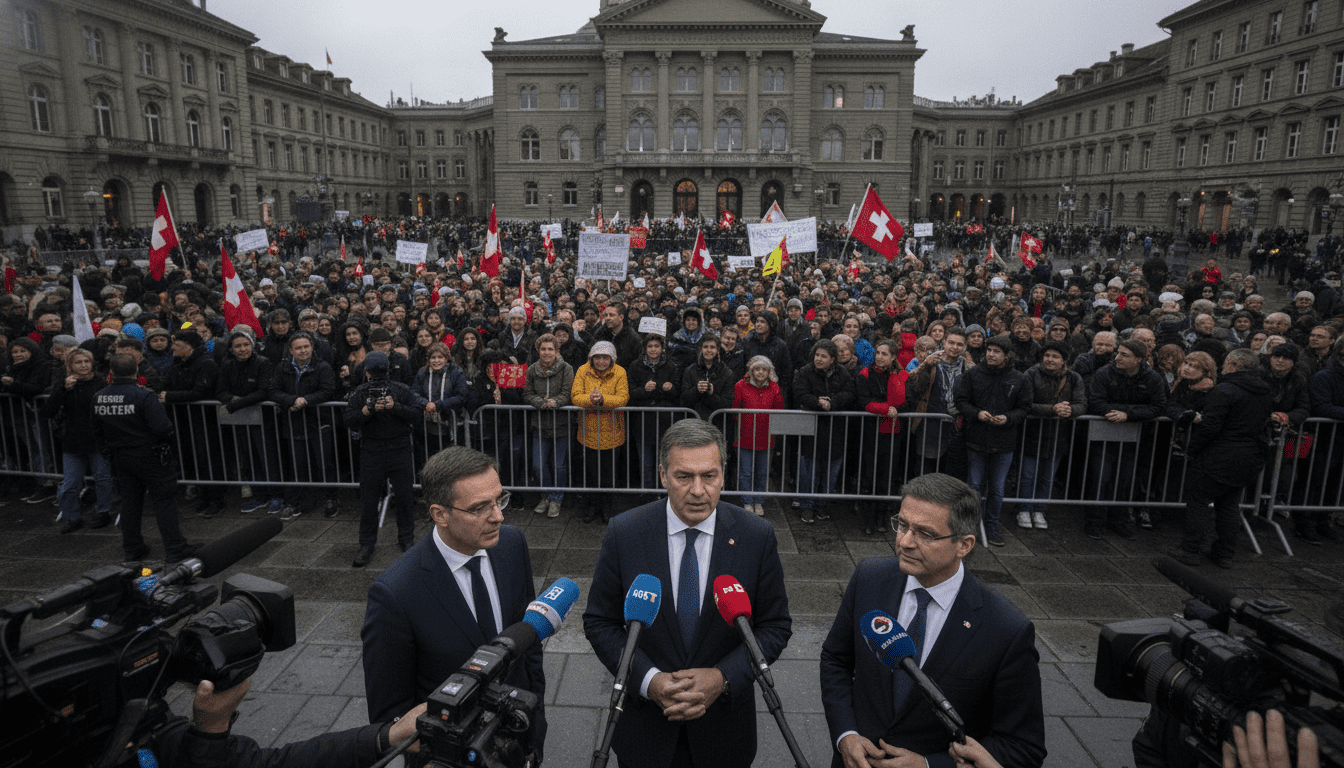
Switzerland’s “Dichtestress” Fuels Vote on 10-Million Population Cap
Swiss voters head to the polls Sunday to decide a proposal that would cap the country’s permanent population below ten million, a debate driven by rising “Dichtestress” — the public feeling of density and crowding. The referendum, framed as a response to pressures on housing, transport and public space, has sharpened nationwide discussion about urban planning and quality of life. Campaigners for the initiative say a population ceiling will relieve pressure on services and neighborhoods, while opponents warn it risks disrupting the economy and international mobility.
Vote Set for Sunday on 10-Million Population Cap
The ballot initiative would prevent Switzerland’s permanent resident population from exceeding ten million before 2050, a threshold backers argue is necessary to curb a perceived squeeze on living space and local infrastructure. The term “Dichtestress” has become a rallying cry for critics of rapid growth, encapsulating frustration with crowded streets, rising short-term rentals and shrinking personal space. Proponents contend the measure restores local control, while critics say it offers a blunt instrument for complex planning challenges.
Population Trends and Living-space Shrinkage
Switzerland’s population has risen to roughly 9.1 million in recent years, a factor that has intensified debates about housing and urban form. Measured average new living space per person has fallen over the last quarter century from about 51.4 to 46.5 square meters, narrowing the margin between Swiss and German averages. That decline has been cited by supporters of the cap as evidence of mounting pressure on private and public space, even as planners and economists point to demographic change and household composition as important underlying drivers.
Urban Pressure: Lucerne’s Tourism and Transit Response
Tourist hubs such as Lucerne illustrate how seasonal and visitor flows amplify Dichtestress in popular city centers. Short-term commercial rentals and furnished apartments have multiplied with the city’s tourism economy, prompting local business leaders to warn that infrastructure is not keeping pace with visitor and resident growth. One local economic association head has argued that expanding transport options is essential, and Lucerne officials are now considering a central gondola proposal as a measure to ease inner-city traffic and reconnect steep approaches to the historic centre.
Density Strategies and the Case for Mid-rise Buildings
City planners advancing densification often point to infill, vertical extensions and compact units as remedies for housing shortages, but not all forms of density perform equally. Research by a regional cantonal bank finds that buildings of four to eight storeys often offer the best balance of high density and livable apartment sizes, delivering efficient land use without the perceived claustrophobia of taller towers. High-rises can reduce land consumption, yet on lower floors they sometimes correspond with smaller per-person floor areas, while upper levels tend to accommodate more generous layouts favored by singles and dual-earner households.
Greening Projects and Zurich’s Overdecking Experiment
Efforts to soften dense urban environments through greening have produced mixed outcomes, as investors and municipalities vary in their commitment to meaningful landscaping. Zurich’s recent project to cap a section of highway with a roughly one-kilometer deck and a 30-meter-wide planted zone has become a high-profile test case. The so-called Überlandpark, completed after a civic initiative pushed for the covering, replaces a bare carriageway divide with trees and lawns, but observers note that the long-term success depends on programming, maintenance and whether residents actively use the new public space.
Behavioural Design and Small-scale Solutions
Local responses to Dichtestress range from tactical to structural, and many planners emphasize small, human-scale interventions as part of the solution. Simple measures — balconies planted with shrubs, furnished communal rooms that genuinely match resident preferences, and multi-generational housing with private retreat spaces — can mitigate the sense of crowding at the household level. Critics warn that token greening or poorly designed shared amenities do little to improve daily life unless they are matched by thoughtful design, adequate maintenance and community engagement.
Nature, Culture and Well-being in Dense Cities
The psychological dimension of Dichtestress helps explain popular demand for visible nature and quiet within dense neighborhoods. Research from the University of Zurich’s architecture psychology group highlights that light physical activity in green settings reduces stress hormones more quickly than many urban alternatives. Experts also find that contemplative indoor spaces such as museums can offer similar restorative benefits by lowering overstimulation and allowing attention to rest. For planners, this evidence supports integrating both programmed green places and calm cultural spaces into compact urban fabrics.
Swiss voters will decide on Sunday whether population limits are an acceptable policy tool to address those pressures, or whether the challenges of Dichtestress should be tackled through targeted planning, transport upgrades and design-led greening instead. The referendum outcome will shape how municipalities balance growth, mobility and the public realm in coming decades, and it will test whether a national cap can substitute for the granular, place-based solutions many experts recommend.
