
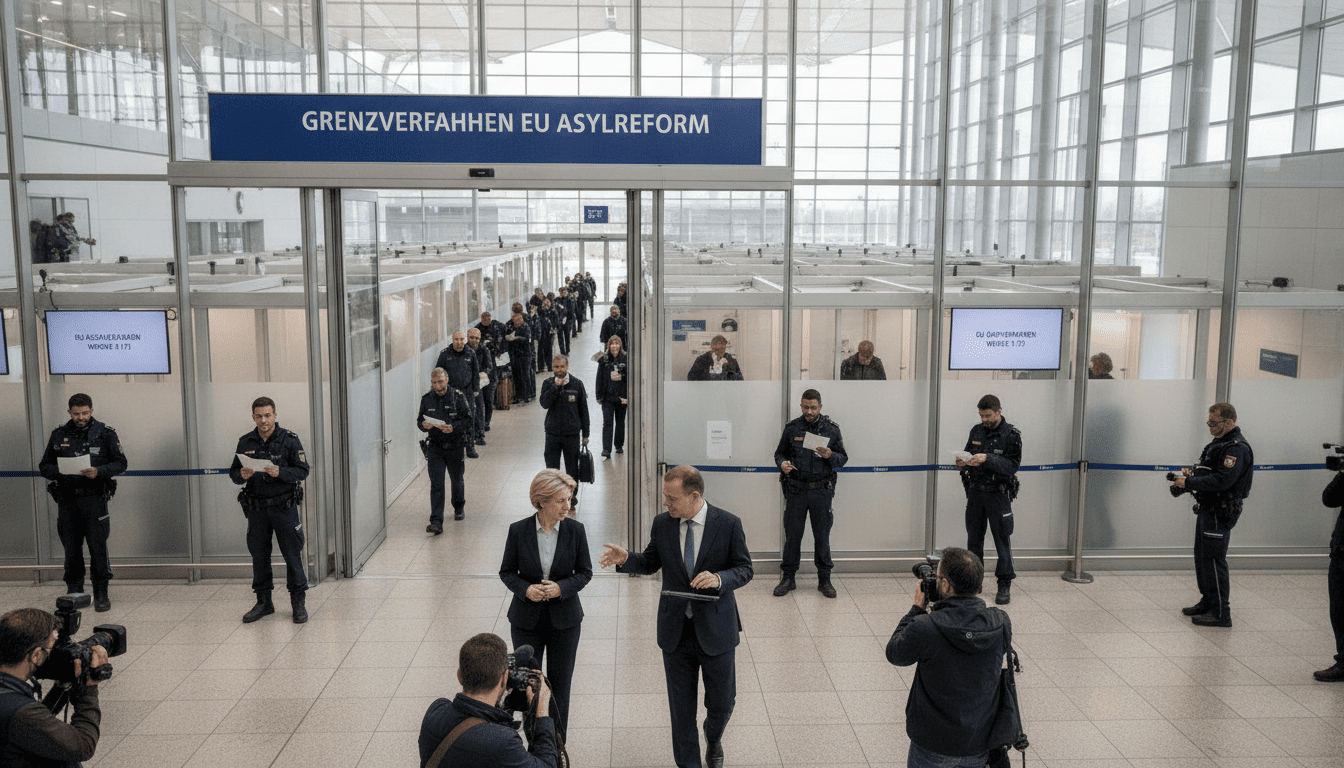
EU asylum rules take effect with fast-track border procedures and new solidarity measures
New EU asylum rules take effect: fast-track border procedures, tougher deportations and a solidarity fund to relieve frontline states and curb onward migration.
The European Union’s new asylum rules took effect at midnight, introducing faster border procedures, stricter deportation powers and measures designed to reduce secondary movement inside the bloc. The EU asylum rules aim to shorten processing times and ensure that people seeking protection are assessed near external entry points rather than moving between member states. Officials say the package is intended to ease pressure on countries at the Union’s external borders while creating a clearer framework for returns.
Design of the fast-track border procedures
The reform institutes accelerated screening at external EU entry points for applicants judged to have limited chances of receiving international protection. These procedures are intended to reach a decision within a tightly defined window to prevent lengthy processing in transit states. The new regimen places greater emphasis on initial admissibility assessments and swift identification of cases that may be processed for return.
These border procedures will be supported by specialized reception or intake centres, which member states can use to carry out medical checks, fingerprinting and initial interviews. The Commission’s text stresses that countries must still respect asylum and human rights obligations even while prioritizing speed in procedure. Member states are required to provide access to legal assistance and information, but timeframes for decisions will be significantly shorter than under previous rules.
Twelve-week limit and movement restrictions
A central element of the rules is a maximum twelve-week timeframe for accelerated procedures at the external border for applicants deemed unlikely to qualify for protection. Within this period, authorities are expected to carry out all necessary checks and issue a decision, either granting protection, a different form of status, or an order for return. The limitation is intended to reduce administrative backlogs and cut the time people spend in legal uncertainty.
To implement such rapid processing, the rules allow authorities to require applicants to remain in designated reception facilities while their cases are examined. National governments must ensure conditions at these centres meet EU standards, including adequate shelter, medical care and procedural safeguards. The balance between restricting movement and safeguarding rights will be a focal point for national courts and civil society monitoring.
Solidarity mechanism and burden-sharing options
The package introduces a formalised solidarity mechanism to support member states experiencing high numbers of arrivals, offering a mix of financial assistance, material aid and relocation of asylum applicants. Contributions can take multiple forms, including transfers of funds, deployment of personnel, or the reception of individuals by other member states. The mechanism is intended to provide flexible support tailored to the needs of the state under strain.
Under the agreed terms, some countries will be able to count costs and procedures already carried out as part of their contribution, which may reduce immediate financial obligations. This accounting method is likely to shape early implementation and determine which states must contribute directly. The Commission has signalled it will monitor application of the mechanism to ensure equitable sharing over time.
Implications for frontline states and secondary migration
Frontline member states such as Italy and Greece have pressed for reforms that discourage onward travel to wealthier or more populous EU countries and address repeated criticisms about uneven responsibility. The new rules seek to clarify which country is responsible for processing particular claims and to limit incentives for secondary movement. Proponents argue the approach will reduce irregular onward travel and alleviate pressure on transit routes.
Critics warn the measures risk concentrating migrants at border points and could strain local capacities if additional resources are not promptly deployed. Humanitarian groups have called for rigorous oversight to prevent rights violations during accelerated processing. The success of the reform will hinge on member states’ ability to operationalize border procedures while maintaining legal protections and humane reception conditions.
Implementation steps in Germany and airport procedures
Germany will introduce its own border assessment mechanisms, including procedures at international airports, to align with the EU framework. Officials have planned the opening of a new facility at Berlin-Brandenburg airport to carry out initial registration and eligibility checks under the new rules. The airport centre is expected to handle arrivals who require immediate screening and will be staffed by migration officials and support personnel.
German authorities say they will implement the EU requirements while ensuring access to legal advice and medical services for applicants. Domestic oversight mechanisms and cooperation with federal states will determine how the new processes operate in practice. The government has also indicated that certain procedural activities already undertaken by Germany may be credited under the EU solidarity accounting, affecting its immediate contribution obligations.
The new EU asylum rules mark a significant shift in how member states manage arrivals and allocation of responsibility across the bloc. Their impact will become clearer as accelerated procedures are rolled out at external borders and national facilities, and as the solidarity mechanism is tested by fluctuating arrival patterns. Continued monitoring by institutions, courts and civil society will shape how rights and responsibilities are balanced in practice.
