
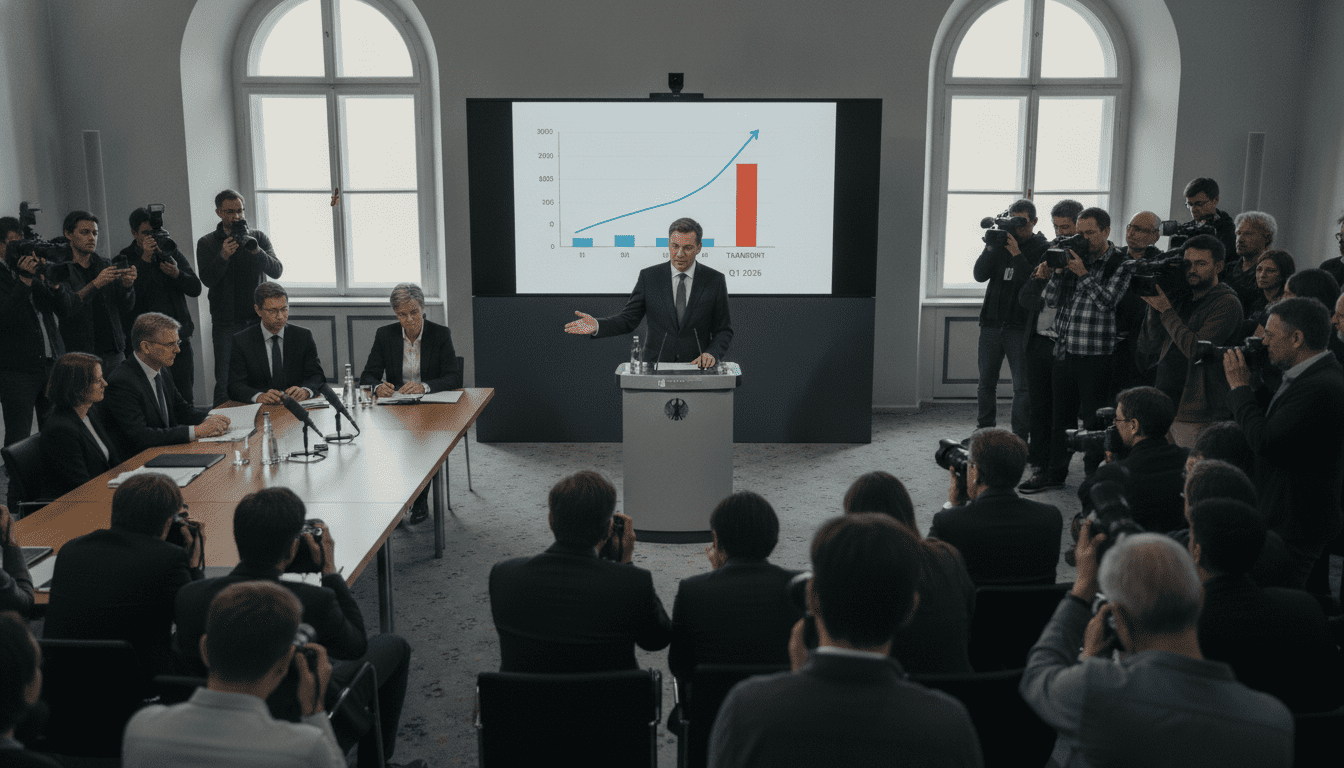
Company insolvencies in Germany rise in Q1 2026 as transport sector records highest rate
Company insolvencies in Germany rose 6.5% in Q1 2026 to 6,275 filings; transport and storage led the rise while creditor claims dropped to €9.3bn, officials say.
Germany’s Federal Statistical Office reported that company insolvencies in Germany climbed in the first quarter of 2026, with 6,275 corporate insolvency filings recorded from January through March. That figure represents a 6.5% increase compared with the same quarter in 2025, and comes amid a marked monthly uptick that peaked in March. Officials said the trend has been uneven across sectors, with transport and storage showing the sharpest rise.
Q1 filings rise 6.5% to 6,275 cases
The Federal Statistical Office (Statistisches Bundesamt) said 6,275 insolvency applications by companies were lodged with local courts in Q1 2026, up from the comparable period a year earlier. This increase follows a string of weaker economic indicators and reflects pressures on businesses across several industries. Analysts noted that while the headline rise is notable, the volume remains concentrated in specific segments rather than being uniformly distributed.
The office’s quarterly breakdown indicates a deterioration in insolvency dynamics that accelerated into March, adding to concerns that the slower economic momentum is translating into more business failures. Policymakers and market participants are watching whether the early-year trend will persist through the rest of 2026.
March surge signals mounting pressure on firms
Monthly data showed a particular spike in March, when insolvency filings rose 15.8% compared with March 2025. The March increase driven the quarterly uptick and suggests a build-up of financial distress toward the end of the quarter. Observers say the timing may reflect cash-flow squeezes tied to seasonal costs, energy and financing pressures, and the exhaustion of temporary support measures.
Market participants caution that a strong March does not necessarily presage a continuous upward trajectory, but it does raise the probability that more firms will face insolvency proceedings if demand remains subdued. The size and composition of the firms filing—whether smaller local operations or larger, systemically important companies—will shape the broader economic impact.
Transport and storage sector posts highest insolvency rate
The transport and storage sector recorded the sharpest rise in insolvency incidence, registering 32.1 insolvency cases per 10,000 companies in the first quarter. This segment includes shipping, aviation, freight forwarding and passenger rail operations, which have faced a mix of demand volatility, higher fuel and maintenance costs, and logistical challenges. The hospitality and construction sectors also showed elevated numbers of insolvencies, contributing to the broader uptick.
Industry groups warn that problems in transport can have ripple effects across supply chains, affecting manufacturers and retailers that rely on timely logistics services. Companies operating with thin margins are especially vulnerable to prolonged weak demand and rising operating expenses.
Creditor claims fall to €9.3bn amid fewer large cases
Despite the increase in the number of filings, creditor claims reported in Q1 2026 fell sharply to around €9.3 billion, down from €19.9 billion in the same quarter of 2025. The Federal Statistical Office attributed this decline to a lower share of economically significant or large-company insolvencies in the current quarter. In other words, more firms are failing, but fewer of them are large enough to generate exceptionally high creditor claims.
The disparity between case numbers and claim volumes may temper immediate systemic risk, but it also means the human and local economic costs—job losses, supplier defaults and regional impacts—can be widespread. Creditors, particularly small suppliers and trade partners, may still face concentrated losses in certain regional or sectoral pockets.
Economists warn of manufacturing exits and a tougher 2026
Patrik-Ludwig Hantzsch, chief economist at business information provider Creditreform, warned that the weak economic backdrop could drive further insolvencies across the year. He said 2026 is likely to bring more corporate failures and closures, and emphasized that the concern is not only the number of filings but which companies are affected. Hantzsch highlighted that many manufacturing firms with otherwise sound fundamentals are being forced out of the market, a trend he described as particularly worrying.
Economists point to a combination of restrained demand, higher input costs and tighter financing conditions as key factors that could keep insolvency rates elevated. They also note that policy responses and bank restructuring practices will influence whether vulnerable firms can be reorganized or are pushed into liquidation.
Business and policy implications for markets and workers
Rising company insolvencies in Germany are likely to have immediate implications for employment, supply-chain resilience and regional economies that rely on exposed sectors. Employers and lenders may face sharper credit losses, while workers in affected fields—logistics, hospitality, construction and manufacturing—could see localised spikes in unemployment. Policymakers will need to weigh targeted support for restructuring and measures to ease financing for viable firms against the risks of propping up unviable enterprises.
Industry associations are calling for clearer frameworks to speed up restructuring and facilitate access to bridge financing, while trade groups urge investments in modernization to boost competitiveness. The interaction between monetary policy, credit availability and fiscal support will be critical in determining whether insolvency pressures subside or intensify.
The early 2026 data paint a mixed picture: a higher number of insolvency filings but fewer headline creditor claims, concentrated sectoral pain and warnings from economists about further exits, particularly in manufacturing. How firms, banks and policymakers respond in the coming months will determine whether the trend stabilizes or deepens across Germany’s economy.
