
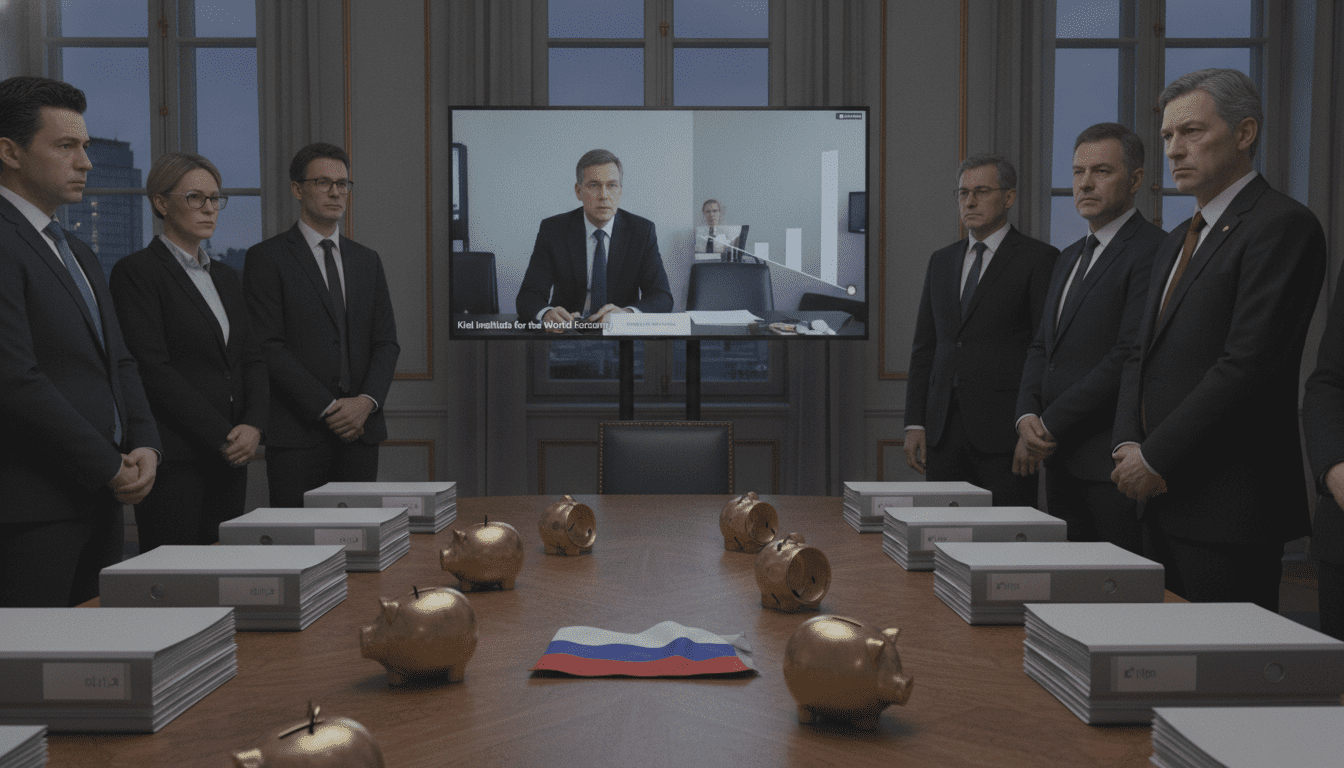
Kiel Institute: Russia’s war economy nears ‘Endgame’ as reserves deplete
Kiel Institute study warns Russia’s war economy is nearing exhaustion; authors urge Europe to consider tariffs, tighter sanctions or a trade halt to end the war.
Russia’s war economy is approaching a critical turning point, the Kiel Institute for the World Economy said in a report released on June 11, 2026. The study, titled “Endgame,” concludes that official figures understate structural erosion and that Moscow’s financial buffers are effectively spent. Lead author Moritz Schularick and a team of international economists argue the Western coalition should seize the moment to increase pressure on the Kremlin.
Kiel Institute frames the situation as an “Endgame”
The IfW report uses stark language to describe the Russian economy’s trajectory and warns the country has moved beyond resilience into decline. The authors say the economy has not collapsed yet, but core productive capacities and financial reserves are eroding faster than headline data suggest. That assessment is presented as the basis for policy recommendations aimed at shortening the war in Ukraine.
Reserves depleted and structural damage hidden in statistics
Researchers highlight that public metrics such as GDP or headline reserves can mask deeper weaknesses in supply chains, investment, and industrial capacity. The team finds that the rapid depletion of foreign-exchange reserves, diminished access to advanced technologies, and shrinking domestic investment point to long-term deterioration. Economists caution that short-term stabilization measures are unlikely to reverse structural decay without significant changes in external trade and finance dynamics.
Growing economic reliance on China and allied partners
The report documents an increasing dependence on non-Western partners, particularly China, to fill gaps in trade, credit and technology transfer. While Beijing provides critical imports and financing, the Kiel team stresses that reliance on a narrow set of partners leaves Russia vulnerable to supply constraints and shifts in political will. This deepening link reduces Moscow’s options but also shifts leverage away from Europe in certain supply chains.
Policy levers for Europe: tariffs, tighter sanctions, or trade restrictions
Authors propose a suite of measures Europe could deploy to hasten a negotiated end to the conflict, with varying degrees of political and economic cost. Options discussed range from targeted tariffs and stricter financial restrictions to broader limits on trade in key sectors that sustain the Russian military effort. The report underscores that careful calibration would be necessary to limit collateral harm to European businesses and energy markets.
Calls for a trade halt and the political obstacles it faces
Some economists within the IfW team go further, arguing that an outright halt to trade with Russia could be the most direct way to undercut the war economy. They acknowledge, however, that such a step would be fraught with legal, logistical and diplomatic hurdles and would inflict costs on European consumers and firms. The report notes that political consensus in the EU and among NATO partners would be difficult to achieve, given divergent national interests and exposure to Russian energy and commodity flows.
Economic costs to Europe and strategic trade-offs
The Kiel analysis also examines the costs that continued conflict and tighter measures impose on European economies, including higher energy prices, disrupted supply chains and fiscal outlays for defense and refugee support. It finds that while short-term economic pain would likely rise under stricter measures, the long-term benefits of shortening the war could outweigh those costs. Policymakers are therefore faced with a strategic trade-off between immediate economic impact and a potential faster return to stability.
Russia’s war economy remains central to debates in Brussels and national capitals about how best to respond in the months ahead. The Kiel Institute’s “Endgame” report adds weight to calls for a reassessment of existing sanctions and trade policies by arguing that timing matters: increased pressure now, the authors contend, could be more effective and less costly in the long run than prolonged, incremental measures.
