
FIFA World Cup 2026: Full groups, Germany fixtures, venues and broadcast guide
FIFA World Cup 2026 guide: groups, Germany’s fixtures, full match schedule, host stadiums across USA, Mexico and Canada, and TV/streaming coverage. Key info.
The FIFA World Cup 2026 opens June 11 and runs through July 19, staging a record 104 matches across three host nations and 16 venues. This expanded tournament features 48 teams, a revised group format and a new round of 16 that will reshape the early knockout phase. Germany is drawn into Group E and begins its campaign with three group matches scheduled in Houston, Toronto and New York, with kickoff times listed in Central European Summer Time.
Opening match and early headlines
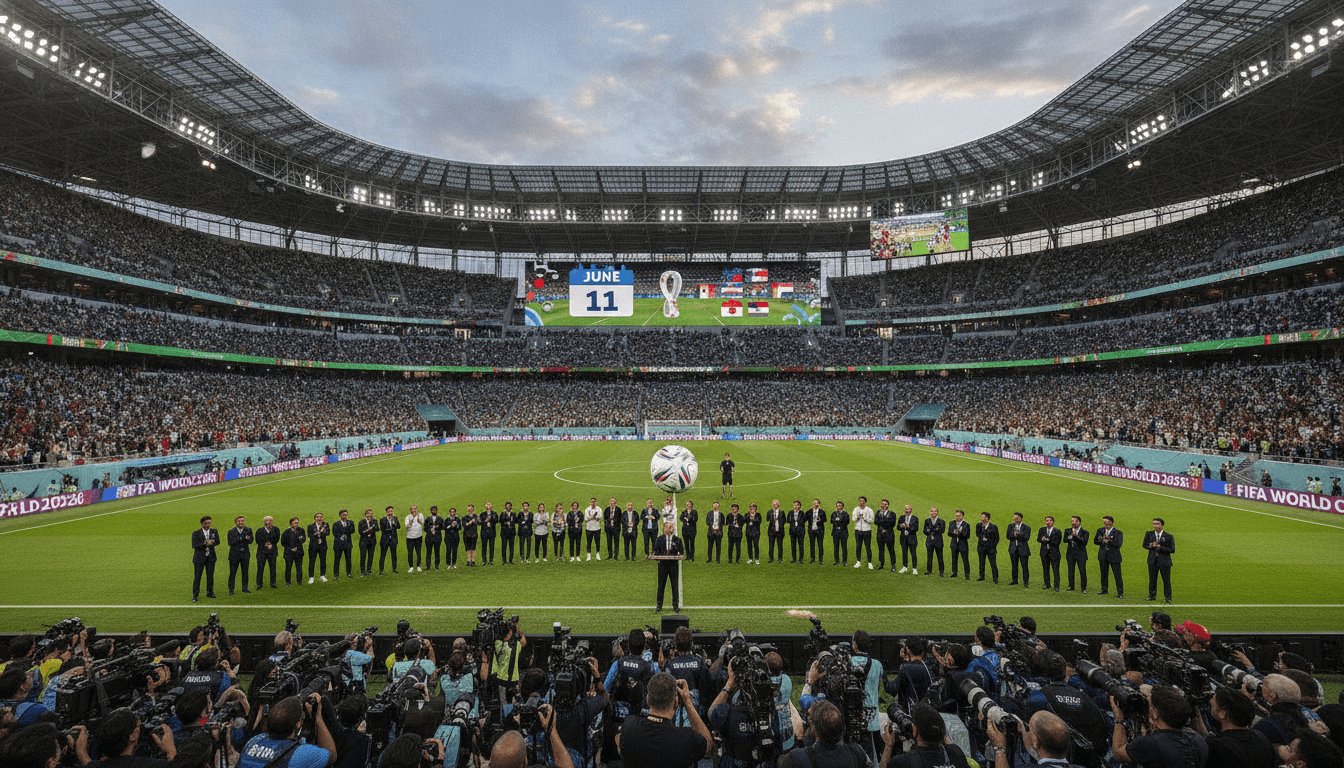
The tournament kicks off with Mexico facing South Africa in the opening match, scheduled for June 11 at 21:00 CEST and broadcast on ZDF. Organizers expect packed stadiums and heavy television audiences as the host nations — the United States, Mexico and Canada — stage the first three-country World Cup. The competition’s expansion to 48 teams increases the number of group games and introduces logistical and scheduling challenges for teams and broadcasters alike.
Group stage draw and notable pools
Twelve groups of four teams will decide who advances, with the top two in each group moving directly to the knockout rounds. The eight best third-placed teams also qualify for a new round of 16, creating an added layer of suspense for several groups. High-profile pools include Group C with Brazil and Morocco, Group I featuring France and Norway, and Group E where Germany will face Ecuador, Ivory Coast and debutants Curaçao.
Germany’s fixtures and potential path
Germany, coached by Julian Nagelsmann, plays Group E matches on June 14, June 20 and June 25, with all times given in CEST for European audiences. The first game is Germany vs Curaçao in Houston on Sunday, June 14 at 19:00 CEST, televised by ARD. The second group match is set for Saturday, June 20 in Toronto at 22:00 CEST on ZDF, followed by Ecuador vs Germany in New York on June 25 at 22:00 CEST, also on ARD.
Key matchdays and knockout roadmap
The schedule maps group action through late June, followed by a concentrated knockout phase beginning with the new round of 16 from June 28 to July 4. Quarterfinals run July 9–12, semifinals on July 14 and 15, a third-place match on July 18 and the final in New York on July 19 at 21:00 CEST. The revised format pairs group winners and runners-up with the eight best third-placed teams, producing a varied pathway that rewards consistency in the group stage.
Host stadiums, capacities and time differences
Sixteen stadiums will stage matches: 11 in the United States, three in Mexico and two in Canada, with capacities ranging from about 45,000 to 94,000 seats. Major sites include the Dallas stadium with roughly 94,000 capacity, the Azteca in Mexico City with about 83,000, and the New York–New Jersey venue holding approximately 82,500. Time-zone differences mean European viewers should expect kickoff times adjusted to Central European Summer Time, typically six to nine hours ahead of local match times.
Broadcast rights and streaming options
Public broadcasters ARD and ZDF will air roughly 60 of the 104 matches, while the telecom provider MagentaTV holds rights to stream all fixtures as part of a paid package. ARD and ZDF will also provide live streams in their respective media libraries and through their sports apps, and MagentaTV will offer a parallel live stream of every game. This split coverage means viewers can follow marquee matches on free-to-air television while subscribing fans have access to every fixture through the paid service.
The tournament’s expansion and the new third-place qualification rule introduce novel sporting dynamics and scheduling pressure for teams, broadcasters and host cities. With matches spread across a wide geographic area, national teams must manage travel and recovery carefully while supporters plan viewing and travel around staggered kickoff times.
As the FIFA World Cup 2026 unfolds, attention will focus on how the larger field affects competitive balance and whether the new round of 16 will change traditional tournament strategies. Fans in Europe should monitor kickoff times in CEST and check which network is carrying each match to ensure they don’t miss key fixtures.
