
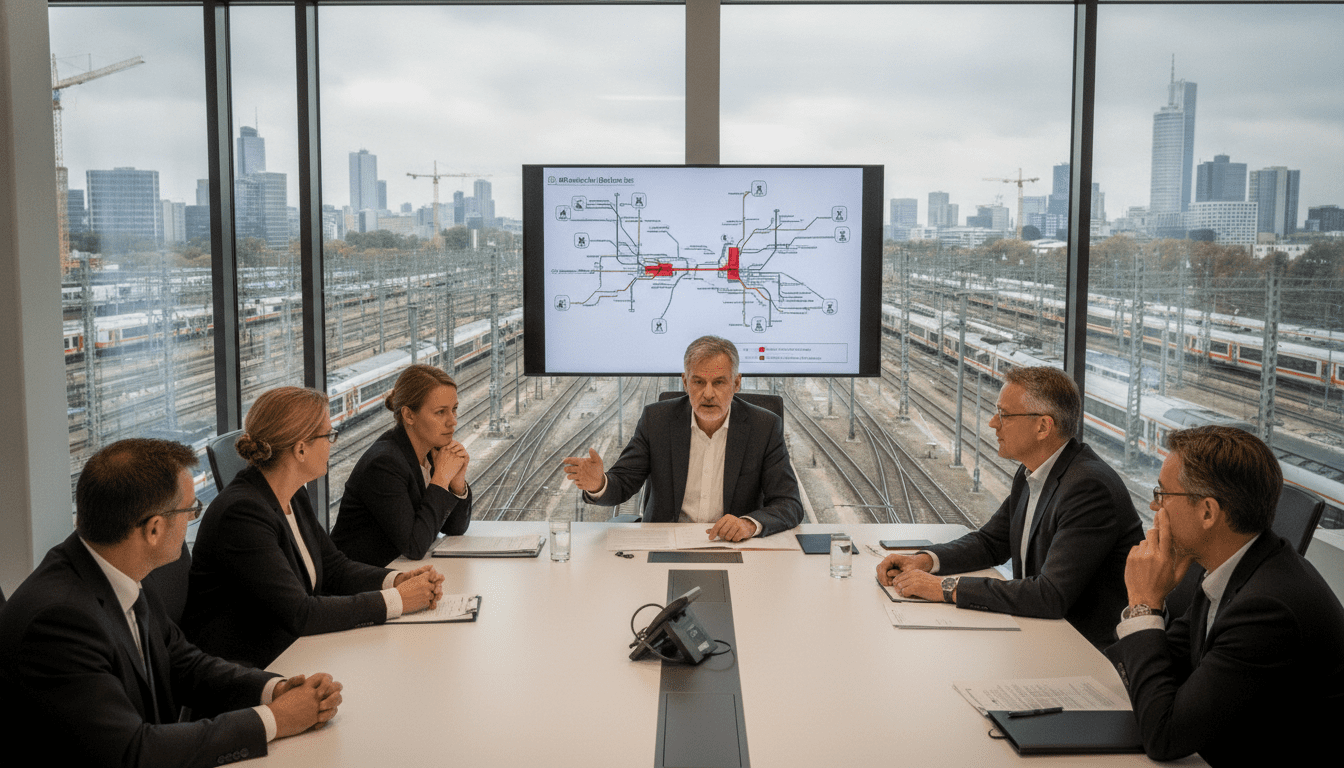
Italo’s push into Germany raises pressure on Deutsche Bahn, board member Michael Peterson warns
Italo’s bid to enter the German long‑distance market intensifies pressure on Deutsche Bahn, with DB board member Michael Peterson citing blocked lines, weak infrastructure and concerns about special rules for competitors.
The Italian operator Italo is pressing to start services on key German long‑distance routes, thrusting competition into the heart of a Deutsche Bahn that Peterson says remains in prolonged crisis. In an interview on June 7, 2026, Michael Peterson, the DB board member responsible for long‑distance operations, outlined how recurring infrastructure failures and line closures limit capacity and complicate any market opening for new entrants like Italo. He framed the debate as not only about who may operate trains, but about whether the railway network can reliably absorb additional services without targeted investment and clearer rules.
Italo’s market entry and the timing
Peterson described Italo’s interest as part of a broader push by private operators to win slots on Europe’s busiest corridors. He noted that Italy’s Italo is seeking access to German high‑speed and intercity lines at a moment when maintenance backlogs and recurring construction work have reduced available paths. The salience of the move, he said, stems from the practical question of whether the physical network can sustain an expanded timetable alongside the existing Deutsche Bahn services. For passengers and policymakers, the timing matters because any new operator will contend with the same constrained infrastructure that DB currently faces.
DB’s operational constraints and closed stretches
A central point in Peterson’s remarks was the number of temporarily closed or capacity‑reduced stretches across the network. He argued that such bottlenecks, caused by ageing infrastructure and extensive renovation programmes, have left long‑distance operations vulnerable to delay and cancellation. According to Peterson, blocked tracks and single‑line diversions reduce resilience, forcing cancellations that erode customer trust and revenue. He warned that adding new services under these conditions risks amplifying disruptions unless infrastructure works are completed more quickly and network capacity is explicitly expanded.
Competition rules and requests for level playing field
Peterson raised concerns about regulatory proposals that, in his view, could create special conditions for new entrants rather than a uniform set of access rules. He pressed regulators and policymakers to ensure a level playing field for all operators operating on federal lines, arguing that ad‑hoc exemptions or preferential scheduling for newcomers could have unintended consequences for timetable stability. At the same time, he acknowledged that effective competition could bring benefits for consumers if it were introduced on a firm legal and technical foundation that safeguards network reliability.
Impacts on passengers and service quality
The board member framed the debate around passengers’ experience, noting that competition will only serve customers if trains run punctually and reliably. He said that current infrastructure problems translate directly into lower service quality, with commuter and long‑distance travelers facing delays and cancellations that undermine confidence. Peterson suggested that any entry by Italo or similar operators should be coupled with clear commitments to operational punctuality, network capacity investment, and coordinated planning to prevent timetable clashes. He also pointed to the potential upside: with robust capacity and fair rules, additional operators could broaden choice and stimulate service improvements.
Policy options and industry responses
Peterson’s comments come as federal authorities, regulators and market players debate alternatives ranging from accelerated maintenance programmes to targeted capacity increases on high‑demand corridors. Industry stakeholders differ on the right mix of measures, with some advocating accelerated liberalization to spur competition and others urging a focus on infrastructure readiness first. Peterson urged a sequenced approach: prioritise clearing bottlenecks and clarifying access rules before allowing a rapid influx of new services that could exceed the system’s present capacity.
The prospect of Italo entering Germany has reignited a policy argument that touches on investment priorities, regulatory design and the sequencing of network upgrades. Michael Peterson’s interview on June 7, 2026 framed the issue squarely as one of infrastructure capacity and fair regulatory treatment, stressing that the long‑term health of Germany’s rail market depends on both reliable tracks and predictable rules for all operators.
