
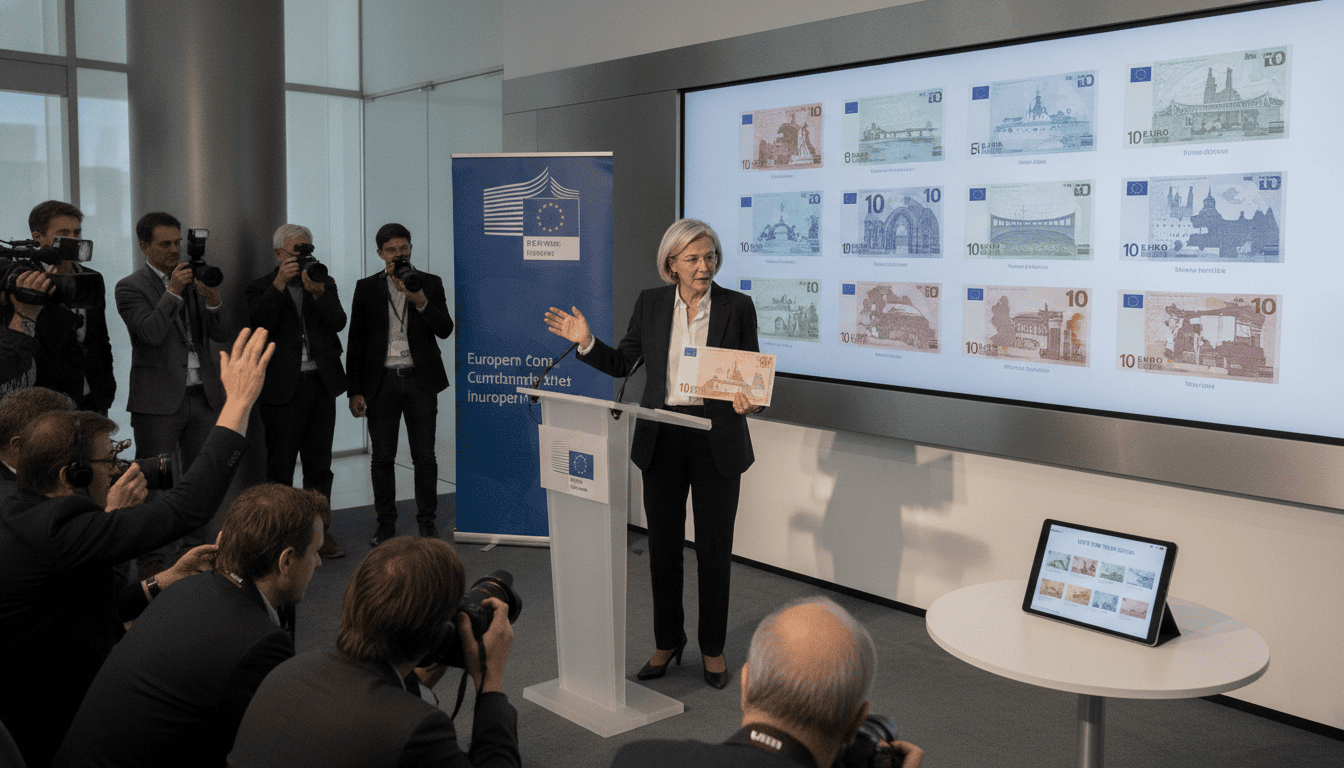
ECB unveils 10 designs for new euro banknotes and opens public vote
ECB unveils 10 designs for new euro banknotes and opens an online public vote. Proposals highlight European culture, nature, security and accessibility.
The European Central Bank has presented ten design proposals for the new euro banknotes and launched an online vote asking citizens to choose their favorites. The selection process, which the ECB says will include public input, is expected to produce a Council recommendation by the end of 2026. The move initiates the next phase in a redesign that aims to refresh imagery, strengthen security and improve durability for the common currency used by roughly 358 million people across 21 EU countries.
ECB presents ten proposals for the new banknote series
The ECB released two thematic directions and five visual proposals for each theme, giving voters a total of ten options to consider. Officials described the designs as proposals rather than final choices, with a formal recommendation still to be made by the ECB’s decision-making bodies. The bank stressed that public feedback will inform the Council’s proposal before any final designs are approved.
Public invited to vote online
An online survey has been made available so residents can register their preferences for the appearance of new euro banknotes. The ECB and national central banks are encouraging broad participation, saying public engagement will help ensure the notes reflect European values and diversity. German officials including Bundesbank President Joachim Nagel have urged citizens to take part, arguing higher participation will produce designs that better represent Europe’s populations.
Design themes: European culture and Rivers and birds
The first theme, titled European culture, features portraits and scenes inspired by influential Europeans and cultural life. Proposed front-side imagery includes figures evocative of the continent’s artistic, scientific and intellectual heritage, while reverse sides depict public gatherings and street scenes. The second theme, Rivers and birds, emphasizes natural resilience and biodiversity, with species such as the kingfisher and white stork appearing alongside representations of European institutions on the backs of the notes.
Upgraded security to deter counterfeiters
A central rationale for the redesign is to stay ahead of counterfeiting through improved and innovative security features. Central bank officials noted that redesigning banknote series is a standard practice to incorporate technological advances and to make illicit copying more difficult. The Bundesbank has specifically highlighted new protective measures as a priority, saying advanced security elements will be part of any future series.
Durability, accessibility and environmental considerations
Planners say the next generation of notes will be built to last longer and to reduce environmental impact during production. The redesign process includes measures to improve readability for people with visual impairments and to ensure tactile and visual features are clearer. Officials also indicated that production methods and materials will be evaluated to lower the ecological footprint of manufacturing and circulation.
Timeline toward selection and issuance
The redesign process began in late 2021 and has moved through thematic selection to the current public consultation stage. The ECB expects the Governing Council to settle on a recommended design before the end of 2026, though any formal issuance of new notes will follow further testing, production planning and a phased rollout. That timetable means circulation of the final series could extend over several years after the Council’s decision, with technical and logistical steps required before banknotes reach the public.
The new series will follow earlier generations of euro bills that entered circulation on January 1, 2002, and an updated second generation that was completed in May 2019. Banknote imagery to date has tended toward stylized architecture rather than real monuments, and the current proposals mark a more figurative approach in the cultural-theme options. Officials say the public vote is intended to ensure the next series aligns with citizens’ expectations for both symbolism and function.
Participation in the vote is open to residents across the euro area and is being publicised by national central banks. Beyond aesthetics, the ECB has framed the consultation as a way for people to contribute to a shared monetary symbol, echoing the bank’s statement that the notes “belong to the people.” German central banking leaders have echoed that sentiment while stressing technical goals such as making the notes harder to counterfeit and more inclusive.
The selection process will weigh multiple factors, including public preference, technical security requirements, production feasibility and accessibility standards. If the Council endorses a proposal by the end of 2026, central banks will move to detailed design finalization, production contracts and distribution planning. The full transition to a new banknote series will be staged to avoid disruption to the cash supply and to allow time for public information campaigns.
The public consultation marks a rare moment when citizens can influence the visual identity of the euro, and the ECB is emphasising transparency and engagement throughout the decision window. Voters are being asked to compare motifs, color schemes and themes while officials monitor responses to inform the eventual recommendation to the Council.
