
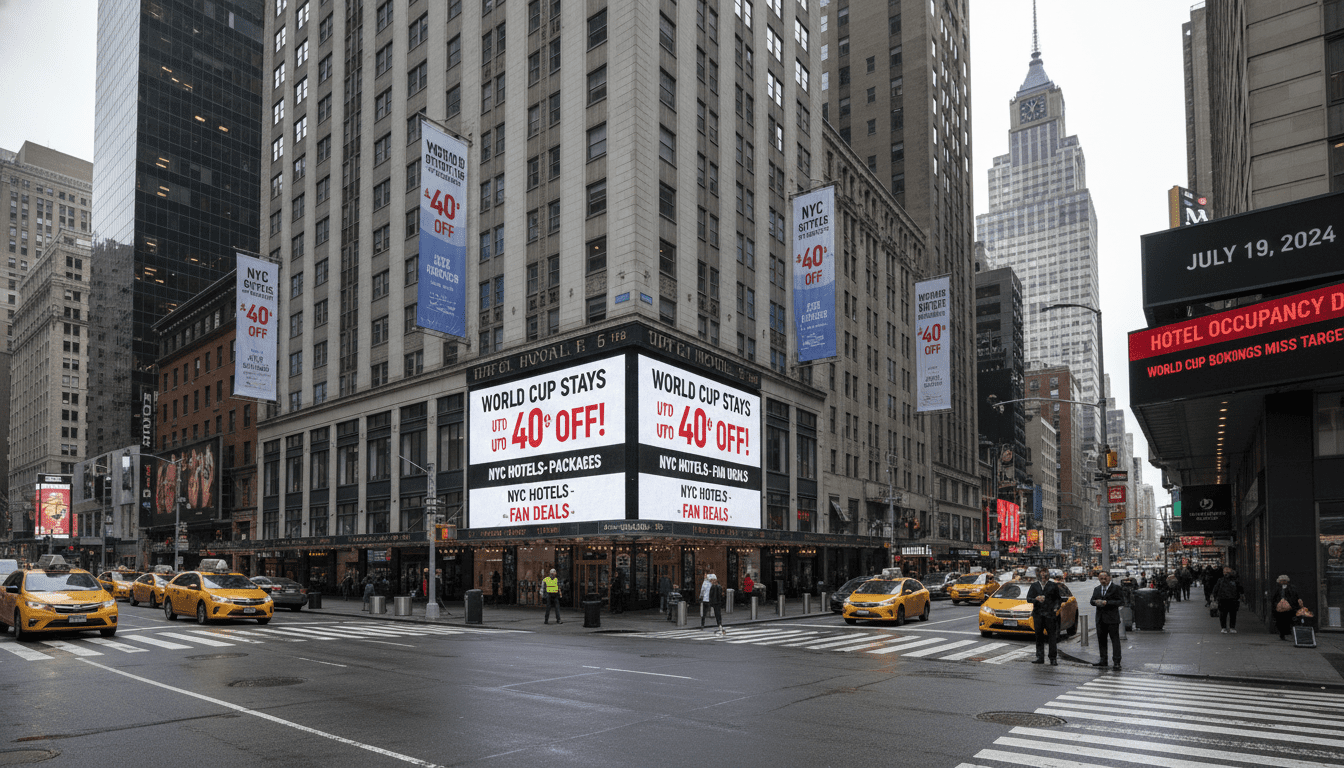
World Cup hotel bookings slump in New York despite early price spikes
A mid-June correction in room rates has left World Cup hotel bookings in New York far below earlier expectations as the city braces for the 2026 tournament.
Hilton Midtown cuts rates as demand falters
The city’s largest hotel, the Hilton Midtown, which has nearly 2,000 rooms and sits a short walk from Central Park and Times Square, briefly listed rooms for more than $840 for June 13, the date of Brazil vs. Morocco. As the tournament start approaches, the hotel has sharply reduced prices, now offering entry-level rooms for about $409 plus taxes and fees, underscoring a broader pullback across high-end inventory. Hoteliers who anticipated a surge tied to marquee matches are confronting the reality that earlier rate spikes did not translate into sustained bookings.
Local hotel association reports sparse fan bookings
Vijay Dandapani, chief executive of the Hotel Association of New York City, says many members report no bookings from visitors traveling specifically for the World Cup. He points to cheaper alternatives still on the market—rooms at chain properties priced well below peak levels—which suggests demand has been weaker than the industry predicted. The association’s feedback paints a cautious picture as hotels attempt to fill rooms in June and July after an already difficult year for inbound tourism.
FIFA’s bookings and economic claims under scrutiny
FIFA has promoted the 2026 World Cup as an unprecedented economic boon, claiming more than five million tickets sold and forecasting substantial GDP and tourism gains for host countries. Yet industry groups say FIFA’s early reservation of large blocks of rooms, many of which were later canceled, created a misleading signal of demand. Hoteliers say that the availability of cancellable FIFA blocks led to overly optimistic pricing and planning, forcing properties to scramble to refill inventory once those contingents were released.
Costs and ticket pricing deter international travel
High ticket prices, introduced this cycle through dynamic pricing, have emerged as a primary deterrent for many would-be international visitors, according to local industry leaders. Resale markets have pushed the cost of sought-after matches well above the face value set by organizers, often placing premium games out of reach for casual fans. The combination of expensive tickets, elevated airfares and the added burden of transport and match logistics has made attending multiple games a costly proposition for large segments of the global fan base.
Transport and visa barriers compound shortfall
Beyond hotels and tickets, ancillary travel expenses are contributing to subdued demand. Plans to charge elevated fares for special trains between Manhattan and the MetLife Stadium sparked public backlash earlier in the year and were only partially scaled back after criticism. Travel industry groups also cite tighter U.S. entry policies and a recently increased visa fee as additional obstacles that may discourage attendees from certain countries. These entry hurdles and higher transit costs have amplified concerns that the tournament will underperform in attracting the breadth of international visitors expected by some forecasts.
Analysts expect a late-stage boost if top teams advance
Market analysts are split between short-term disappointment and cautious optimism for the tournament’s later stages. Some research firms predict an overall rise in U.S. visitor numbers for 2026 and attribute a portion of that growth to the World Cup, suggesting hotels could see an uptick as knockout rounds create concentrated demand. Industry specialists describe a “two-speed” event: a modest early phase with uneven attendance during group play, followed by a surge if major footballing nations progress and their supporters travel on short notice.
Industry members are adjusting tactics in response; many have reversed minimum-stay rules and rebalanced marketing toward conventional tourists rather than relying solely on match-driven bookings. The outcome for the hotel sector will hinge in part on the tournament’s competitive trajectory and whether late-stage fixtures can generate the kind of spontaneous travel that will refill rooms and revive the hospitality bounce originally promised.
