
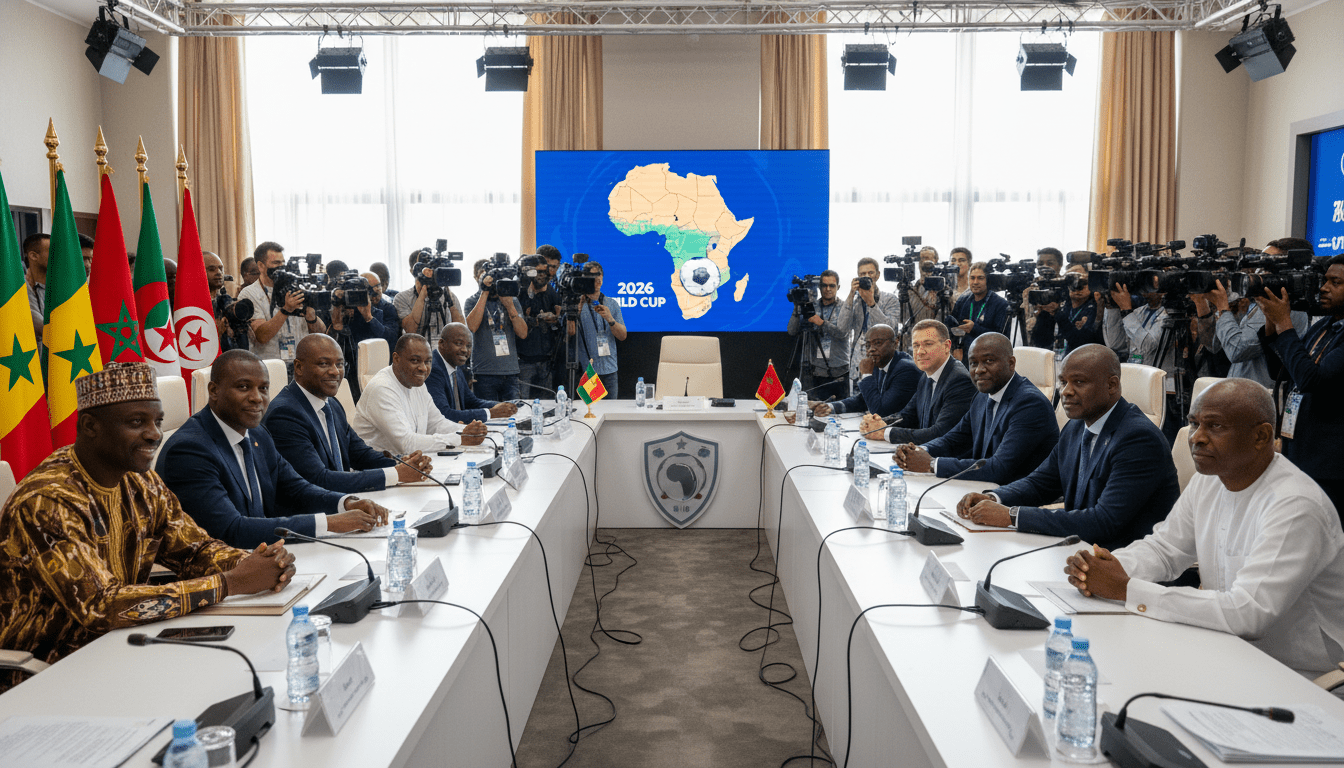
Sub-Saharan teams at World Cup 2026 face varied prospects as tournament opens June 11, 2026
Sub-Saharan teams World Cup 2026: Six nations from south of the Sahara—Senegal, Ghana, Ivory Coast, Cape Verde, South Africa and DR Congo—arrive in North America with contrasting squads, recent form and ambitions as the tournament begins on June 11, 2026.
Senegal enter the tournament carrying the highest expectations among sub-Saharan teams World Cup 2026 after a volatile domestic season and an AFCON controversy that left scars. Their squad depth, international experience and stars such as Sadio Mané and Kalidou Koulibaly make them contenders to reach the knockout phase. Coach Pape Bouna Thiaw has publicly framed the campaign as a generational opportunity and will test his side against France, Iraq and Norway in Group I. Expectations hinge on balancing star leadership with younger contributors across a demanding schedule.
Ghana adapt under new management
Ghana arrive after a late coaching change, with Carlos Queiroz taking charge amid mixed form and a string of poor results that prompted the switch. The Black Stars remain a familiar World Cup presence and will look to forward Antoine Semenyo to spearhead their attack despite the absence of injured talisman Mohammed Kudus. Group L’s draw—featuring England, Croatia and Panama—creates a difficult pathway, but Ghana’s history of deep tournament runs gives supporters cautious optimism. Tactical cohesion and defensive solidity will determine whether they can progress beyond the group phase.
Ivory Coast return after a long rebuild
Ivory Coast make their first World Cup appearance since 2014 following a deliberate rebuild that has delivered two Africa Cup of Nations titles and a talented, youthful core. Players such as Yan Diomande, Simon Adingra and Amad Diallo represent a new attacking thrust that blends pace and technical ability. Manager Emerse Fae has pushed an ambitious message, suggesting the Ivorians can aim high in a group with Curacao, Ecuador and Germany. Consistency and experience in closing out tight matches will be central to any deeper run.
Cape Verde prepare for historic debut
Cape Verde arrive as debutants and one of the tournament’s smallest nations by population, relying heavily on a diaspora of professional players to punch above their weight. Their manager Bubista has emphasised a mindset shift and belief as the foundation of recent progress, with quarterfinal appearances at AFCON underscoring the nation’s rapid rise. Drawn alongside Spain, Uruguay and Saudi Arabia, Cape Verde face a daunting group but can play without expectation pressure and with tactical discipline. The challenge will be converting competitive performances into points against top-tier opponents.
South Africa lean on domestic champions
South Africa return to the World Cup with a squad that features a core of players from domestic powerhouses Mamelodi Sundowns and Orlando Pirates, clubs that dominated continental competition this season. Coach Hugo Broos has cited club form and experience as positives as Bafana Bafana prepare to face Mexico, Czech Republic and South Korea in a demanding pool. The side’s pace and recent improvements in structure could produce a surprise, yet breaking through from a crowded group will require clinical finishing and compact defending. Early form in the opening fixture against co-host Mexico will set the tone for their campaign.
DR Congo mark a long-awaited comeback
DR Congo return to the finals for the first time since 1974, completing a dramatic qualification that included high-profile wins over Nigeria and Cameroon in the African path. The squad, composed largely of Europe-based players and a few homegrown talents, brings a mix of physicality and athleticism that can unsettle opponents. Coach Sébastien Desabre has framed this appearance as a moment of national pride and a chance to showcase a new generation on football’s biggest stage. Progress beyond the group will depend on disciplined defending and seizing scarce scoring opportunities.
The six sub-Saharan teams travel to North America with differing prospects shaped by injuries, managerial changes, youth infusion and domestic momentum. Each nation carries distinct narratives—Senegal’s pressure to deliver, Ghana’s tactical reset, Ivory Coast’s youthful promise, Cape Verde’s debuting belief, South Africa’s domestic core and DR Congo’s long-awaited return. How these stories unfold over the opening matches will determine whether any of the sub-Saharan sides can break new ground at the World Cup 2026.
As the tournament kicks off on June 11, 2026, all eyes will be on early results that can build momentum or expose weaknesses, and the performances of these sub-Saharan teams will play a significant role in shaping perceptions of African football on the global stage.
