
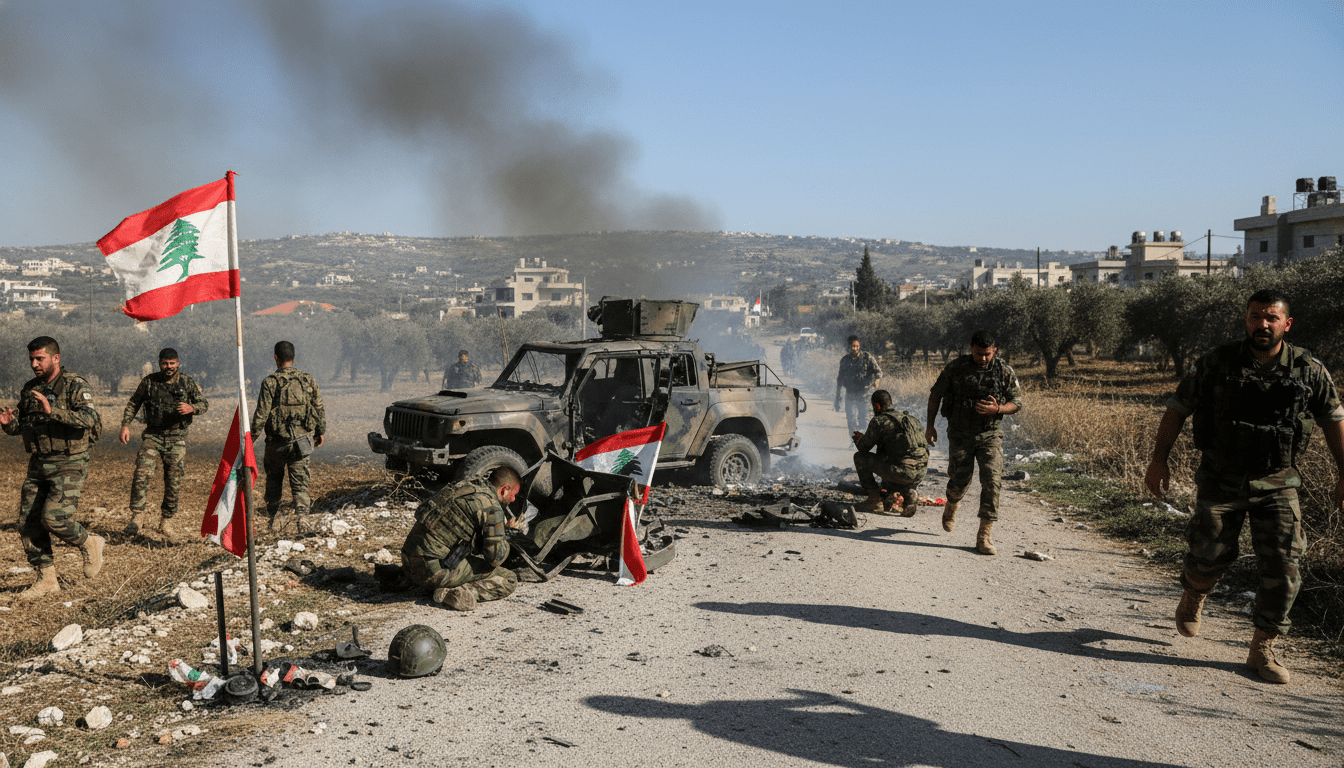
Israeli strike in south Lebanon kills two officers and a soldier on Khardali‑Nabatieh road
Israeli strike on June 6, 2026 hit a military vehicle on Khardali‑Nabatieh road, killing two Lebanese officers and a soldier, as Israel cited Hezbollah threats.
A strike on June 6, 2026, hit a Lebanese military vehicle on the Khardali‑Nabatieh road in southern Lebanon, killing two officers and one soldier, the Lebanese army said. The incident occurred amid escalating cross‑border violence that has already caused widespread death and displacement across Lebanon. The phrase “Israeli strike in south Lebanon” captures the immediate topic as both sides trade accusations over targets and intentions.
Strike site and immediate casualties
The Lebanese army confirmed that three members of its forces were inside the vehicle when it was hit by the strike on the Khardali‑Nabatieh road. The deaths were reported on the day of the attack and were described by officials as a direct hit on a military transport in the south of the country. Local medical sources and army spokespeople reported the identities only in rank, saying the victims were two officers and a soldier.
Residents in nearby villages reported smoke and loud explosions after the strike, and emergency crews moved to the scene amid continuing security concerns. The road links populated areas in Nabatieh governorate and has been exposed to recurrent exchanges since the current cross‑border campaign began. Access to some sites remains restricted because of ongoing hostilities and the risk of follow‑on strikes.
Israeli military account of the operation
The Israeli military said it targeted the vehicle after identifying what it described as a threat to its forces in the area. In an operational statement, Israeli officials said they had received “indications” that Hezbollah fighters were preparing to fire from the location and that the vehicle was linked to that potential threat. The military framed the strike as a precautionary measure intended to neutralize an imminent danger to its troops.
Israeli authorities have repeatedly said they will act on indications of planned attacks along the border, a stance that has raised questions from international observers about verification and proportionality. The armed group Hezbollah, which operates across southern Lebanon, has been central to the confrontation with Israeli forces, and each side has justified its actions as defensive in nature.
Lebanese army role and official responses
The Lebanese army said the vehicle hit was part of its forces, noting that in general it has not been a participant in the fighting between Hezbollah and Israel. Lebanese commanders have sought to maintain a separation between state military units and non‑state actors, even as their forces operate in areas where Hezbollah maintains a presence. The strike intensifies pressure on the Lebanese army to clarify rules of engagement and protect its personnel amid a complex battlefield.
Authorities in Beirut called for an investigation into the circumstances of the strike and stressed the army’s status as a national institution not formally engaged in the conflict. Political leaders and military officials urged restraint and demanded explanations from all parties involved, reflecting concern about the risks of a wider, more direct confrontation between state forces and Israeli operations.
Human cost and displacement across Lebanon
The strike adds to a mounting civilian and military toll across Lebanon, where more than 3,500 people have been reported killed and over 10,000 injured since the outbreak of the wider hostilities. Large swaths of southern Lebanon have been devastated by repeated bombardments, and the capital, Beirut, has also been struck on multiple occasions. Nearly one million people are estimated to be displaced within Lebanon, seeking shelter away from front‑line towns and villages.
Humanitarian agencies operating in the region warn that damage to infrastructure and constrained access are complicating relief efforts and medical care. Hospitals have reported surges in casualties while facing shortages of supplies and safe corridors for evacuation, intensifying the crisis for civilians caught in the fighting.
Security implications for the border region
Analysts say the killing of Lebanese military personnel on a southern route heightens risks of miscalculation along the Israel‑Lebanon frontier. The presence of national army units, non‑state armed groups and Israeli forces in close proximity has created a complex operational environment in which incidents can escalate quickly. Each strike or return fire raises the prospect that localized clashes could broaden into sustained exchanges across the border.
Military planners on all sides face difficult decisions about how to balance tactical objectives with the political and humanitarian costs of expanded operations. Diplomatic actors have expressed concern that continued strikes on or near state forces increase the likelihood of unintended escalation and complicate prospects for de‑escalation.
Final paragraph
The deaths of two officers and a soldier on June 6, 2026 underscore the fragile security picture in southern Lebanon and the broader humanitarian crisis gripping the country. As investigators seek to establish the precise sequence of events on the Khardali‑Nabatieh road, regional and international mediators are likely to intensify calls for restraint to prevent further civilian and military losses.
