
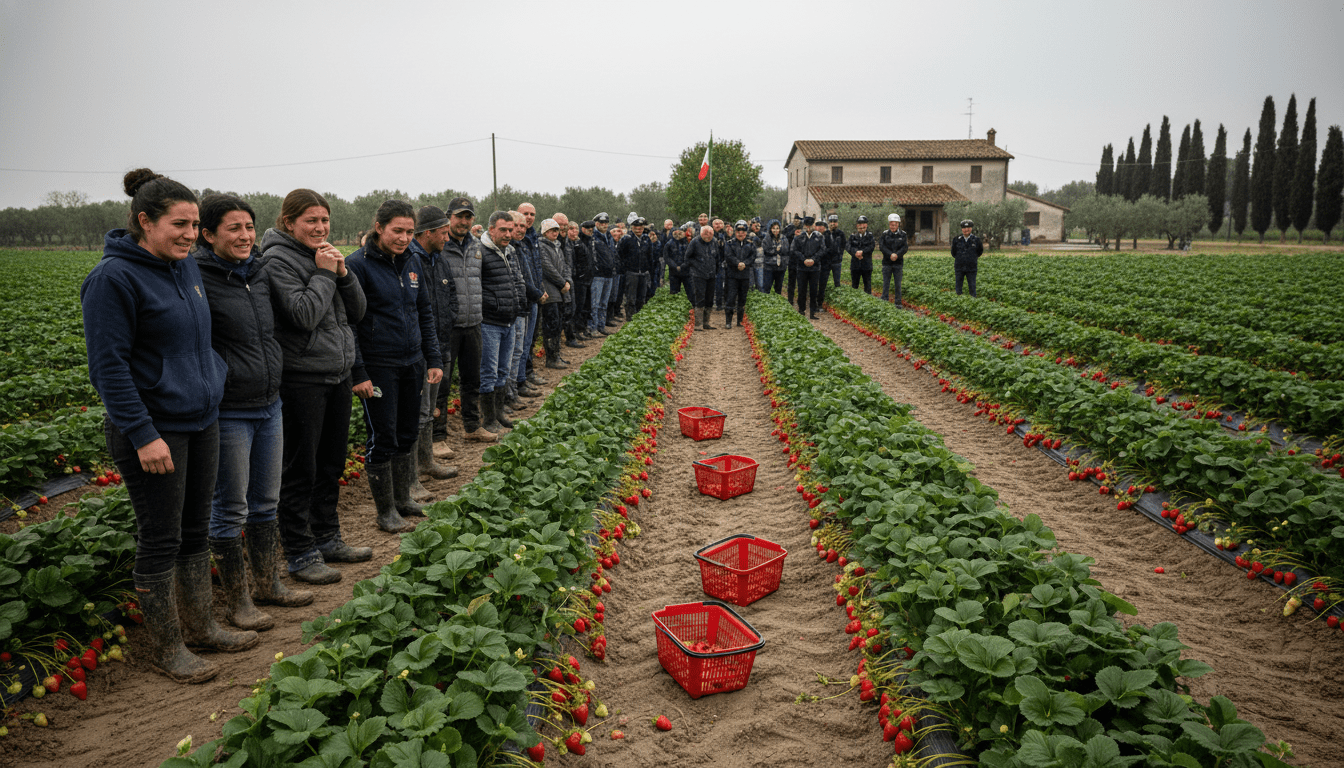
Brutal killing of four seasonal strawberry pickers in Italy raises supply-chain alarm
Four seasonal workers found burned in a vehicle; investigation probes links to exploitation in Italian agriculture and strawberry supply for European markets.
The murder of four strawberry pickers in Italy has shocked local communities and renewed scrutiny of labour conditions in European fruit production. Authorities discovered the bodies burned inside a vehicle, and investigators have opened a criminal probe into the circumstances of the killings. The victims were seasonal workers engaged in strawberry harvesting, a sector that relies heavily on migrant labour and precarious employment arrangements.
Scene of the crime and initial findings
Local police found the burned vehicle during a routine patrol, prompting an immediate criminal investigation. Forensic teams are examining the scene to establish time and cause of death, while prosecutors have launched inquiries into whether the killings were targeted or the result of escalating violence. Officials have not released the identities of the victims pending family notifications and further investigative steps.
Victims’ status and working arrangements
Preliminary information indicates the four were employed as seasonal pickers, a common role in southern Italy’s agricultural regions during the strawberry season. Such workers frequently live in informal or temporary accommodation and are paid piece rates, conditions that advocacy groups say increase vulnerability. Investigators are probing employer records, pay slips, and accommodation arrangements to reconstruct the victims’ last days.
Labor exploitation in the strawberry sector
The case has highlighted long-standing concerns about exploitation in parts of Italy’s agricultural industry, where organized networks sometimes mediate recruitment and housing. Workers often face irregular contracts, wage arrears, and crowded living conditions that reduce oversight and heighten risks. Labor rights organizations argue that systemic enforcement gaps enable abusive practices and leave seasonal workers exposed to violence and criminal exploitation.
Supply-chain connections to European markets
Strawberries picked in affected regions are routinely destined for domestic and European markets, including Germany, raising questions about downstream accountability. Retailers and distributors increasingly face pressure to ensure ethical sourcing and traceability across complex supply chains. Consumer groups and importers may now demand clearer information on working conditions and certifications for produce sold in supermarkets.
Official and union responses
Local authorities have called for a swift and thorough investigation, while regional politicians expressed concern over the violence and its implications for rural safety. Trade unions and migrant worker organizations demanded immediate protective measures for seasonal labourers and urged authorities to investigate employer practices. Calls for emergency inspections of farms and temporary housing sites have been voiced by several advocacy groups.
Potential legal and policy ramifications
The killings could prompt renewed policy debates over labour inspections, recruitment practices, and housing standards for seasonal workers. Lawmakers and regulators may face pressure to strengthen oversight of agri-food supply chains and to allocate resources for enforcement in rural areas. The incident is likely to fuel discussions about corporate responsibility among companies that source fruit from regions where enforcement is weak.
The investigation remains ongoing and authorities have warned against speculation while forensic and legal work continues. Families of the victims and migrant support groups are awaiting further information, and local communities are calling for answers and justice. The brutal deaths of four seasonal strawberry pickers have cast a harsh light on the human cost behind parts of Europe’s fresh fruit supply and underscored the urgency of addressing labour vulnerabilities in the sector.
