
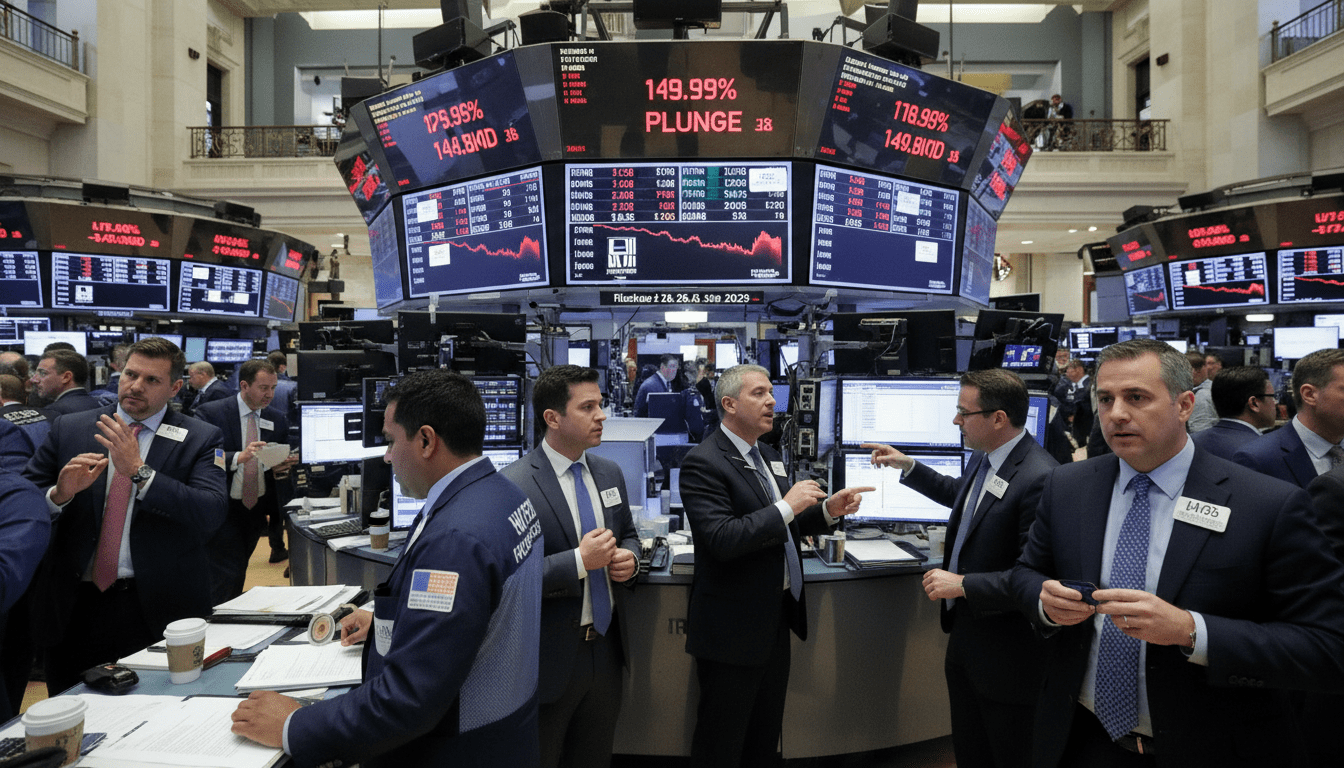
Wall Street sell-off jolts markets after strong U.S. jobs report and renewed rate fears
Strong U.S. jobs data triggers Wall Street sell-off, sending tech and semiconductor stocks sharply lower as rate fears, inflation and geopolitical risks rise.
A surprisingly strong U.S. jobs report for May set off a broad Wall Street sell-off on Friday, June 5, 2026, as investors scaled back expectations for near-term Federal Reserve rate relief. The Dow Jones fell 1.4 percent to 50,867, the S&P 500 dropped 2.6 percent to 7,384 — ending a nine-week winning streak — and the Nasdaq tumbled 4.2 percent to 25,709. The employment release showed 172,000 new jobs and an unchanged unemployment rate of 4.3 percent, a combination traders interpreted as a sign the Fed may keep policy tighter for longer.
Strong U.S. jobs report reignites rate concerns
The Labor Department’s May payrolls surprised the market with gains roughly double many analysts’ expectations, reviving concern that the economy is resilient enough to delay Fed easing. Market pricing shifted rapidly, with traders assigning nearly a 43 percent probability to a rate increase by December. That recalibration undercut the growing optimism that had supported equities through the prior nine weeks of gains.
Investors and strategists said the data narrowed the runway for rate cuts and elevated the importance of upcoming inflation readings and Fed commentary. In this context, risk assets — especially those priced for continued monetary relief — moved sharply lower as positions were trimmed.
Major indices suffer steep losses
Friday’s session produced some of the heaviest single-day percentage declines since the earlier rebound, with the S&P 500 snapping its nine-week winning streak. The Dow’s 1.4 percent decline contrasted with a deeper slide in the Nasdaq, reflecting the pressure on growth-oriented technology names. Trading volumes rose as markets adjusted to the new rate outlook.
The S&P 500’s pullback erased short-term gains and widened the gap between cyclical and defensive sectors, with energy and financials showing relative strength versus technology and consumer discretionary areas that had led the prior advance.
Technology and semiconductors hit hardest
Technology and semiconductor stocks bore the brunt of the sell-off, reversing much of the recent rally. The Philadelphia Semiconductor Index plunged in its largest one-day drop since March 2020, erasing more than $1 trillion in market value across the sector as investors rotated out of overbought positions.
Nvidia shares fell 6.2 percent, while peers including Intel, Micron, AMD and Broadcom tumbled between about 7.9 and 13.3 percent. Market strategists described the moves as a wave of profit-taking after a concentrated run-up, rather than an immediate change in the underlying fundamentals of chipmakers.
Crypto and index developments add to pressure
Cryptocurrency-linked equities also slid, with Coinbase and MicroStrategy losing roughly seven percent apiece as Bitcoin fell about 4.1 percent. The drop in digital-asset prices contributed to selling across riskier assets and amplified volatility in equity markets during the session.
Separately, S&P Global said it would not adjust criteria for its major indices, a decision that effectively rules out a rapid inclusion of SpaceX into the S&P 500 following a proposed public listing. The clarification removed a potential source of speculative buying and underscored the broader rebalancing underway.
Earnings create divergent stock moves
Corporate earnings and guidance produced pronounced stock-specific moves that intensified market dispersion. Activewear maker Lululemon plunged about 8.6 percent after lowering its full-year profit forecast and warning that second-quarter results would miss Wall Street estimates, prompting swift investor reappraisal.
By contrast, Cooper Companies rallied about 8.6 percent after reporting second-quarter results that exceeded analyst expectations, illustrating how earnings beats and misses continue to drive idiosyncratic performance amid the broader sell-off.
Geopolitical risks and inflation outlook complicate markets
Beyond domestic data and corporate results, rising concerns over the conflict in Iran and the prospect of a sustained blockade of the Strait of Hormuz weighed on sentiment. Traders warned that continued disruption to shipping through the strait could push energy prices higher, feeding through to global inflation and complicating Fed policy decisions.
With inflation sensitivities elevated, policymakers and investors must balance a still-tight labor market against geopolitical shocks that could reignite price pressures. That uncertainty has increased the premium placed on near-term economic releases and central bank communications.
Market participants said the session reflected a convergence of profit-taking, macro recalibration and geopolitical anxiety after a period of concentrated gains. With Fed expectations repriced and volatility heightened, investors will be closely watching forthcoming inflation prints, employment data and any guidance from the central bank for clues on the path of interest rates and market direction.
