
Wadephul Mexico Visit Follows Germany’s Defeat at UN General Assembly
Germany’s foreign minister Johann Wadephul began his Wadephul Mexico visit with a pilgrimage to the Basilica of Our Lady of Guadalupe, arriving the day after Germany suffered a notable loss in the United Nations General Assembly vote for a Security Council seat. The visit, which includes talks with Mexican officials, is being framed as a move from multilateral disappointment toward reinforced bilateral and economic ties.
Wadephul seeks a blessing after UN setback
Arriving in Mexico City immediately after the UN vote, Wadephul stopped at the basilica and received a priest’s blessing, a brief moment screened as personal solace following the diplomatic defeat. Photos of the gesture circulated with his later public appearances, underlining a symbolic reset as he transitioned from multilateral campaigning to state-to-state engagement. The scene offered a softer image than the stark results in New York and marked the start of his official program in Mexico.
Public reaffirmation of support for the United Nations
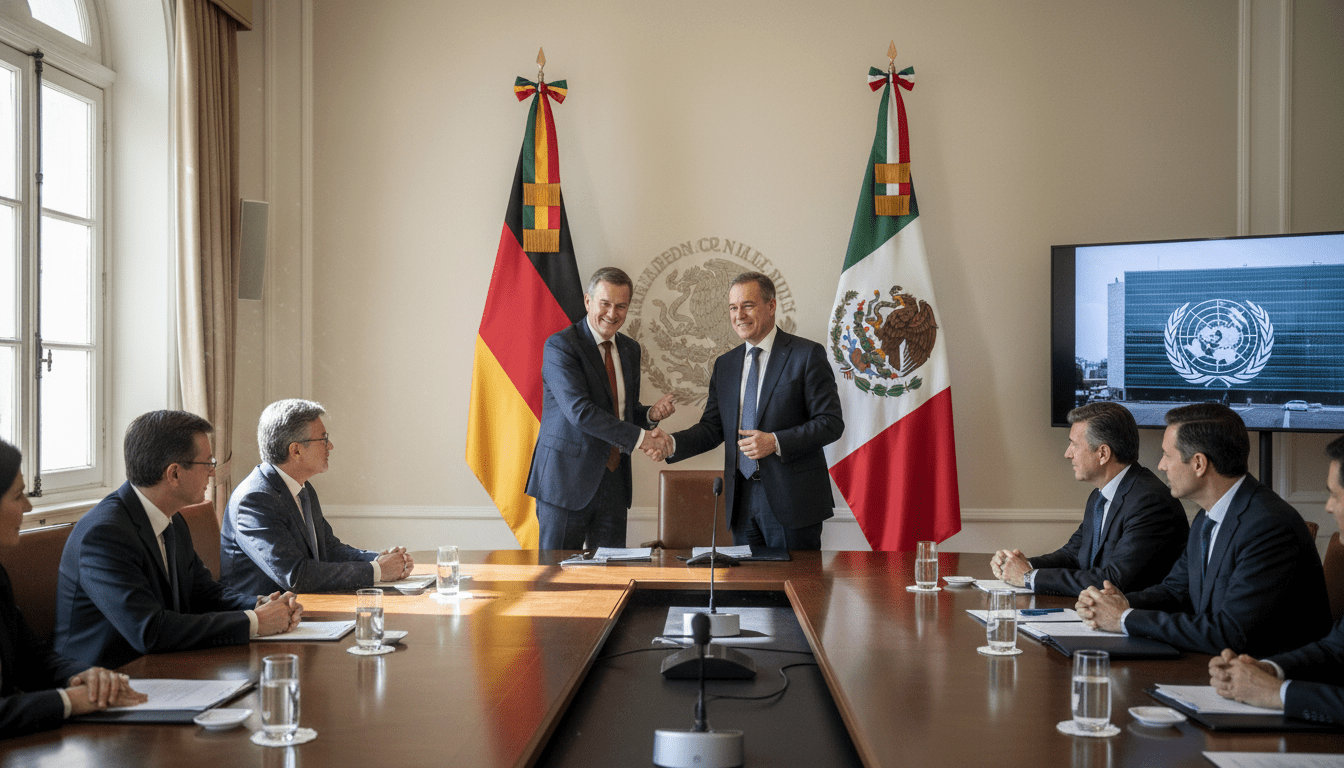
In a joint press appearance with Mexican Foreign Minister Roberto Velasco Álvarez, Wadephul reiterated Germany’s commitment to the UN as the foremost institution for crisis resolution. He resisted calls from some domestic voices to reconsider financial contributions to the organization, saying budget decisions rest with Germany’s legislature but advocating continued engagement. The public declaration sought to separate national disappointment over the vote from Berlin’s broader multilateral strategy.
Bilateral diplomacy takes priority as bilateral visit unfolds
Wadephul’s itinerary emphasized pragmatic, bilateral topics that can move forward despite the New York outcome, reflecting an effort to pivot quickly from reputational damage to actionable cooperation. Officials highlighted longstanding economic connections and the need to translate trade ties into deeper political coordination. The visit revives a pattern of German foreign ministers periodically reconfirming ties in Latin America after short-term diplomatic setbacks abroad.
Economic groundwork: German industry in Mexico
German companies count more than 2,000 operations in Mexico, making the country Germany’s largest trading partner in the Americas after the United States, officials noted during the visit. The modernized Global Agreement between the European Union and Mexico, signed at the end of May, is being presented in Mexico City as an opportunity to reduce tariffs and improve legal certainty for investors. For German firms, Mexico serves not only as a market but also as an industrial base with access to North American value chains under USMCA rules.
Mexico’s strategic balancing between EU and US interests
Mexican officials framed the enhanced EU ties as a complement rather than a replacement for deep economic links to the United States, emphasizing additional options rather than a realignment. Mexico’s economy remains heavily dependent on exports to the U.S., and Washington’s leverage on migration and security matters persists. Nevertheless, Mexican authorities argue that diversifying partnerships with Europe can strengthen their negotiating position and attract broader investment and technology transfer.
Berlin’s domestic debate over UN strategy continues
Back in Germany, the scale of the General Assembly defeat has provoked scrutiny within political circles and the foreign ministry, with opponents questioning the campaign and some suggesting a reassessment of priorities. Wadephul’s public posture in Mexico—reaffirming support for the UN and urging continued engagement—appears calculated to calm internal debate while sticking to the government’s multilateral commitments. His message was that diplomatic setbacks merit review but not abandonment of long-term institutions.
Visit aims to translate economic ties into political capital
Officials on both sides stressed that recent trade and framework agreements create a platform for deeper political coordination on global issues, from supply chains to international security cooperation. Mexico described the Global Agreement as a package that includes political consultation and a roadmap for regular strategic dialogue, signaling ambitions beyond tariff reductions. For Germany, strengthening bilateral links offers a way to maintain influence and partnerships even when multilateral bids fall short.
Germany will not replace the loss at the United Nations by a single trip, but Wadephul’s Mexico visit underlines a pragmatic approach: shore up economic relations, deepen political dialogue, and show that German diplomacy can pivot quickly to partnerships that matter on the ground.
