
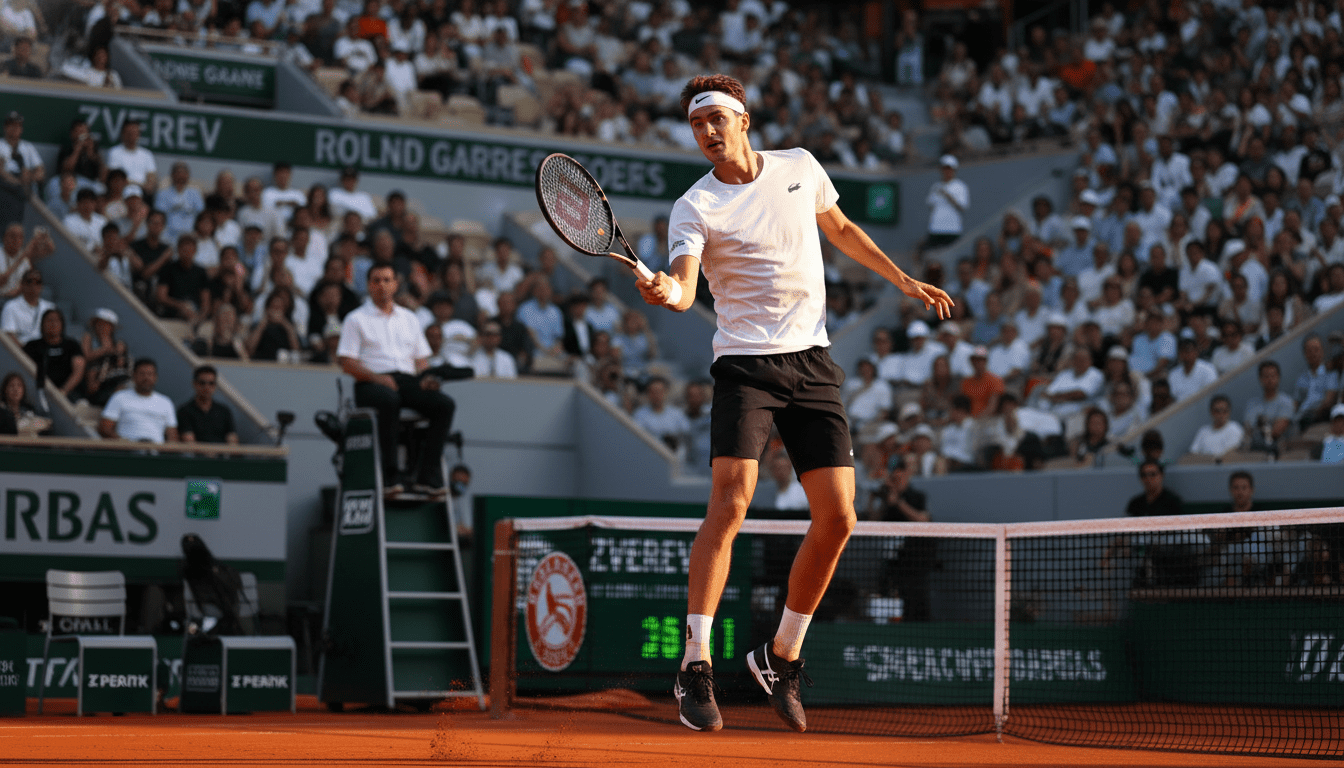
Alexander Zverev French Open: Calm Favorite Set to Face Jakub Mensik in Roland Garros Semifinal
Alexander Zverev French Open: Zverev reached the Roland Garros semifinal and will meet Jakub Mensik, aiming for his first Grand Slam title after a composed quarterfinal win.
Alexander Zverev arrives at the Roland Garros semifinals with the look of a player who has done this before and is singularly focused on the prize. At 29, Zverev has again navigated Paris to reach the last four, where he will face 20-year-old Czech Jakub Mensik for a place in the final. The German’s composed performance in a straight-sets quarterfinal victory has elevated expectations that this could be his best chance yet to capture a first Grand Slam. With the other half of the draw yielding two Italians, the path to a title now appears unusually favorable.
Semifinal matchup confirmed: Zverev vs. Mensik
Jakub Mensik presents a youthful, powerful challenge that contrasts with Zverev’s veteran poise and tactical variety. Mensik’s rise to the semifinal rounds has been among the tournament’s storylines, but his experience at the major level remains limited compared with Zverev’s repeated deep runs. Zverev’s quarterfinal win over Spanish teenager Rafael Jodar underlined his ability to manage tense moments and close matches without allowing nerves to dictate play. The upcoming clash will test whether Zverev’s measured approach can neutralize Mensik’s aggressive shotmaking.
Routine and restraint: Zverev downplays the moment
Off-court, Zverev has emphasized a tight daily routine that keeps distractions at bay and preserves energy for match day. He has repeatedly described simple habits—meals, treatment, light leisure activities and rest—that help him maintain a steady mindset amid tournament pressure. That steadiness has translated into terse, economical press appearances and a refusal to let external narratives inflate his sense of occasion. By framing each match as a continuation of the same process, Zverev aims to reduce the psychological strain that often accompanies breakthrough opportunities.
On-court adjustments underline a maturing game
Tactically, Zverev’s Roland Garros campaign has shown subtle but significant changes from earlier seasons, with a willingness to step into points and close the court more often. Rather than retreating deep behind the baseline, he has mixed flatter drives and timely net approaches to shorten rallies when necessary. Against Jodar he calibrated risk and reward, attacking when openings appeared and forcing errors from a younger opponent prone to inconsistency. Those choices reflect a player who has layered experience over natural power, trading raw aggression for smarter deployment of his strongest weapons.
Debate over pressure: Outside voices raise questions
Not all observers accept Zverev’s public calm as evidence of internal confidence, and criticism has come from prominent figures in the sport. Some commentators argue that the weight of expectation—being one of the best players without a major title—could still disrupt his final push. The debate centers on whether accumulated experience will carry him through or whether the unique pressure of a Grand Slam opportunity will expose vulnerabilities. Zverev and his camp, however, continue to insist that concentration on preparation and fundamentals will define the outcome, not outside commentary.
Potential final scenarios and tournament dynamics
The other semifinal, featuring two Italian contenders, sets up a potential final that many see as favorable to Zverev should he advance. With top seed exits reshaping the draw earlier in the fortnight, the field now includes several younger players whose rapid runs have altered pre-tournament projections. If Zverev reaches the championship match, he would enter as the experienced favorite against comparatively less proven opponents in major finals. That positioning shifts some spotlight away from immediate matchup threats and onto Zverev’s capacity to seize the moment.
Zverev’s run in Paris has been defined by a quiet efficiency and a refusal to be drawn into grand narratives before the job is done. He has repeatedly returned focus to his own preparation rather than speculation about legacy or labels, and his tactical evolution suggests he is thinking beyond pure power toward more complete match management. As the semifinal approaches, the match will reveal whether this approach is sufficient to erase lingering doubts and deliver the first Grand Slam title that has eluded him.
If Zverev can convert this opportunity, the victory would alter the conversation about his place in the sport and close a long-running chapter in his career. Regardless of the result, his form in Paris has underscored both a maturation in play and a commitment to the routines that have steadied him through high-pressure moments. The semifinal against Mensik will be the clearest indicator yet of whether those elements combine into a championship performance.
