
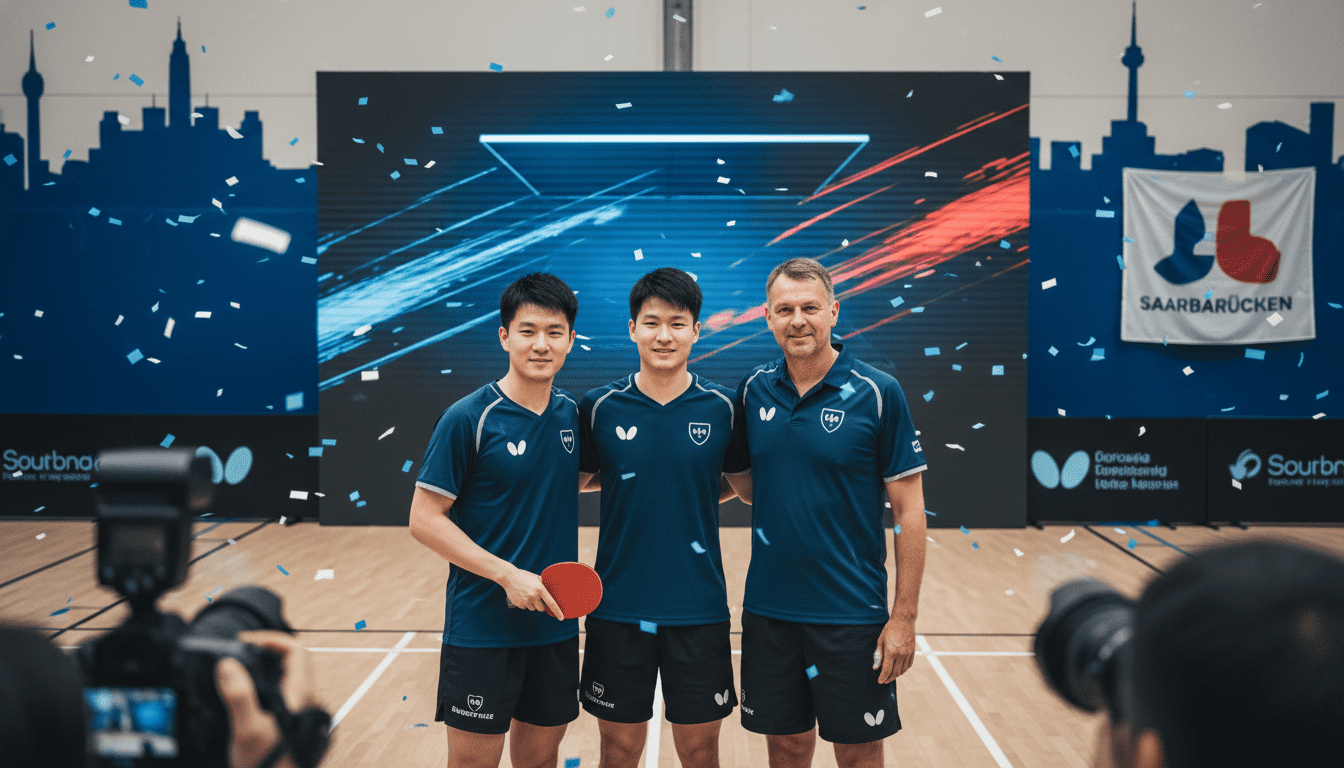
Borussia Düsseldorf signs Olympic champion Fan Zhendong to challenge Saarbrücken’s dominance
Borussia Düsseldorf has secured Chinese Olympic champion Fan Zhendong in a high-profile move to regain supremacy in German and European table tennis, aiming to counter rival 1. FC Saarbrücken’s recent treble.
Borussia Düsseldorf moved decisively this season to sign Fan Zhendong, the 29-year-old Chinese Olympic champion, as part of a broader effort to restore the club’s winning momentum. The transfer follows a year in which Saarbrücken captured the Bundesliga title, the national cup and the Champions League, prompting Düsseldorf to respond with an aggressive recruitment drive. Club officials framed the acquisition as both a sporting necessity and a strategic signal that Düsseldorf intends to remain a central force in European table tennis.
Borussia Düsseldorf completes signing of Fan Zhendong
Borussia’s management confirmed that they secured Fan after an intense period of talks and persuasion, leveraging personal ties and the club’s standing in the sport. Timo Boll, the club legend and now ambassador, is reported to have played a personal role in convincing Fan that Düsseldorf offered the right challenge. Club statements stressed that Fan will join a roster built to compete at the highest level domestically and in continental competition.
Saarbrücken’s treble reshaped the domestic balance
- FC Saarbrücken’s sweep of the Bundesliga championship, the DTTB Cup and the European Champions League last season altered the pecking order in German table tennis. The Saarländern’s dramatic recruitment and on-court success forced rivals to reassess their strategies, and Fan’s temporary stint with Saarbrücken last year was a turning point. That club’s ability to attract and integrate elite international talent underscored how quickly competition for trophies can shift in the modern game.
Manager Andreas Preuß frames the signing as long-term planning
Andreas Preuß, Borussia’s manager, acknowledged disappointment at recent results but emphasized a measured response rooted in planning rather than panic. He said the club had been contemplating structural changes and that pursuing Fan was part of a deliberate strategy to rebuild competitive depth. Preuß rejected the notion that Düsseldorf was merely weakening rivals by taking their players, insisting the move reflected legitimate sporting ambitions and careful roster construction.
Timo Boll’s influence and squad dynamics
Timo Boll’s role as club ambassador and friend to Fan Zhendong emerged as a decisive human factor in the transfer. Boll, who finished his playing career recently and remains a central figure in Düsseldorf’s identity, provided a persuasive bridge between the club culture and Fan’s personal preferences. Sporting directors noted that trust and chemistry—alongside financial terms—were central to securing the Olympic champion’s commitment.
A more open Bundesliga and tighter European field
The incoming combination of Fan with established names such as Dang Qiu, Anton Källberg and Kanak Jha makes Düsseldorf stronger on paper, but competition will be fierce. Saarbrücken has retained or attracted top-ranked players, including world-class contenders, and other German clubs like Ochsenhausen have shown they can claim titles as well. Preuß conceded he does not expect Düsseldorf to be automatic favorites next season, warning that the forthcoming campaigns will feature closely contested matches and tactical battles across competitions.
Wider context: German clubs and the national title ledger
The scramble around high-profile transfers reflects a broader evolution in German sports, where historical dominance is increasingly challenged across disciplines. Düsseldorf’s bid to add to its long list of domestic and international trophies comes against a backdrop where other clubs and sports have amassed notable title counts. Executives say the landscape demands more proactive roster planning and investment if traditional powers are to preserve their standing.
The signing of Fan Zhendong marks a clear turning point for Borussia Düsseldorf: it signals intent, raises expectations and deepens one of German table tennis’ fiercest rivalries. With both domestic and European crowns up for grabs again, the coming season promises intensified competition and a string of marquee encounters that will test whether Düsseldorf’s new configuration can translate star power into silverware.
