
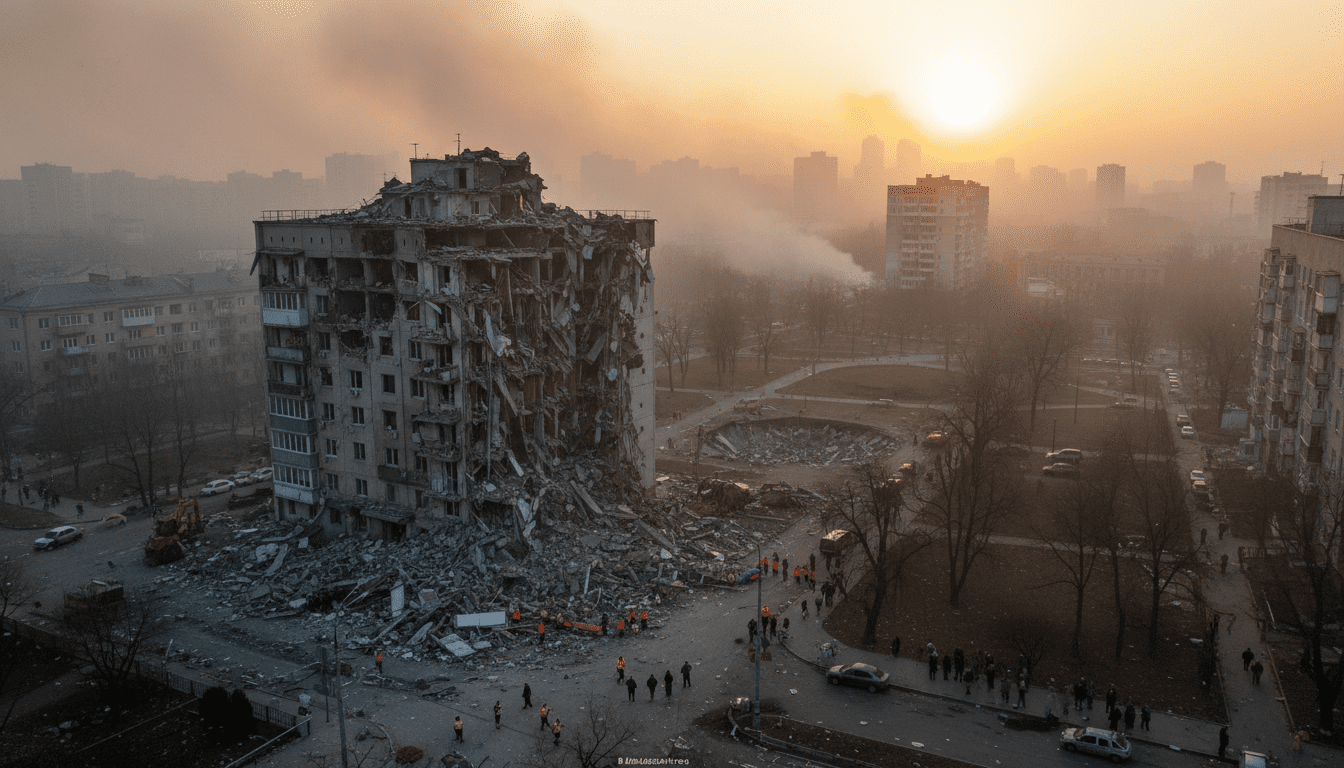
Russian attack on Kyiv kills at least four as nationwide strikes leave 11 dead
Russian attack on Kyiv and other Ukrainian cities on June 2, 2026 left at least 11 dead and more than 100 injured, with a collapsed apartment building and widespread infrastructure damage.
Kyiv struck in heavy overnight barrage
The Ukrainian capital Kyiv was hit by a heavy Russian attack in the early hours of June 2, 2026, producing loud explosions across the city and dense smoke over several neighborhoods. Mayor Vitali Klitschko reported that at least four people were killed in Kyiv and 58 were wounded, 40 of whom remain hospitalized, including two children.
Authorities said air defenses faced a large-scale assault that combined ballistic missiles, cruise missiles and swarms of attack drones, and Kyiv experienced multiple fires and damaged buildings during the overnight strikes. Emergency crews worked through the morning to extinguish blazes and search for survivors amid damaged streets and disrupted services.
Collapsed residential tower and ongoing rescues
A multi-story apartment block in Kyiv collapsed following a direct hit, rescuers and local officials reported, raising fears that residents could be trapped beneath the rubble. Teams from city emergency services and volunteers deployed heavy equipment and sniffer dogs to find survivors while cordons were set up around unstable structures.
Firefighters and medics treated dozens of injured people at improvised triage points, and subway stations and air-raid shelters were used by civilians seeking safety during the attacks. Officials cautioned that casualty totals could rise as search-and-rescue operations continue and as crews gain access to damaged buildings.
Casualties and damage across multiple regions
The strikes were not limited to Kyiv: officials reported fatalities and injuries in several other cities, including Dnipro where authorities said at least five people were killed and 36 were wounded, 23 of whom are hospitalized, among them a 13-year-old girl. In Kharkiv local authorities reported at least ten people injured, and targets in Zaporizhzhia also sustained damage.
National emergency services said impacts were recorded in at least 38 separate locations across Ukraine, illustrating the scale of the attack and the wide geographic spread of the damage. Many of the reported casualty and damage figures come from Ukrainian officials and have not been independently verified.
Widespread energy outages and infrastructure strain
The assault significantly affected energy and utility networks, with Ukraine’s largest private energy provider reporting that some 140,000 customers lost power during the night. The company later said power had been restored for roughly 110,000 people, while repair crews worked under hazardous conditions; two technicians were reported injured while on duty.
Water supplies and other municipal services were disrupted in several districts, complicating rescue efforts and hampering firefighters trying to contain blazes. Officials warned residents to expect intermittent outages and urged caution around damaged electrical equipment and downed lines.
Poland raises air defenses amid cross-border concern
Poland, which borders Ukraine to the west, placed its air defenses on heightened alert in response to the attacks and scrambled military aircraft as a precautionary measure. Warsaw has periodically activated air defense systems and deployed jets when large strikes occur in Ukraine, citing the need to monitor any potential spillover effects.
NATO partners often coordinate such patrols, and Polish officials emphasized that the heightened posture was defensive and intended to protect national airspace while monitoring developments across the border. The move underscored regional concern about escalation and the security implications of intense aerial campaigns in Ukraine.
Conflicting claims from Moscow and Kyiv
Moscow reported that Ukrainian forces carried out strikes on Russian territory on the same day, including an attack on the Ilski oil refinery in Krasnodar and incidents in the Belgorod region that, according to Russian authorities, wounded a child. Russian statements also claimed that Moscow shot down 148 Ukrainian drones during the night.
Both sides presented differing accounts of the scale and targets of the attacks, and most claims from both Kyiv and Moscow could not be independently corroborated at the time of reporting. Analysts note that information in wartime environments can be fragmented and subject to rapid updates, making verification difficult.
Humanitarian and security officials in Ukraine appealed for continued vigilance, with President Volodymyr Zelenskyy urging civilians to heed air-raid warnings and stressing the importance of bolstering air defenses amid supply shortfalls. Rescue operations are ongoing and authorities said more detailed assessments of casualties and damage will follow as daylight allows.
