
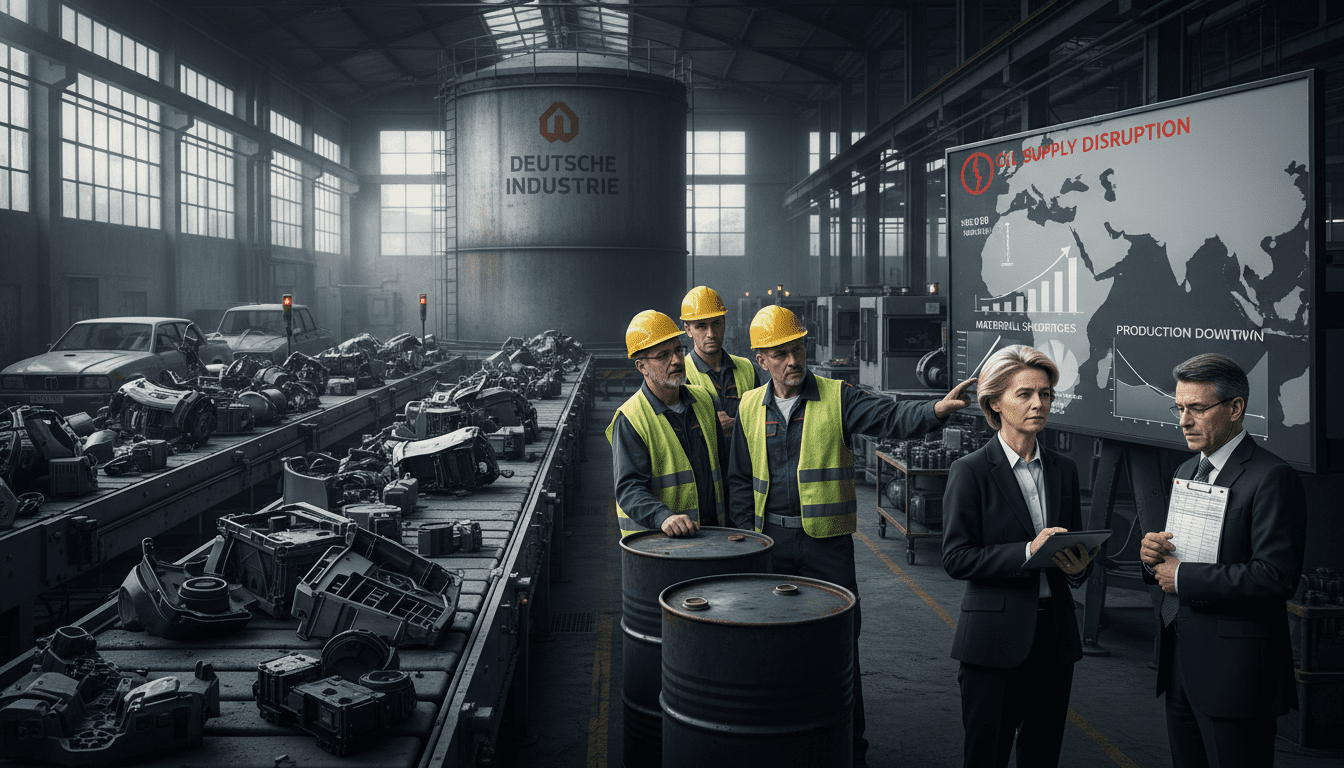
German industry reports rising material shortages as ifo survey shows 15.9% of firms affected
German industry faces rising material shortages—ifo survey: 15.9% of firms hit in May. Oil and petrochemical disruptions strain supply chains and production.
German industrial firms are reporting a sharp uptick in material shortages, according to a May survey by the Munich-based ifo Institute. The headline finding — that 15.9% of companies experienced shortages in May, up from 13.8% in April — signals a widening strain on supply chains and production. Klaus Wohlrabe, head of the ifo surveys, warned that the bottlenecks are concentrated where oil- and energy-intensive feedstocks are required and could force some manufacturers to cut output.
ifo survey finds increase above pre-2020 norms
The ifo data show the share of firms reporting input scarcities well above the long-term pre-2020 average of roughly 5 percent. The institute highlighted that the recent rise is noteworthy not only for its level but for its pace, with constrained supplies persisting across consecutive months. Analysts say the pattern suggests a structural tightening rather than a short, isolated shock.
Chemicals and plastics face biggest shortfalls
The chemical industry emerged as the sector most frequently reporting shortages, with 31.2% of firms affected in the survey. Producers of rubber and plastic goods also reported significant pressure, with 23.7% indicating shortages that risk disrupting downstream manufacturing. Those sectors rely heavily on petrochemical feedstocks and refined products, making them more vulnerable to disruptions in oil and gas flows.
Electronics and automotive show uneven exposure
Around one in four companies in the electrical industry reported supply problems, according to the survey, underlining continued fragility in component and material availability. By contrast, the automotive sector reported a relatively lower incidence of shortages at 10.0%, reflecting mixed inventory positions and differing supplier networks. Consumer-facing industries remained largely insulated in this survey wave; for example, beverage manufacturers reported no shortages while food producers recorded a 6.9% incidence.
Geopolitical drivers: Strait of Hormuz and Iran conflict
Experts point to geopolitics as a key driver of the recent shortages, noting that oil flows through the Strait of Hormuz represent a substantial share of global supply. The ifo Institute and industry observers cite the protracted Iran conflict and related maritime disruptions as having interrupted crude deliveries and refined-product logistics. Because roughly one-fifth of global seaborne oil transits the strait, sustained interference can quickly ripple through petrochemical feedstock markets and shipping schedules.
Supply-chain impact and production risk
Rising input constraints are already prompting companies to reassess production plans and inventories, with some firms indicating the prospect of temporary capacity reductions if supplies do not normalize. Price pressures are likely to follow, particularly for petrochemical-derived inputs that feed wide swaths of the manufacturing base. Smaller suppliers and highly specialized component makers face the greatest risk of operating shortfalls, which can cascade to larger assemblers and export-oriented producers.
Policy options and industry responses under discussion
In response to the survey findings, industry groups are urging rapid measures to stabilize supply and ease immediate bottlenecks, including targeted use of strategic reserves and accelerated logistics support. Officials and trade associations are also discussing medium-term steps such as supplier diversification, reshoring of critical inputs, and incentives for alternative feedstock development. Companies are increasingly turning to scenario planning, multi-sourcing and longer-term contracts to reduce vulnerability to single-route disruptions.
Outlook if oil-related disruptions continue
If the maritime and geopolitical disruptions that have affected oil and petrochemical flows persist, economists warn material shortages could intensify and broaden beyond energy-intensive sectors. Sustained constraints would raise the prospect of measurable output losses in affected industries and could feed through to higher prices for intermediate and finished goods. Market participants say the coming weeks will be decisive in determining whether the current rise in shortages is a transitory spike or the start of a longer, more disruptive phase.
German manufacturers and policymakers will be watching subsequent ifo releases and logistics indicators closely for signs of easing or escalation. The immediate challenge for companies is to manage production risks while policymakers weigh measures to secure critical inputs and maintain industrial continuity.
