
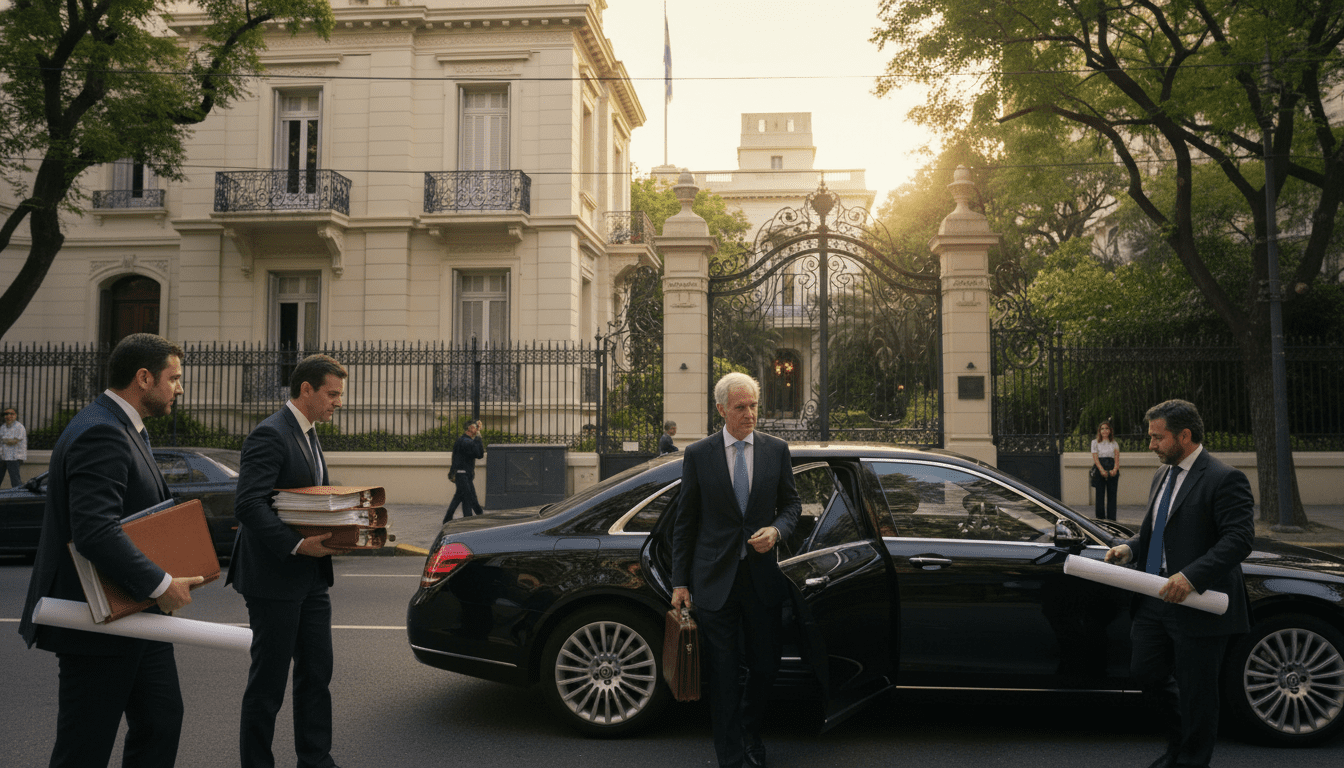
Peter Thiel Moves to Argentina, Buys Buenos Aires Villa
Peter Thiel moves to Argentina, purchasing a Buenos Aires villa as his family relocates; he cites tax, safety and AI concerns, and Argentina may offer residency.
Peter Thiel, the Silicon Valley investor and PayPal co‑founder, has purchased a villa in an upscale Buenos Aires neighborhood and moved members of his family to Argentina, according to a report by The New York Times dated May 28, 2026. The relocation includes arrangements for his children to attend school locally, signaling a tangible shift rather than a purely speculative investment. The report, citing two people familiar with Thiel’s plans, frames the move as part of a broader strategy tied to tax, safety and geopolitical concerns.
Details of the Buenos Aires Property and Family Move
The NYT report says Thiel completed the villa purchase in April and has been spending time in the Argentine capital with family members. Local enrollment of his children suggests a semi‑permanent presence rather than an extended visit, insiders told reporters. Property registries and local press have not publicly detailed the purchase price or precise address, reflecting the buyer’s preference for discretion.
Observers note that the chosen neighborhood is among Buenos Aires’ most exclusive, offering privacy and gated security that appeal to high‑net‑worth residents. The move has been presented in Argentine media as high‑profile but has been handled quietly by Thiel’s representatives. Officials contacted by journalists declined to confirm the purchase beyond noting standard legal processes for real estate transactions.
Tax and Regulatory Motivations Behind the Move
The New York Times cited concerns about changing tax regimes in the United States, especially in California, as a significant factor in Thiel’s decision to relocate. Political pressure and organizing around proposals such as a wealth tax on billionaires have intensified debates over high‑net‑worth liability in several U.S. states. Thiel’s team views diversification of residency as a hedge against potential fiscal changes that could affect his assets and business interests.
Beyond taxation, the investor’s broader dislike of heavy regulation and preference for deregulatory environments align with his long‑standing libertarian views. That orientation has informed past residency and citizenship strategies, and it appears to have been a practical consideration in weighing Argentina as an alternative base. Industry analysts say such decisions are increasingly common among ultra‑wealthy global citizens seeking legal and financial flexibility.
Security Concerns, AI Risks and Civilisation ‘Plan B’
According to people quoted by the NYT, Thiel has expressed concerns about existential risks including geopolitical conflict and runaway artificial intelligence. Sources reported that he has framed Argentina as a “plan B” location where he could be based if major conflicts or technological disruptions unfolded. The argument for a South American refuge is tied to distance from potential flashpoints and access to secure transport and communications networks.
These worries are not unique to Thiel; other tech leaders have explored remote or multiple residences as contingency measures. What sets this instance apart is the public nature of the Argentine property purchase combined with reported comments that portray the relocation as a deliberate strategy for civilisational continuity rather than a temporary retreat. Experts caution that such moves can fuel domestic political debate about inequality and the role of capital mobility.
Political Convergence with President Javier Milei
Thiel’s relocation coincides with a notable political rapport between him and Argentina’s president, Javier Milei, whom Thiel reportedly met in 2024 following an introduction by Argentina’s ambassador Alec Oxenford. Both men are said to share skepticism toward high taxation, expansive welfare states and extensive regulation, creating an ideological alignment that observers characterize as mutually reinforcing. A recent dinner in the presidential palace was described by officials as an exchange between two proponents of radical economic liberalism.
Milei’s administration has publicly courted wealthy foreigners, with senior aides signaling that Argentina welcomes investors who reject increasing regulation elsewhere. Milei’s cabinet chief announced before Congress that billionaires seeking alternatives to higher taxes and oversight were welcome to relocate to Argentina. That overture has drawn attention at home and abroad, raising questions about the intersection of populist politics and elite capital relocation.
Residency Offers and Citizenship Possibilities
Two people familiar with the matter told the NYT that the Argentine government has considered offering Thiel either permanent residency or even citizenship to secure his presence. Thiel already holds multiple citizenships: born in Germany, raised in the United States, he was granted New Zealand citizenship in 2011 and reportedly applied for a Maltese passport in 2022. Any formal steps toward Argentine residency would involve judicial and administrative processes that could take months and require disclosure of legal and financial information.
Officials have not confirmed whether a specific residency package has been formally extended, and Argentine authorities have been circumspect in public remarks. Political commentators point out that expedited offers to high‑net‑worth individuals are politically sensitive and could attract legal scrutiny, particularly if perceived as privileging a small number of wealthy newcomers.
Local Reaction and International Implications
The arrival of a figure like Thiel has elicited mixed responses in Argentina, with some business leaders welcoming potential investment and others warning of reputational risks. Critics argue that courting global billionaires can deepen domestic inequality and undermine social cohesion if not paired with transparent governance. Supporters counter that high‑profile relocations may stimulate local markets, bring philanthropic capital and raise Argentina’s profile in global tech circles.
Internationally, Thiel’s move underscores a growing trend in which affluent individuals diversify their residency to mitigate political, fiscal and security risks. Diplomats and policy analysts say such mobility complicates traditional notions of tax sovereignty and raises questions about how countries should balance openness to investment with equitable domestic policy. For now, it remains unclear whether Thiel’s Argentine presence will be strategic and temporary or the start of a longer‑term relocation.
The full implications of Peter Thiel’s move to Argentina will depend on whether the investor formalizes residency, the extent of his local investments, and how Argentine authorities handle high‑profile offers to global capital.
