
French Navy Seizes Sanctioned Tagor Tanker in Atlantic as Moscow Denounces Action
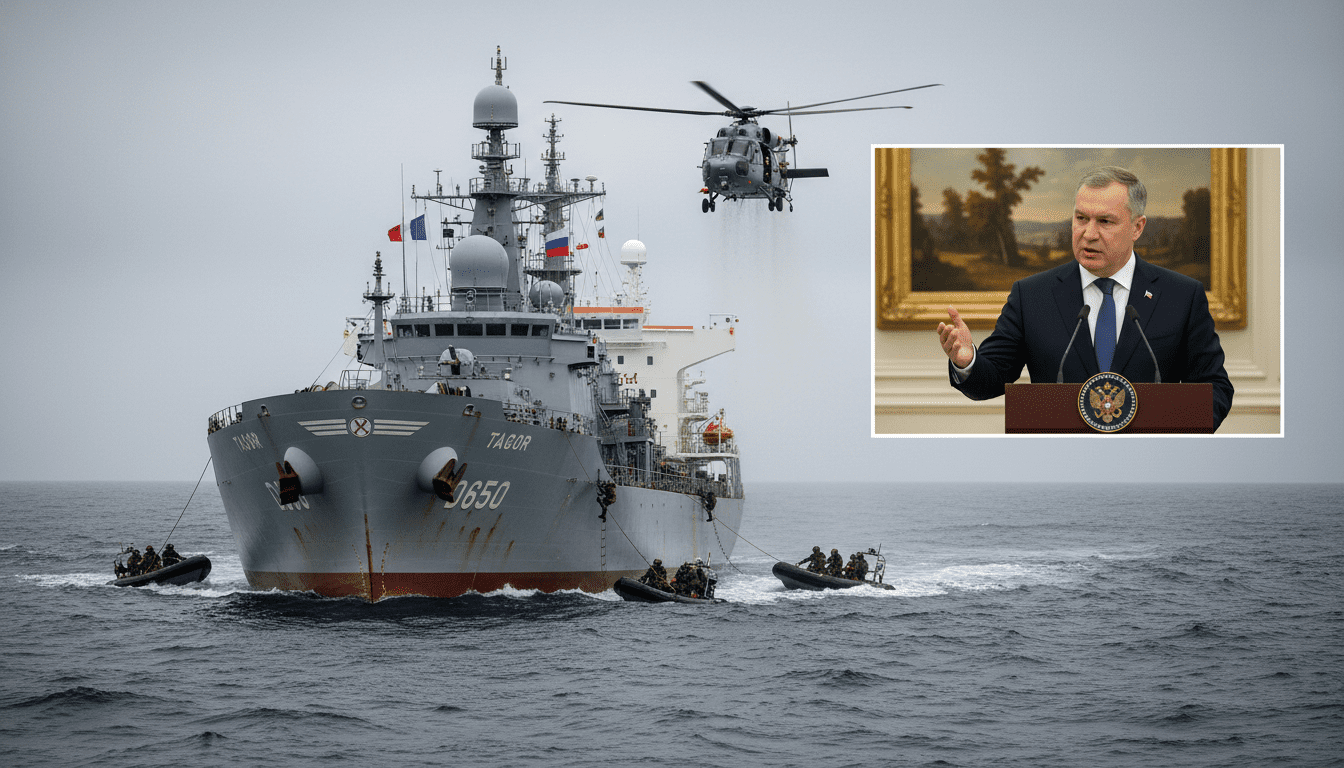
French navy releases video showing forces boarding the sanctioned Tagor tanker 700 km west of France on June 1, 2026, prompting strong Russian criticism.
Opening summary
The French navy on June 1, 2026 released footage showing its forces seizing the sanctioned Russian-linked oil tanker Tagor in the Atlantic Ocean, approximately 700 kilometres west of France. French authorities describe the operation as an enforcement action against a vessel subject to sanctions, while the Kremlin has condemned the move and called for explanations. Russia’s embassy in Paris has formally demanded information about its citizens reportedly aboard the Tagor, escalating a diplomatic dispute between Paris and Moscow.
Navy footage and official statement
Video released by the French navy shows boarding teams approaching the Tagor and personnel moving on deck, followed by personnel inspecting the vessel’s superstructure and documentation. French officials said the operation was carried out at sea under rules that allow interception of ships linked to breaches of international sanctions. The navy statement emphasized safety for crew and the avoidance of force beyond what was necessary to secure the ship and verify its status.
Location and operational details
French sources placed the interception around 700 kilometres west of mainland France in the Atlantic, an area under international waters but within the range of long-range naval operations. The navy described the manoeuvre as coordinated and conducted by trained boarding teams and maritime patrol assets, with the intention of verifying the vessel’s identity, cargo and compliance with sanctions. Authorities also said the ship was escorted to a port for further inspection, though they did not immediately disclose which port or a timetable for any formal proceedings.
Kremlin response and piracy allegation
Moscow reacted sharply, labelling the seizure “illegal” and saying the action bordered on “international piracy,” a charge that dramatically raises the diplomatic stakes. Kremlin spokespeople urged French authorities to provide an account of the operation and warned of possible consequences if the incident was not clarified. Russian statements stressed the need to protect nationals and raised questions about the legal basis invoked by France for boarding a vessel on the high seas.
Embassy requests and consular concerns
Russia’s embassy in Paris has officially demanded information about its citizens said to be on board the Tagor, requesting immediate consular access and clarification on their status and treatment. French officials acknowledged receipt of the embassy’s request and said consular channels are being used in line with international practice to inform relatives and verify identities. Both sides indicated they were seeking rapid clarification, but spokespeople gave few details about the number or nationality of crew members publicly.
Sanctions context and legal questions
The Tagor has been described by officials as a vessel linked to sanctioned entities, though French authorities have so far given limited public detail about the precise sanctioning authority or the nature of the link. That lack of specificity leaves legal questions about the grounds for boarding and seizure, and experts said such operations must be supported by clear evidence and legal authority under international law. Brussels and individual EU member states have mechanisms to enforce sanctions, but the legality of naval interceptions in international waters commonly prompts scrutiny from legal advisers and international courts.
Diplomatic fallout and international response
The seizure is likely to prompt diplomatic exchanges in Paris and Moscow and could draw statements from European and other international partners monitoring sanctions compliance. Governments that back sanctions enforcement typically aim to avoid military escalation while ensuring that designated ships and companies cannot evade restrictions. Observers said the incident will test how states balance rigorous sanctions enforcement with the need to maintain maritime norms and avoid incidents that could escalate into broader confrontations.
Next steps and investigations
French authorities indicated that technical inspections of the Tagor and verification of cargo manifests and ownership records will continue, with legal and customs offices to determine the next steps. If the vessel is formally detained or its cargo seized, prosecutors and sanctions enforcement agencies would lead an inquiry to establish whether criminal or administrative measures apply. Meanwhile, diplomatic channels are expected to remain active as both France and Russia seek to manage the political and legal consequences.
France’s decision to publicize the video and details of the operation suggests officials want to document the seizure as transparent enforcement of sanctions rather than a covert action. The Russian government’s strong language and the embassy’s demands increase the urgency for clear, documented legal reasoning to be presented by French authorities in the coming days. The incident underscores tensions over maritime enforcement of sanctions and the risks that such operations pose for bilateral relations between Moscow and European capitals.
