
Qatar Rejects Permanent Strait of Hormuz Toll, Says Temporary Fee May Be Negotiable
Qatar opposes a permanent Strait of Hormuz toll, saying at the Shangri-La Dialogue only a temporary, purpose-linked fee to fund mine clearance and waterway reopening is negotiable.
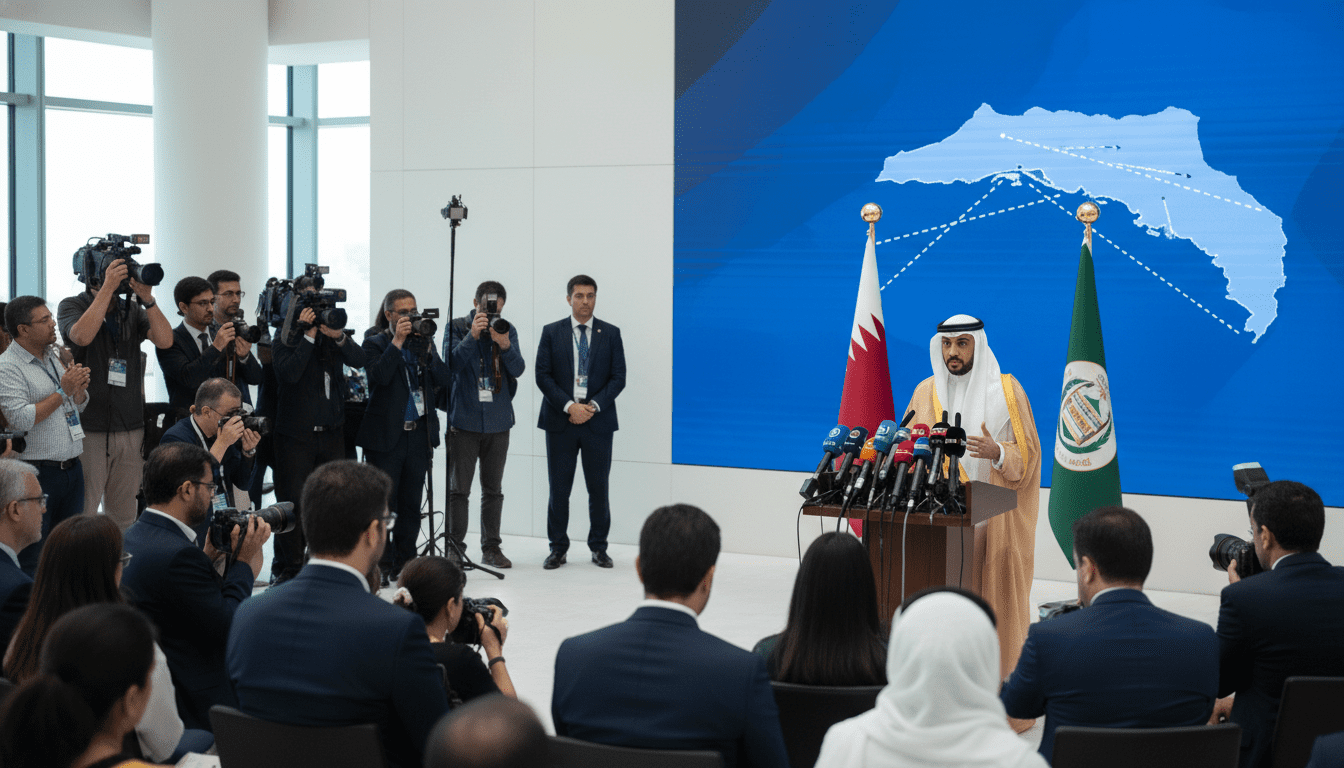
Qatar’s deputy prime minister told security leaders at the Shangri‑La Dialogue on May 30, 2026 that Doha would not accept a permanent toll on passage through the Strait of Hormuz, but left open the prospect of a temporary levy tied to specific recovery operations. The statement puts Qatar at odds with any proposal to institutionalize charges on one of the world’s busiest oil and gas transit chokepoints, while signalling willingness to discuss short-term, purpose-driven contributions. The reference to mine clearance framed the concession as conditional, technical and time-limited rather than a new regime for commercial passage.
Qatar’s Position Announced at the Shangri‑La Dialogue
Sheikh Saoud bin Abdulrahman bin Hassan bin Ali Al Thani, the deputy prime minister of Qatar, delivered the statement during a high-level session convened for defence and security officials. He explicitly rejected a permanent toll for the Strait of Hormuz and described a temporary fee as negotiable only if funds were earmarked for reopening the waterway, for example to remove sea mines. The remarks were made in Singapore, where the Shangri‑La Dialogue draws defence ministers and strategists from across the region and beyond.
Doha’s stance reflects a careful balancing act between protecting navigational freedom and addressing practical obstacles to safe passage. By linking any payable amount to mine remediation and reopening operations, Qatar positioned such a fee as a one-off recovery instrument rather than a new source of sovereign revenue.
Temporary Fee Framed as a Recovery Measure
Qatar’s conditional openness to a temporary fee focuses on tangible, time-bound objectives such as mine clearance and infrastructure repair. Officials framed the proposal as a pragmatic mechanism to defray costs of making the channel safe again, not as an enduring toll on commercial shipping. That distinction is likely intended to preserve international legal norms that guard passage through international straits while providing a financing model for emergency operations.
Analysts said the idea of a temporary levy highlights operational problems: clearing mines and restoring safe navigation would require coordinated logistics, specialized vessels, and clear chains of custody for funds. Any temporary charge would therefore demand a detailed agreement on governance, oversight and sunset clauses to reassure shipping companies and regional states.
Strait of Hormuz’s Strategic and Economic Importance
The Strait of Hormuz links the Persian Gulf with the Gulf of Oman and the Arabian Sea and remains a vital artery for global oil and liquefied natural gas shipments. A significant share of the world’s seaborne crude and gas flows through the narrow channel, making it highly sensitive to disruptions. Even short-term impediments can ripple across energy markets, push up freight costs and prompt emergency diplomatic responses.
Because the strait is both an international waterway and adjacent to multiple coastal states, measures affecting transit—taxes, tolls, or security controls—have outsized geopolitical and economic consequences. That reality informs why Doha’s rejection of a permanent toll is likely to find support among energy-importing nations and maritime trade organisations.
Regional Security Dynamics and Diplomatic Reactions
The statement arrives amid heightened regional sensitivities over maritime security, naval patrols and the risk of weaponised sea mines, incidents that have prompted international naval deployments in recent years. Countries with direct stakes in Gulf shipping will watch negotiations closely, wary that a permanent charge could be used to exert influence over transit or alter the balance of maritime control.
Diplomatic channels are expected to be active following the Strasbourg remarks, with affected states seeking assurances that any proposal for temporary funding will not evolve into a de facto tariff regime. Multilateral bodies and alliances that coordinate freedom of navigation operations may push for a transparent, international oversight structure for any fee and its use.
Legal and Economic Questions Around a Toll
A permanent toll would raise complex legal questions under the United Nations Convention on the Law of the Sea, which protects innocent passage through international straits used for navigation. Legal experts argue that an enduring levy imposed by a single state or coalition could challenge long-standing principles governing transit rights and customs. Economically, a fixed toll could alter shipping routes, insurance premiums and global commodity pricing if carriers sought to avoid charges.
A temporary, narrowly targeted levy to cover mine clearance costs would still require legal clarity. Stakeholders will require formal agreements that spell out liability, auditing arrangements and a finite timeline to prevent mission creep. Market participants will likely demand assurances that any charge will be proportionate, temporary and subject to international scrutiny.
Steps Ahead and Possible Multilateral Mechanisms
If talks advance, Doha and other interested parties could propose a multilateral trust or special fund to manage payments and contracting for clearance operations. Such mechanisms could include participation from affected states, industry stakeholders and neutral international organisations to oversee procurement and deployment of clearance teams. Confidence-building measures and third-party verification would be central to securing buy-in from shipping lines and importers.
Observers expect near-term diplomatic consultations among Gulf Cooperation Council members, energy-importing states and maritime security partners. Concrete plans would need timelines, technical assessments of mine threats, and cost estimates before any temporary fee could be negotiated or implemented.
Qatar’s public rejection of a permanent Strait of Hormuz toll, coupled with conditional openness to a temporary, purpose-specific levy, sets the terms for what could become a complex multilateral negotiation on maritime safety, legal norms and the financing of emergency clearance operations.
