
German health finances under scrutiny as privately insured shoulder costs for Bürgergeld recipients
Nina Warken warns German health finances are strained as privately insured members and state funds absorb higher costs for Bürgergeld recipients. Implications.
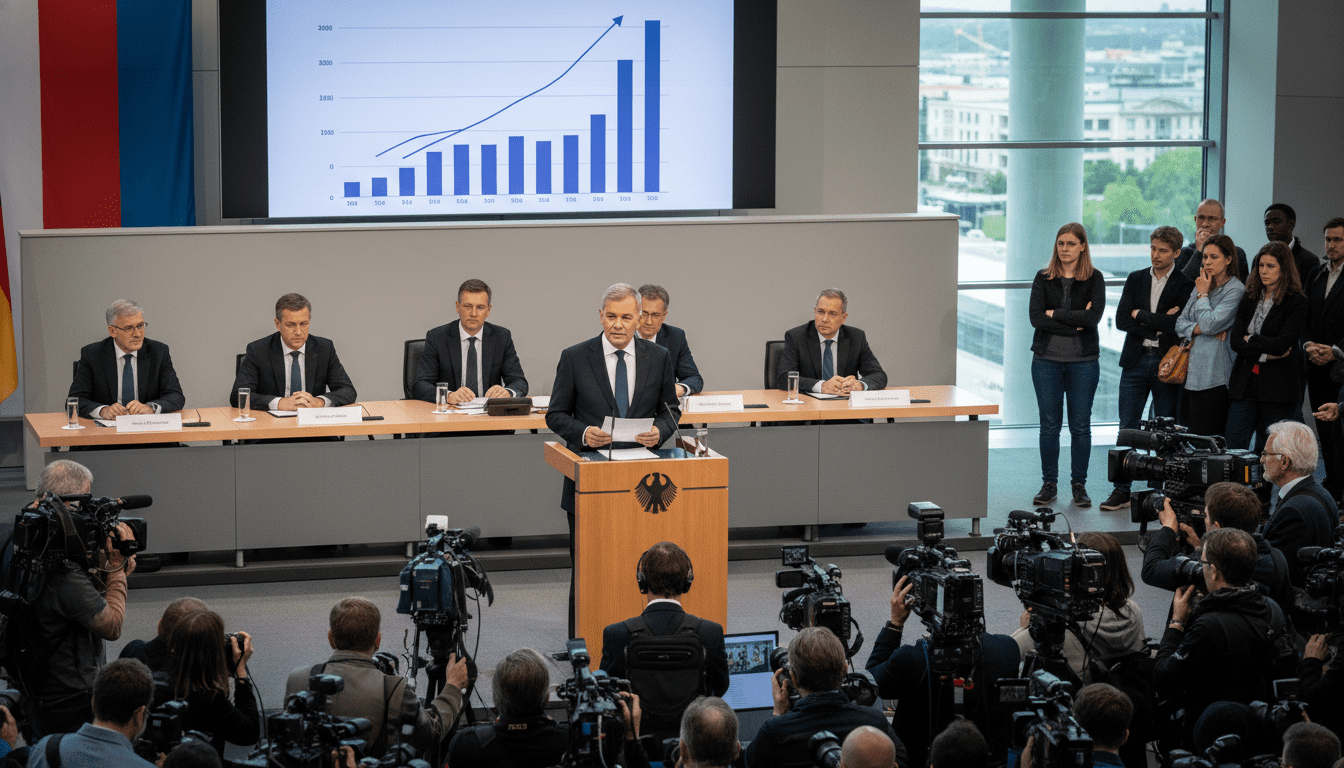
On May 30, 2026, Health Minister Nina Warken (CDU) framed an emerging problem for German health finances, saying that privately insured individuals and public coffers are covering disproportionate costs for the small number of Bürgergeld recipients who remain in private health plans. Warken’s remarks highlighted a structural imbalance in how care for social assistance beneficiaries is financed across the private and statutory systems.
Warken signals pressure on the system
The minister noted that although very few people on Bürgergeld are privately insured, their care generates costs that ultimately fall on other insured members and on the state. That dynamic, Warken argued, contributes to mounting pressure on overall health budgets and complicates efforts to stabilise finances across the sector. Her comments make the treatment of privately insured social assistance recipients a focal point in the broader debate about repairing public health finances.
How privately insured members end up bearing costs
Industry observers point out that private health insurance is typically financed by individual premiums and actuarial risk assessments, but the arrival of social assistance recipients into the private system creates an unusual funding mismatch. When the state covers premiums or expenses for Bürgergeld recipients in private plans, the net effect can be a higher load on the remaining private membership or additional fiscal transfers. That relationship means the cost of caring for a few high-need beneficiaries can be felt elsewhere in the system.
State payments exceed statutory levels, officials say
Warken’s briefing stressed another imbalance: state payments for privately insured Bürgergeld recipients tend to be higher than the amounts channelled through the statutory health-insurance system for comparable beneficiaries. The minister framed this as a budgetary inefficiency that reduces the flexibility of public finances at a time when payers across the system are pressing for consolidation. Analysts say the discrepancy raises questions about equitable treatment and the long-term sustainability of current funding rules.
A small group with outsized fiscal consequences
Experts caution that numerically the group of privately insured Bürgergeld recipients remains small, but their financial impact is not negligible. Because private contracts can involve different reimbursement rates and coverage packages, a limited number of cases may trigger disproportionate expenditures. That imbalance complicates attempts to draw direct comparisons between the private and statutory systems and makes headline figures misleading unless examined in detail.
Insurers and contributors face policy and pricing questions
The situation presents practical dilemmas for private insurers and their members, who may object to bearing costs associated with policyholders who no longer contribute at their prior income level. Industry associations are likely to press for clearer rules on state reimbursements and risk equalisation to prevent premium shocks for long-standing customers. At the same time, advocates for social protection warn that any measures must preserve access to necessary care for vulnerable Bürgergeld recipients.
Political stakes and potential reform avenues
Warken’s intervention places the issue squarely in the political arena, where parties and parliamentary committees must weigh equity against fiscal prudence. Possible responses under discussion among policymakers include revising reimbursement formulas, strengthening cross-system equalisation mechanisms, and improving transparency about the flows between state payments and private insurers. Any change will require negotiation with insurers, municipalities and social-service agencies that administer Bürgergeld payments.
The debate over privately insured Bürgergeld recipients highlights a broader challenge: how to reconcile two parallel forms of coverage with differing financing logics while keeping the health system solvent. As policymakers assess whether targeted adjustments are needed, the conversation is likely to focus on aligning incentives so that the costs of social protection are shared fairly without destabilising premiums or public budgets.
Discussions are expected to continue in the coming weeks and months as the ministry, insurers and parliamentary actors refine proposals to address the funding imbalances Warken described on May 30, 2026.
