
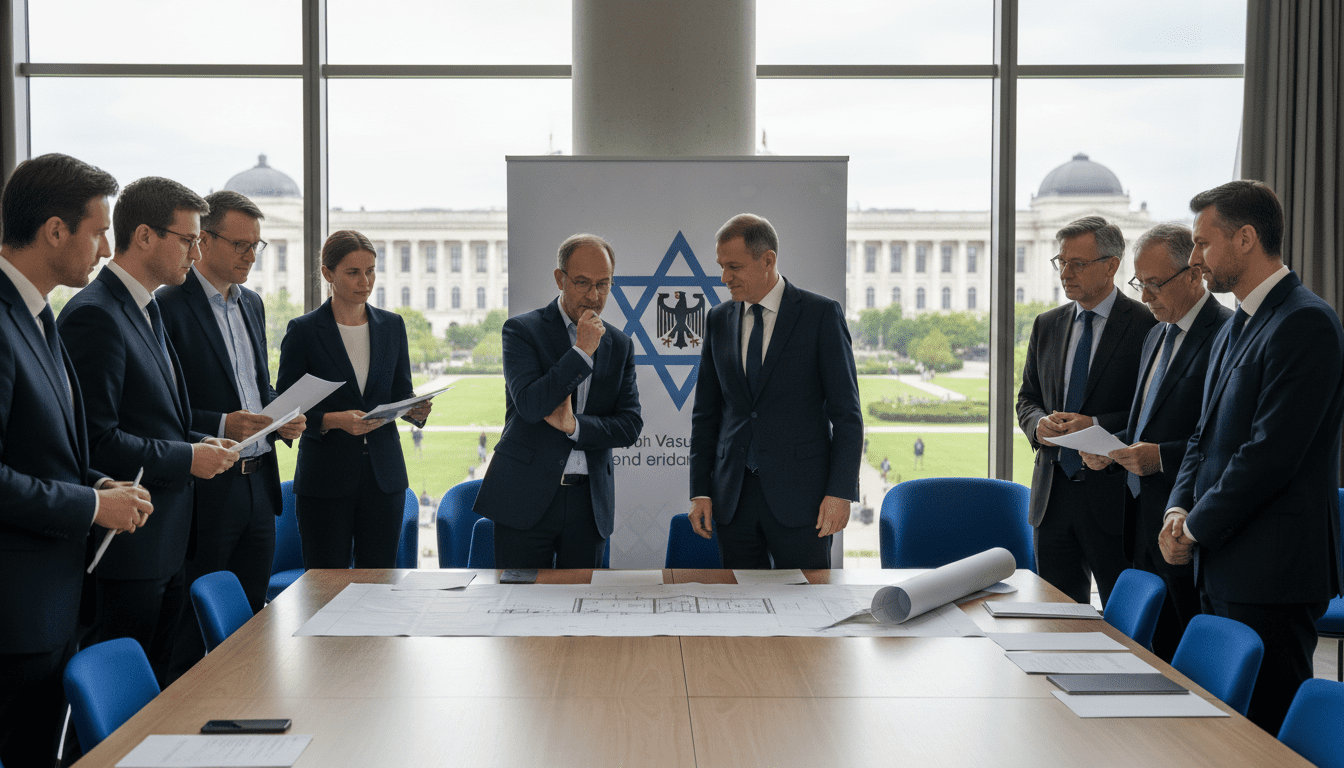
Yad Vashem Memorial Outside Israel Planned in Germany as Political Debate Intensifies
Germany plans to host the first Yad Vashem memorial outside Israel, prompting debate as officials link the move to broader reform plans and defence proposals.
Germany to Host First Yad Vashem Memorial Site Outside Israel
Germany announced plans for what would be the first physical Yad Vashem memorial site located outside Israel, officials said, marking a significant development in Holocaust commemoration policy. The proposal, which was presented to federal authorities in recent discussions, has already generated a wide spectrum of political and public reactions.
The announcement was accompanied in reporting by images of the Hall of Names at Yad Vashem in Jerusalem, underscoring the symbolic weight of the project. Organizers say the initiative aims to extend the reach of Holocaust remembrance beyond national borders while working in partnership with Israeli custodians of memory.
Scope and Purpose of the Planned Memorial
Officials described the planned site as an extension of Yad Vashem’s educational and archival mission rather than a standalone museum competing with the Jerusalem campus. The proposed facility would focus on commemoration, education, and the documentation of victim names in a locale accessible to European audiences.
Details on exact location, design, and funding were not disclosed, with authorities indicating that feasibility studies and consultations remain ongoing. German ministries have signalled that further coordination with Yad Vashem trustees and international stakeholders will shape the project’s scope and programming.
Political Context: Reform Ambitions Highlighted by Merz
The proposal surfaced amid a broader push by political leaders to signal reform and renewal within the federal government, with CDU politician Friedrich Merz publicly underscoring the administration’s reform ambitions. Merz framed institutional changes as part of a larger effort to strengthen Germany’s public infrastructure and international partnerships.
Observers say linking the Yad Vashem plan to domestic reform narratives may heighten its visibility but also politicize what many consider a sensitive memorial initiative. Parties across the spectrum have expressed interest in shaping the project to reflect Germany’s responsibilities for Holocaust remembrance.
Defence Ministry Proposes Reservist Duty in Peacetime
Separately, the Federal Defence Ministry has outlined a proposal to introduce a possible service obligation for military reservists that could apply even in peacetime. The measure, discussed in coordination with defence planners, aims to bolster readiness and ensure a trained reserve capable of responding to emerging security challenges.
Officials described the idea as part of a suite of policy options under consideration rather than a finalized decision, emphasising that legal, practical and budgetary implications must be examined. The proposal has already prompted debate among legislators, veterans’ groups, and civil society about the scope and necessity of compulsory service for reservists.
Reactions from Jewish Communities and Memory Institutions
The plan for a Yad Vashem memorial outside Israel is expected to provoke careful scrutiny from Jewish communities, survivors’ organisations, and academic historians, who often stress the importance of preserving historical integrity. Leaders within those communities have historically supported initiatives that deepen public understanding of the Holocaust while urging transparency and survivor involvement.
International memory institutions and scholars have signalled an interest in how the project will balance commemoration, education, and research. Questions about governance, curatorial control, and the safeguarding of archival material will be central to debates as the plan moves forward.
Process, Oversight and Next Steps
German authorities say the next phase will include formal consultations with Yad Vashem, municipal partners, and relevant cultural and legal bodies, as well as parliamentary scrutiny where required. The timeline for approvals, site selection and construction remains open, with officials indicating that the project will proceed only after extensive stakeholder engagement.
Budgetary considerations and the allocation of responsibilities between federal, state and private partners will shape the eventual design and operation of the memorial. Observers expect a multi-stage process that could take months or longer before concrete commitments are reached.
The proposal to host a Yad Vashem memorial outside Israel has sparked immediate discussion about how nations remember atrocity and the responsibilities of public institutions in preserving memory. As German officials pursue the plan, and as debate over defence and reform continues, the contours of both policies will likely evolve through public consultations and parliamentary debate.
