
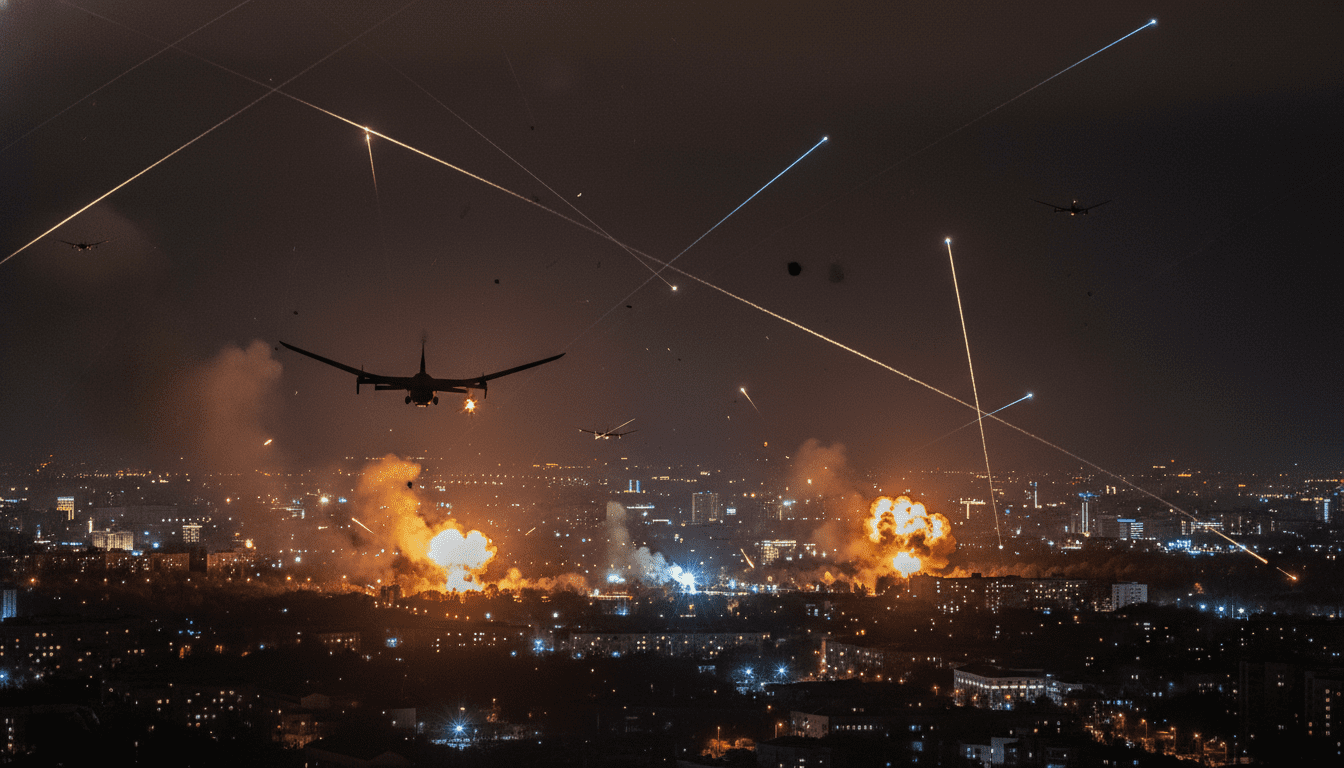
Russia launches one of its largest attack on Kyiv as hundreds of drones and missiles strike overnight
Russia launched one of its largest attacks on Kyiv on 24 May 2026, firing hundreds of drones and missiles across Ukraine; Kyiv reports major damage and vows retaliation.
Russia launched a sustained attack on Kyiv and multiple regions across Ukraine overnight, officials said, in what Ukrainian authorities described as one of the heaviest barrages since the full-scale invasion began. The attack on Kyiv involved a large wave of drones and missiles targeting urban areas and critical infrastructure, with emergency services reporting damage at multiple sites. President Volodymyr Zelenskyy visited affected areas, condemned strikes on civilian infrastructure and pledged that Ukraine would respond.
Hundreds of drones and missiles struck cities across Ukraine
Reports from Ukrainian authorities describe an assault involving hundreds of aerial weapons deployed across the country during the night of 24 May 2026. The incoming salvo combined different types of unmanned aerial vehicles and cruise or ballistic missiles, complicating air-defence efforts and dispersing attacks across multiple population centers. Officials characterized the scale of the operation as among the largest concentrated strikes on Kyiv since the onset of the war.
Ukrainian air-defence assets were mobilized to intercept the incoming rounds, and authorities said many weapons were shot down before reaching their intended targets. Civil defence services continued to assess the full scale of the damage as daylight allowed emergency crews to move into affected neighborhoods. Local authorities urged residents to follow safety orders and avoid damaged areas while recovery operations proceed.
Damage reported to civilian infrastructure and urban neighborhoods
Initial assessments by municipal services indicated damage to residential buildings, utilities and transport nodes in Kyiv and other struck cities. Power and communications disruptions were reported in several districts, complicating rescue and relief efforts and prompting temporary outages for hospitals and emergency facilities in some locations. Authorities warned that the full tally of structural damage and civilian impacts would take hours or days to confirm.
Health officials and emergency responders described a rapid, chaotic overnight response as ambulances and fire crews worked to reach hit sites amid continuing air-raid alerts. Hospitals treated injured civilians and military personnel, though comprehensive casualty figures were not immediately available as teams prioritized urgent care and search operations. Municipal leaders called for calm and coordinated support to clear debris and restore essential services.
Zelenskyy visits frontline damage and condemns attacks on civilians
President Volodymyr Zelenskyy visited damaged sites in Kyiv on the morning of 24 May 2026 and publicly condemned strikes that he said deliberately targeted civilian infrastructure. In remarks after the visit, he reiterated Ukraine’s intent to hold those responsible to account and emphasized that attacks on non-combatants would not deter the government’s defence. Zelenskyy’s statements framed the assault as a continuation of a campaign against civilian life and critical services.
The president also used his visit to highlight the resilience of municipal and volunteer responders who remain on duty under frequent threat. He called for accelerated support from international partners to replace damaged equipment and strengthen air-defence capabilities. Local authorities said they would provide regular briefings as the response and recovery phases progress.
Ukraine’s military and air-defence posture during the strikes
Ukraine’s air-defence units were reported to have engaged multiple waves of incoming weapons, drawing on layered systems designed to identify and intercept both drones and missiles. Military spokespeople emphasized that defence forces were actively responding and that interception rates had reduced some of the potential destruction of the strikes. Nonetheless, the volume and diversity of the weapons used created operational challenges during the overnight assault.
Military analysts noted that such intense barrages aim to overwhelm defensive systems and inflict cumulative damage on infrastructure and logistics. Kyiv’s armed forces indicated readiness to conduct targeted counter-operations in response, while continuing routine defence measures to protect populated areas. Commanders also said they would adapt tactics to evolving threats and maintain communication with allied partners about equipment and intelligence needs.
Security implications for the region and international response expected
The scale of the overnight attack underscores continuing volatility along front lines and the risk of further escalatory strikes on urban centers. Governments and international organizations monitoring the situation signalled deep concern over repeated strikes that impact civilians and essential services. Analysts warned that sustained pressure on infrastructure could have broader humanitarian consequences and complicate longer-term reconstruction efforts.
Diplomatic channels were reported to be active as foreign capitals considered statements and potential measures, though formal international responses were still unfolding as officials gathered further facts. Observers said the strike could influence discussions on future military assistance, air-defence provisioning and sanctions policy amid already heightened tensions. Most analysts stressed that immediate priorities would focus on civilian protection and restoring basic services in affected areas.
Emergency crews continue recovery and assessment work across affected neighborhoods. Further updates are expected as authorities compile damage reports and clarify casualty figures, while Kyiv maintains its stated position that the strikes will be met with a measured military response.
