
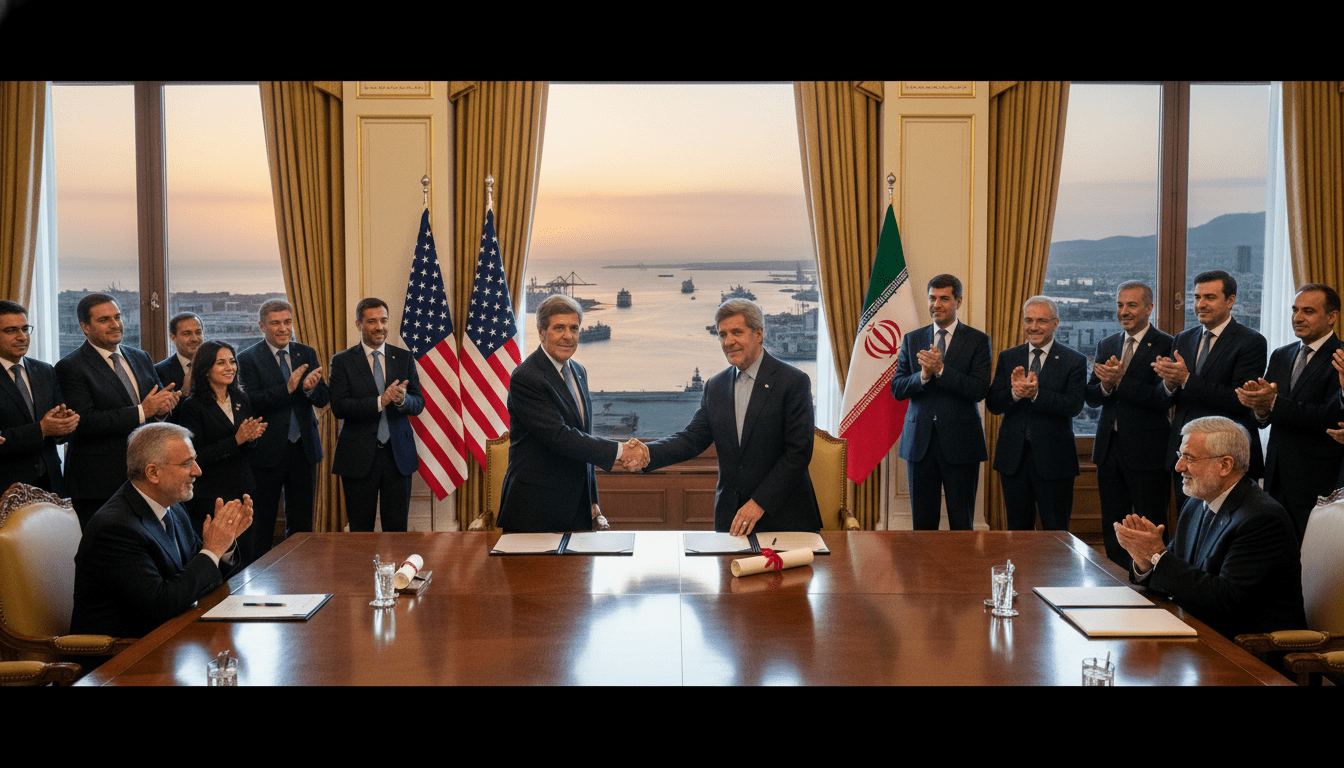
U.S. and Iran Near Deal on a 60-Day Ceasefire Centered on Strait of Hormuz
Reports say a U.S.-Iran 60-day ceasefire would reopen the Strait of Hormuz and pause attacks while talks continue on sanctions and uranium.
The United States and Iran are reportedly on the verge of signing a U.S.-Iran 60-day ceasefire that would halt offensive operations and reopen the Strait of Hormuz, according to multiple sources familiar with the negotiations. The proposed agreement, first reported by Axios and discussed by senior U.S. officials, would suspend attacks while laying the groundwork for talks on sanctions relief and the fate of Iran’s enriched uranium. Officials and regional actors said an announcement could come imminently.
Terms Focus on Hormuz, Shipping, and Oil Sales
The draft framework would prioritize reopening maritime traffic through the Strait of Hormuz, which has been disrupted since late February, by removing the effective blockade and clearing mines. Under the proposal, Iran would clear mines it is accused of laying and no transit fees would be charged to passing vessels during the 60-day window. In return, Tehran would be permitted to resume oil exports and U.S.-led restrictions on Iranian ports would be eased for the duration of the ceasefire.
Negotiators have linked economic and security measures closely, making maritime confidence-building a central lever for wider progress. The arrangement as described aims to restore ship movements to pre-conflict levels while creating space for diplomacy on more contentious issues such as sanctions and frozen funds.
Nuclear Questions and Iran’s Uranium Offer
One pivotal element reported by the New York Times is Iran’s apparent willingness to relinquish some or all of its enriched uranium stockpiles, though officials cautioned that the details remain to be negotiated. U.S. President Donald Trump has publicly conditioned his approval on measures that address both ongoing enrichment and existing enriched material, underscoring the political sensitivity in Washington.
Iranian state-affiliated media, however, painted a different profile of concessions. Outlets such as Fars have stated Tehran made no fundamental concessions on its nuclear program and insisted that administrative control of the Strait of Hormuz remain with Iran. These divergent narratives illustrate key gaps negotiators must bridge in subsequent rounds.
Military Posture and U.S. Forces in the Region
The reported deal would not immediately pull back U.S. forces mobilized to the region in recent months; instead, American troops and assets would remain in place throughout the 60-day period. U.S. officials indicated any withdrawal would be contingent on reaching a final, broader agreement that provides durable security guarantees.
Maintaining force posture while pausing kinetic operations is intended to deter renewed escalation and give diplomats breathing room to hammer out technical accords on sanctions relief and asset releases. Military planners and diplomats will need to coordinate closely to avoid incidents during the implementation phase.
Regional Reactions and Diplomatic Engagements
Regional leaders and NATO partners have been engaged in consultations around the prospective agreement. Turkish President Recep Tayyip Erdoğan told counterparts he was prepared to assist with implementation, emphasizing the pact’s importance for global energy markets. U.S. officials are reported to have spoken with Gulf partners and Israel ahead of any announcement, reflecting the delicate balance of regional security interests.
Israel’s government was said to have been briefed but has voiced concern publicly about any arrangement that does not explicitly constrain Iran’s nuclear capabilities or military reach. Tehran has reportedly insisted any settlement must include an end to hostilities by Israeli forces in Lebanon, adding another layer of complexity to regional diplomacy.
Domestic Political Fallout in Washington
The emerging deal has already generated sharp debate inside the United States. Prominent Republican senators expressed deep misgivings, warning that lifting restrictions or allowing Iran to resume oil revenues could strengthen Tehran’s regional influence. Senator Ted Cruz wrote on social media that he feared the pact would empower an adversarial regime and called for verification guarantees.
Administration officials, including Secretary of State Marco Rubio, portrayed progress as substantial and said an announcement could follow soon, while emphasizing that American approval hinges on concrete limits on enrichment and verification procedures. The internal political dynamic in Washington suggests negotiators will face pressure to produce robust monitoring mechanisms alongside any temporary truce.
Next Steps and a Fragile Timeline
If both sides endorse the tentative text, diplomats expect a rapid sequence of follow-up talks to translate ceasefire terms into enforceable measures and a roadmap for sanctions relief. The 60-day timeline is intended to be long enough to negotiate further concessions but short enough to maintain leverage if talks stall. Observers cautioned that the window will test the durability of commitments and the capacity of verification teams to inspect sites and oversee mine clearance.
Analysts warn that any ambiguities in language about enrichment, asset transfers, or control of strategic waterways could reignite tensions, while clear, enforceable mechanisms could chart a path toward a more lasting settlement.
For now, the world awaits formal confirmation and the exact text of the proposed U.S.-Iran 60-day ceasefire, a fragile construct that aims to pause violence, reopen a vital maritime corridor and open a narrow channel for negotiations on sanctions and nuclear constraints.
