
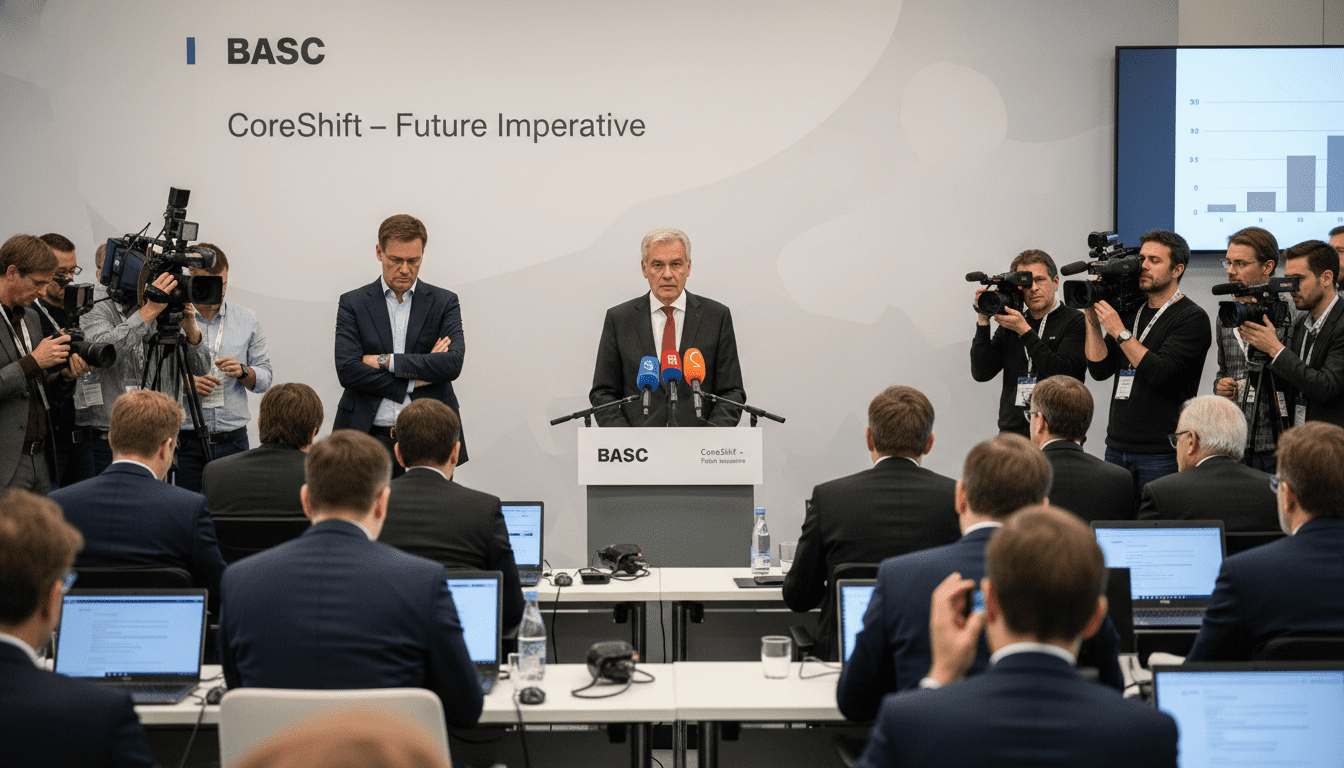
BASF unveils CoreShift plan to cut cash fixed costs by up to 20% by 2029
BASF launches “CoreShift” to reduce cash fixed costs in its core business by up to 20% versus 2024 levels by 2029, a move expected to reshape operations and prompt staff talks.
BASF on Wednesday announced a broad restructuring programme under the name CoreShift that aims to reduce cash fixed costs in its core businesses by up to 20 percent versus 2024 levels by 2029, CEO Markus Kamieth said, signaling a major operational overhaul and potential job reductions as the company seeks higher competitiveness and margin resilience. The CoreShift keyword frames a company-wide effort that management describes as a new operating system for the group, designed to simplify core activities and accelerate profitable growth while targeting substantial efficiency gains. Management emphasized the plan will concentrate on the four core segments—Chemicals, Materials, Industrial Solutions and Nutrition & Care—while reshaping services and the company’s largest production footprint in Ludwigshafen.
Scope and numerical targets of CoreShift
CoreShift targets a reduction in cash fixed costs of up to 20 percent in the defined core business by the end of 2029 compared with the 2024 baseline, BASF said, placing the timeline and quantifiable target at the centre of the programme. The company has identified personnel and service structures as major levers to achieve savings, with management stating that wage and staff-related costs will make up a significant portion of the planned reductions. Executives have framed the initiative as structural rather than cyclical, intended to reposition BASF for longer-term competitiveness in global chemical markets.
Management, leadership and responsibilities
The programme will be led by Julia Raquet, currently head of BASF’s Europe operations, who will report directly to CEO Markus Kamieth and coordinate implementation across the affected units. Kamieth described CoreShift in published remarks as “one of the largest optimisation programmes for BASF” and said it will result in a leaner core business with fewer roles, making clear that headcount effects are expected as part of the cost savings. Company spokespeople also said management will enter consultations with worker representatives to discuss the measures and their social implications, signalling formal negotiations ahead.
Impact on Ludwigshafen and global services
BASF said CoreShift encompasses a reorganisation of its largest production site at the Ludwigshafen headquarters, where around 30,000 people work, and involves a global realignment of service units to reduce complexity and costs. Reporting has indicated that some functions currently based at BASF Global Services in Berlin could be shifted to locations such as India; the company employs roughly 8,500 people in its Global Services arm, though final decisions on numbers and locations remain subject to consultation. Management stated the physical and organisational reconfiguration of service and site operations is necessary to sustain the scale and productivity of the core chemicals business.
Core business focus and asset moves
BASF defines its core business as the four segments Chemicals, Materials, Industrial Solutions and Nutrition & Care, which together generate about €40 billion in annual revenue, and CoreShift is explicitly targeted at strengthening these areas. The company has already adjusted its portfolio in recent years; for instance, it sold a majority stake in its paints business in 2025, part of a wider drive to concentrate on core industrial and speciality chemicals activities. BASF has also signalled plans to bring a minority stake in its agricultural division to the market in the near term as it refines the group’s strategic footprint.
Worker consultations and market implications
Company leadership has stated it will begin talks with employee representatives to negotiate the scope and social safeguards of any workforce changes, a process that is expected to be closely watched by unions and regional authorities given BASF’s size in Germany’s industrial landscape. Analysts and market participants are likely to monitor CoreShift for both its potential to lift group profitability and the social costs of streamlining, while customers and suppliers will watch for any operational impacts at key production sites. BASF’s emphasis on simplifying service units and centralising certain functions reflects an industry trend toward consolidating back-office operations to support capital-intensive manufacturing.
BASF said the CoreShift programme is intended to produce a leaner, more focused core group structure that can compete effectively in a challenging global chemicals market, with management aiming to balance cost discipline and investment in priority areas. The company will provide further details as implementation proceeds and as consultations with employee representatives advance.
