
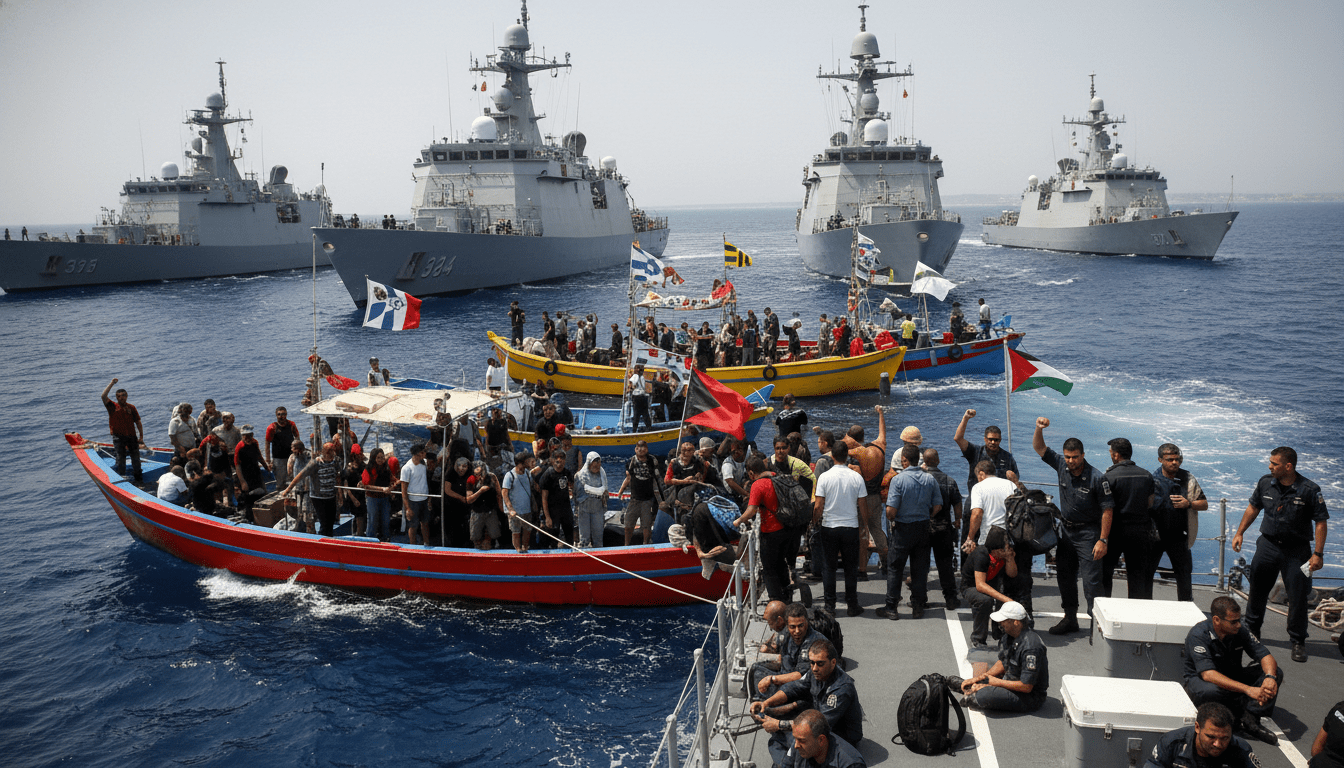
Global Sumud Flotilla: Israel Transfers 430 Activists to Israeli Vessels
Israel transfers 430 activists from the Global Sumud Flotilla to Israeli vessels; officials call it a PR stunt while activists aimed to deliver aid to Gaza.
The Global Sumud Flotilla, an international effort to reach the Gaza Strip, ended on Tuesday, May 19, 2026, with Israeli authorities reporting the transfer of all 430 participants to Israeli ships and their onward movement to Israel. The Israeli Ministry of Foreign Affairs described the mission as a publicity operation tied to Hamas, while officials said the activists will have access to consular representatives once in Israeli custody. Organizers of the flotilla have said their intent was to bring humanitarian supplies and draw attention to the humanitarian situation in Gaza.
Israeli authorities transfer activists to Israel
Israeli officials said late on Tuesday that every participant from the Global Sumud Flotilla had been taken aboard Israeli vessels and was being transported to Israeli ports. The Ministry of Foreign Affairs provided the tally of 430 activists and said they would be offered the chance to meet consular representatives from their home countries.
Security officials described the operation as orderly and nonviolent, saying no significant clashes occurred during the transfer. Authorities framed the move as enforcement of maritime and national security rules while ensuring basic processing and consular access for foreign nationals.
Spokesperson dismisses flotilla as PR stunt
A ministry spokesman characterized the flotilla as a public relations exercise intended to benefit Hamas, and not a genuine humanitarian effort. The comment echoed Israeli government messaging that such flotillas are often politically motivated and can present security risks to Israeli forces and to occupants of the relief vessels.
Those remarks are likely to intensify the political debate over civilian maritime actions aimed at Gaza, where competing narratives about intent and impact intersect with broader regional tensions. Israeli leaders have repeatedly warned that attempts to breach naval restrictions will be met with interception and enforcement measures.
Details of transfer and consular access
According to the statement from Israel’s foreign ministry, the activists were transferred to Israeli vessels and are making their way to Israel where consular officials may meet them. The ministry emphasized that foreign nationals will be able to contact their diplomatic missions for assistance and legal representation as part of standard procedures.
International law and diplomatic practice typically require that detained foreign nationals be granted consular access, and Israeli officials said they intended to follow these obligations. The ministry did not provide a detailed timeline for processing, release, or potential legal actions, and did not specify the nationalities represented among the 430 activists.
Flotilla objectives and organizers’ account
Organizers of the Global Sumud Flotilla presented the mission as an effort to deliver humanitarian supplies to civilians in Gaza and to protest what they call an ongoing siege. Activists aboard multiple vessels had said they sought to break through maritime restrictions to draw international attention to conditions in the enclave.
Despite those aims, Israeli authorities have long maintained a naval blockade around Gaza, citing security concerns related to arms smuggling and militant activity. Flotillas in the past have generated international controversy and diplomatic friction, with organizers arguing that humanitarian needs warrant direct delivery efforts.
Past incidents and evolving maritime confrontations
The interception of activist-led flotillas is not unprecedented and has previously provoked international responses and legal scrutiny. High-profile confrontations in prior years heightened scrutiny of both the tactics used by protesters at sea and the methods of interception employed by naval forces.
Experts say such episodes often lead to investigations, diplomatic protests, and exchanges at multilateral bodies when casualties or overt confrontations occur. In the present case, Israeli officials reported an orderly transfer and did not cite injuries or major incidents, signaling a more controlled enforcement operation than in some earlier maritime confrontations.
Diplomatic implications and international response potential
The transfer of 430 activists to Israeli vessels is likely to prompt statements from foreign governments whose citizens were involved, and from humanitarian groups monitoring Gaza. Consular visits and diplomatic inquiries will follow as activists seek information, legal counsel, and the status of any humanitarian cargoes they carried.
Humanitarian organizations and allied governments will be watching for details about the humanitarian materials, if any, purportedly bound for Gaza, and for assurances about the welfare and treatment of detainees. The episode could feed into broader diplomatic conversations about access to aid for Gaza and the legal frameworks that govern maritime interdictions.
Despite the immediate operational focus on the transfer, the event is also set against a wider political backdrop where public campaigns, international advocacy, and security policies collide. Both organizers and Israeli authorities portrayed the outcome in sharply different terms, a dynamic that will likely shape media coverage and diplomatic responses in the days ahead.
The Global Sumud Flotilla episode underscores recurring tensions over maritime access to Gaza and the competing claims of security and humanitarian need, and it will likely prompt further scrutiny of how future civilian maritime initiatives are planned and how responding states manage interceptions.
