
NAACP calls for Black athlete fan boycott of Southern public universities after Voting Rights Act ruling
NAACP urges Black athlete fan boycott of Southern public universities in response to a Supreme Court decision and state redistricting that advocates say dilutes Black voting power.
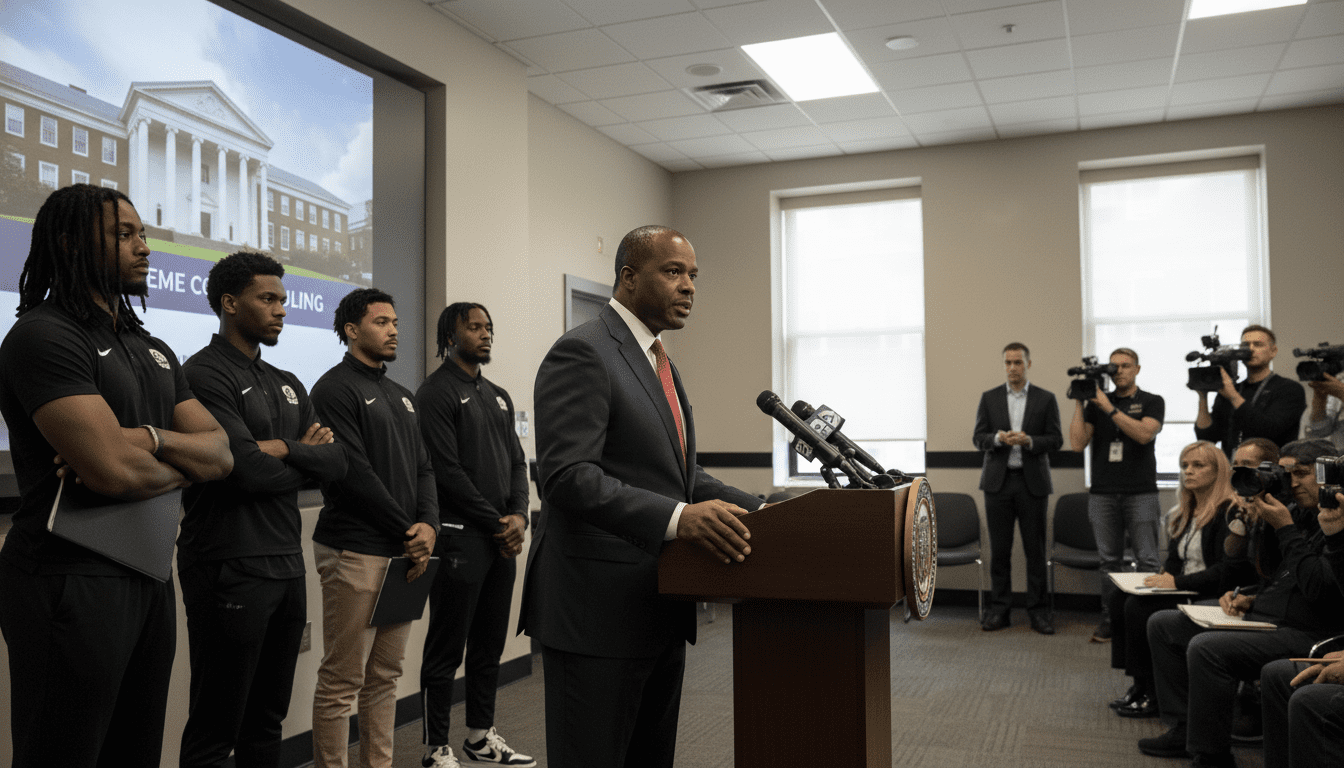
The NAACP on Tuesday launched an “Out of Bounds” campaign urging a Black athlete fan boycott of Southern public universities that have moved to redraw districts in ways the civil rights group says weaken Black voting representation. The call asks athletes, families, alumni and fans to withhold athletic and financial support from public institutions in several Southern states affected by post-ruling redistricting. The campaign is framed as a protest against what the NAACP describes as coordinated efforts by state legislatures to limit Black political influence following a recent Supreme Court ruling. The organization says the boycott targets states where redistricting measures follow the April decision that narrowed federal protections under the Voting Rights Act.
NAACP launches “Out of Bounds” campaign
The NAACP announced the campaign with a public statement calling on Black athletes and supporters to use their economic and cultural power to press for voting rights protections. The organization presented the boycott as a targeted response to state actions it sees as designed to dilute Black voters’ influence at the congressional level. NAACP leadership argued that athletic programs have been built in large part on the talents of Black players, and that this contribution should not coexist with policies that reduce Black political representation.
States cited as targets and criteria for action
The campaign specifically names Alabama, Florida, Georgia, Louisiana, Mississippi, Texas and South Carolina as states where the NAACP believes redistricting has moved to limit Black voting power. The group says its list focuses on jurisdictions where legislatures have either adopted new maps, announced plans to redraw lines, or taken steps to pause electoral schedules to enable map changes. The NAACP’s guidance asks supporters to consider both athletic engagement and financial contributions when making decisions about universities in those states.
Supreme Court ruling and the legal backdrop
Earlier this year the U.S. Supreme Court curtailed a key provision of the Voting Rights Act, a decision voting rights advocates warn will make it harder to challenge state maps that diminish minority representation. Legal specialists and civil rights groups say the ruling reduces federal oversight of redistricting and shifts battlegrounds to state courts and legislatures. The NAACP frames the timing of its boycott in direct response to that ruling, saying the legal change has emboldened some Republican-controlled state legislatures to pursue maps that critics contend weaken the Black vote.
Economic and athletic leverage highlighted by NAACP
NAACP officials emphasized the financial significance of Black athletes to major college programs, noting the revenue generated by televised games, ticket sales, merchandising and alumni donations. The organization argued that withholding support could hit some programs’ bottom lines and force university leadership and state officials to reckon with community demands. The campaign frames the action as leveraging the commercial value created by Black athletes to press for broader civic protections rather than as a punitive measure against athletes themselves.
Potential effects on college sports and political timelines
Observers say a sustained boycott could affect powerhouse football and basketball programs, particularly in the Southeastern Conference and Atlantic Coast Conference, where Black athletes are prominent on rosters and in fan bases. Athletic departments dependent on gate receipts, donor support and television visibility could face pressure if enrollment, attendance or giving declines in targeted states. Political analysts note that some states have already paused primaries or advanced map revisions ahead of this year’s midterm elections, meaning changes to congressional districts could have effects on control of the U.S. House and Senate.
Responses expected from universities and lawmakers
University officials in the affected states have not yet issued uniform responses to the NAACP’s demand, and some academic leaders may argue that athletics funding and governance are separate from legislative redistricting decisions. State lawmakers who support the new maps have defended their actions as lawful and necessary for compliance with state constitutions or demographic shifts. Legal and advocacy groups opposing the maps are preparing challenges in courts where they can, while the NAACP seeks to add a public-relations and economic dimension to resistance.
The NAACP ties the boycott to the broader history of the Voting Rights Act of 1965, which was enacted to curb discriminatory practices that had long disenfranchised Black voters in the South and beyond. The civil rights group says that, with federal safeguards weakened, civic and economic pressure are among the tools communities can use to protect political representation. The campaign urges athletics stakeholders to weigh their influence and consider coordinated actions that align sporting support with demands for fair electoral maps.
The coming weeks are likely to see intensified debate between civil rights organizations, state officials and university leadership as map challenges proceed and as the midterm calendar moves forward. The NAACP has set no single formula for participation, instead urging communities to consider local circumstances and to coordinate with civil rights advocates as legal and political options evolve.
