
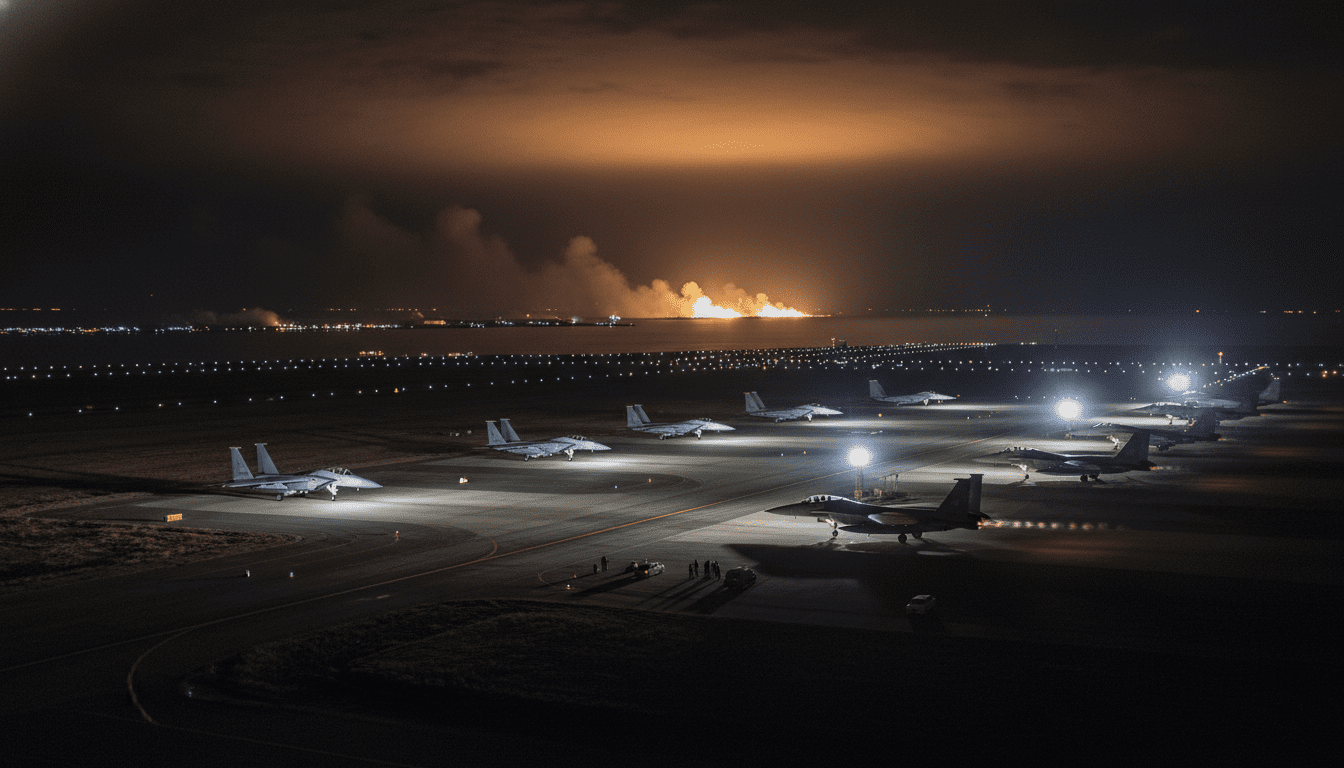
New York Times Reports Saudi Arabia and UAE Attacked Iran in Recent Strikes
NYT reports Saudi Arabia and the UAE attacked targets in Iran during recent hostilities, a development that has raised fears of broader regional escalation.
The New York Times reported that Saudi Arabia and the UAE attacked targets inside Iran during the most recent round of Middle East fighting, saying the strikes were carried out independently and in retaliation for attacks on their territory. The report cites current and former U.S. officials who described the operations as the first direct strikes by the two Arab states into Iranian territory. Neither Riyadh nor Abu Dhabi has publicly confirmed the actions, and the account has not been independently verified by other governments.
Report by The New York Times
The New York Times account says U.S. officials who spoke on condition of anonymity provided the basis for the story, describing a shift in tactics by Gulf states during the conflict. According to those sources the strikes were separate operations rather than a coordinated single strike force. The newspaper said the incidents, if confirmed, would mark a significant escalation in the confrontation between Iran and its Gulf neighbors.
Alleged Strikes and Operational Details
Officials cited by the report declined to disclose precise timing, targets or the weapons used, leaving open multiple questions about the scale and effects of the alleged attacks. The report characterizes the actions as retaliatory responses to a series of Iranian assaults that had struck sites inside Saudi Arabia and the Emirates during the broader clash involving Israel and U.S. forces. The lack of independent confirmation and the sensitive military environment in the region make verification difficult and leave analysts relying on satellite imagery and intelligence reporting for corroboration.
Responses from Saudi Arabia, UAE and Iran
Neither Saudi Arabia nor the United Arab Emirates issued public confirmations or claims of responsibility in the immediate aftermath of the reporting, and Iran had not acknowledged specific strikes attributed to its territory in the same cycle of coverage. All three governments have offered limited public commentary about specific operational moves during the recent conflict, often emphasizing defensive justifications or invoking restraint. International actors are watching for any formal statement or diplomatic démarches that might follow a reported cross-border use of force.
Regional Rivalry and Historical Context
The alleged strikes must be understood against decades of competition between Iran and its Gulf neighbors, where influence is contested through proxies, diplomatic maneuvers and periodic military engagements. The Sunni-majority Arab states, led by Saudi Arabia and joined by the UAE, have long been at odds with Tehran’s regional ambitions and with Iran’s support for armed groups in Lebanon, Iraq, Syria and elsewhere. Recent years have also seen warming ties between some Gulf states and Israel, adding another layer to an already complex tactical environment.
Implications for U.S. Forces and Regional Stability
The United States maintains military facilities and personnel in both Saudi Arabia and the UAE, and U.S. officials have previously warned about risks to forces and commercial traffic amid heightened hostilities. A reported direct strike by Gulf states into Iran could complicate U.S. efforts to limit escalation while protecting its regional partners and assets. Diplomats and security planners are likely to assess whether the incidents represent a new threshold in regional conduct or a contained episode of retaliation.
Energy Markets and Global Economic Risks
Markets are particularly sensitive to any development that increases the risk of broader conflict in the Gulf given the region’s central role in global energy supplies and shipping lanes. Even unconfirmed reports of cross-border strikes can prompt spikes in oil and insurance prices and spur short-term volatility as traders reprice risk. Beyond immediate market moves, sustained military action would raise concerns about longer-term disruptions to exports, shipping through the Strait of Hormuz and investor confidence in regional stability.
The New York Times report, if substantiated, would mark a notable change in the pattern of direct strikes and reprisals in the region, underscoring the potential for localized conflicts to broaden quickly. For now the account rests on anonymous U.S. official sourcing and on-the-record silence from the capitals involved, leaving a gap between the claims and independent confirmation. Observers cautioned that verifying such events can take time and that diplomats will weigh next steps to prevent further escalation.
