
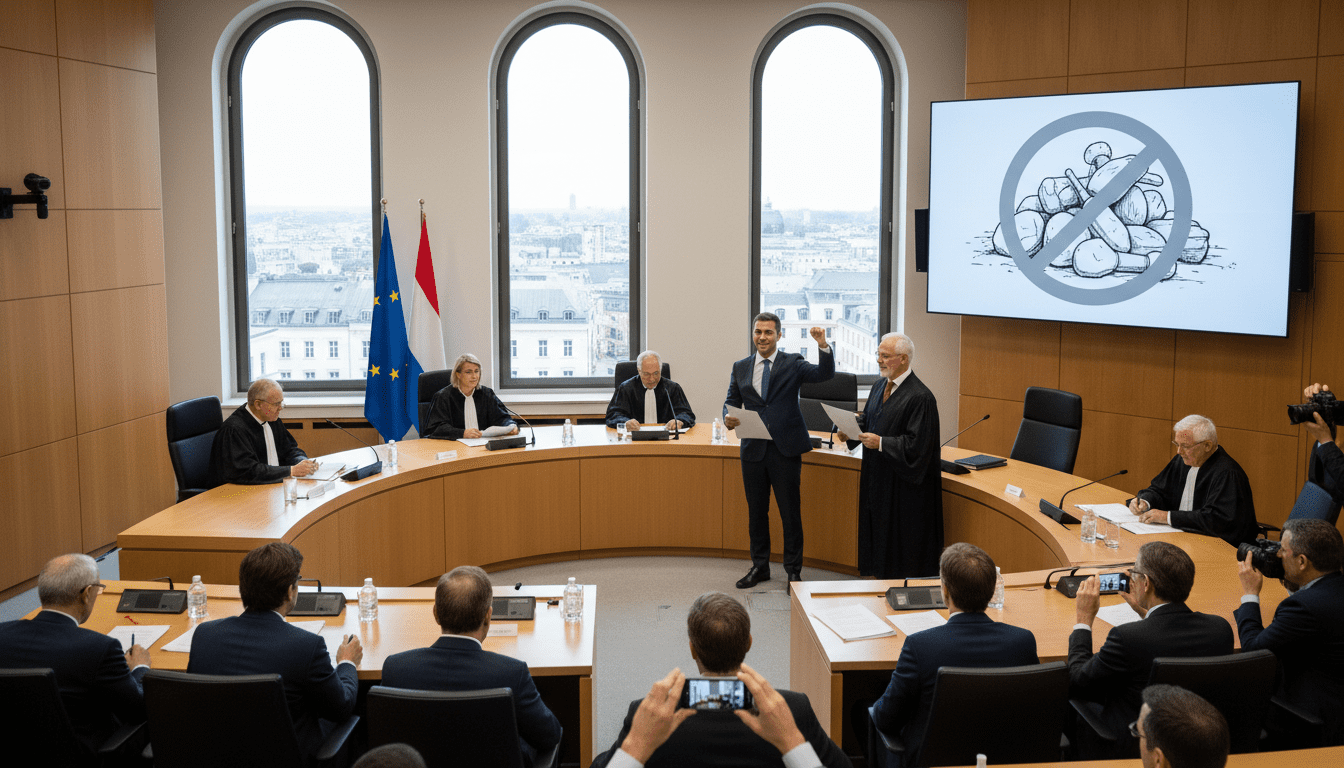
EU General Court Overturns EUIPO Decision on Obelix Trademark for Weapons
EU General Court annulled EUIPO’s decision to uphold a Polish firm’s ‘Obelix’ trademark for weapons, siding with the publisher and ordering a fresh review.
The EU General Court has annulled a prior EUIPO decision and ordered a fresh examination of a contested “Obelix” trademark registration that had been applied to weapons, ammunition and explosives. Les Éditions Albert René, the French publisher that owns the long-standing Obelix mark for comics and related goods, brought the case after EUIPO refused to declare the newer registration invalid. The ruling sends the matter back to the European Union Intellectual Property Office for reconsideration and leaves open the possibility of a further appeal to the Court of Justice of the European Union.
Details of the court’s ruling
The General Court found that EUIPO’s analysis of the publisher’s evidence was incomplete and legally flawed, and that the agency had failed to assess properly whether the older Obelix mark enjoyed the reputation claimed. The court specifically criticised EUIPO for not giving adequate weight to documents showing the sign used together with the Asterix brand and for overlooking materials that could demonstrate the mark’s distinctiveness and recognition. As a result, the judgment annulled EUIPO’s decision that had upheld the Polish manufacturer’s registration and remitted the case for renewed assessment.
The court’s order does not itself cancel the Polish firm’s registration for weapons; rather it nullifies EUIPO’s reasoning and requires the office to re-evaluate the alleged reputation, the strength of the earlier mark, and whether its use in the defence sector could harm that reputation. That reconsideration will require EUIPO to examine the full body of evidence and to address the specific legal criteria governing protection of well-known or reputed marks across different categories of goods.
Background of the Obelix trademark dispute
The Obelix name has been registered in favor of the French publisher since 1998 for categories including books, clothing and games, reflecting the character’s long presence in the Asterix comic series. In 2022 the EU trademark register was expanded to include a separate registration of the identical word mark for weapons and ammunition by a Polish defence manufacturer, triggering the publisher’s challenge. Les Éditions Albert René argued that the firearms registration risked exploiting the character’s public image and could damage the reputation built over decades.
The publisher’s complaint emphasised the character trait associated with Obelix — immense strength and invulnerability in the comics — and contended that applying the name to weapons could create an impermissible association and tarnish the mark. That argument relied on legal doctrines protecting famous marks from dilution or reputational harm even where the goods are dissimilar, provided a sufficient link between the marks can be established.
EUIPO’s original reasoning and the court’s critique
EUIPO had rejected the publisher’s request to invalidate the weapons registration on the grounds that the older mark’s reputation was not conclusively demonstrated and that purchasers of weapons would not mentally link the product with the comic character. The agency applied the statutory tests for reputation and “likelihood of confusion” for dissimilar goods and concluded the threshold for protection in this cross-sector scenario was not met. EUIPO therefore maintained the validity of the Polish firm’s filing.
The General Court disagreed, finding that EUIPO had failed to properly evaluate submitted evidence and had dismissed relevant indicators of the mark’s renown, including examples where the sign appeared jointly with the Asterix mark. The court said this omission amounted to a misapplication of the legal standard, and that the office must now assess whether the older mark’s public image could be negatively affected by registration in the defence sector.
Legal and commercial implications for famous marks
The decision highlights the continuing tension in EU trademark law between free trade in new product categories and protection of marks with an established reputation. If EUIPO, on re-examination, concludes the Obelix mark is protected against uses on firearms, the outcome would reinforce protections available to owners of well-known marks even when goods are dissimilar. That could broaden the range of industries where famous brands can block identical or similar signs on reputational grounds.
Conversely, a renewed finding that reputation was not sufficiently proven would underline the difficulties rights holders face in extending protection across unrelated sectors, especially where consumer perception is unlikely to make a mental link. Firms in media, merchandising and brand management will watch closely, since the case may influence how evidence of fame and co-branding is weighed in future disputes.
Next procedural steps and potential appeals
Following the General Court’s order, EUIPO must revisit the file, re-evaluate the evidence on the mark’s reputation, and issue a fresh decision consistent with the court’s findings. That decision could either cancel the Polish registration for weapons or uphold it if EUIPO again determines the reputation test is unmet. Either outcome would be susceptible to appeal, and the losing party could bring the matter before the Court of Justice of the European Union for a final ruling on points of law.
For the parties involved, the practical stakes are significant: the publisher seeks to prevent association between a beloved cultural character and military goods, while the manufacturer will be defending rights to a commercial sign in a regulated sector. The case therefore blends intellectual property doctrine with commercial and reputational considerations that may influence registration strategy and enforcement in the EU trademark system.
The General Court’s order to remand the dispute to EUIPO marks a notable development in the treatment of reputed marks, and the coming months will determine whether the Obelix trademark can be confined to its established cultural and consumer niches or extend into the defence market.
