
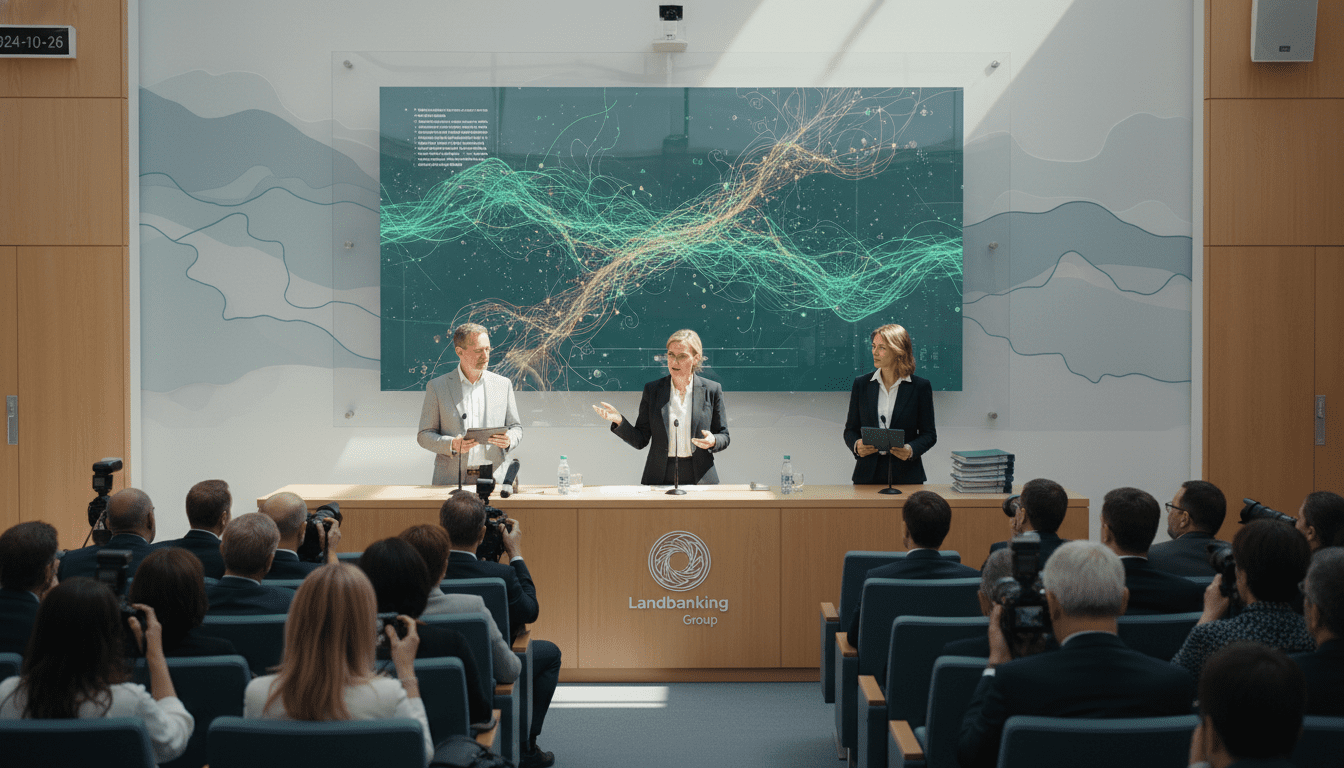
Landbanking Group Plans to Put a Price on the Ecological Value of Farmland
Landbanking Group aims to quantify the ecological value of land parcel-by-parcel, creating tradable ecosystem credits to reward soil health, biodiversity and water retention.
Sonja and Martin Stuchtey, former consultants turned serial entrepreneurs, launched the Landbanking Group in 2022 with the stated aim of assigning measurable ecological value to farmland worldwide. The company measures indicators such as soil health, carbon storage, water retention and biodiversity so that landowners can sell shares in the environmental performance of their parcels rather than the land itself. The approach seeks to create financial incentives for regenerative farming while keeping property rights with existing owners.
Founders and intent
The Stuchteys combine corporate experience with on-the-ground agriculture; they run a historic farm in East Tyrol and now lead a Munich-based team that blends science, data and markets. They emphasize that the project does not involve selling land or rudimentary “pay us or we cut” conservation schemes, but rather generating a price signal for measurable ecosystem services. Their pitch to farmers and investors is practical: improve soil and water performance, document the gains, and the improved ecological score should translate into tradable value.
How the ecological metric is constructed
Landbanking aggregates remote-sensing data, commercial satellite feeds and ground-sourced biological samples to create a composite index of land integrity. The company’s proprietary software, Landler, synthesizes signals—microwave measures of soil moisture, satellite-derived vegetation indices, and biodiversity proxies drawn from environmental DNA—to estimate current performance and potential natural baseline conditions. The outcome is an Integritätsindex that compares observed values against the land’s ecological potential and tracks change over time.
Data methodology and verification
The startup looks back up to five years to establish a historic baseline, then monitors annually to register improvements or declines in performance. Remote observations are complemented by periodic DNA soil tests and local yield and management records to reduce error and detect potential gaming. Despite these safeguards, scientists note remote proxies for biodiversity and function remain imperfect and require regular field validation and transparent algorithms to maintain credibility.
Market model and buyer questions
The business model envisions landowners issuing tradable claims on ecosystem performance that third parties—corporates seeking environmental offsets, impact investors, or conservation funds—would purchase. Who will pay for the environmental service and at what scale remains the central commercial unknown. Demand will likely hinge on corporate sustainability commitments, regulatory frameworks that recognize such credits, and robust standards that prevent double-counting with existing carbon markets.
Regulatory and ethical considerations
Commodifying ecosystem services raises legal and ethical questions about land rights, benefit sharing and the treatment of communities living on or near assessed parcels. The Stuchteys stress contracts will not transfer ownership and that their model differs from controversial offset projects, but critics warn that market mechanisms can inadvertently marginalize smallholders or indigenous stewards without clear safeguards. Standardized verification, transparent governance and legal clarity on additionality and permanence are essential if such instruments are to gain public trust.
Scaling challenges and commercial outlook
Landbanking already reports coverage of roughly 40 million hectares under its index, but scaling to a meaningful global market will require interoperable standards and willing buyers at scale. The price signal must be large enough and stable enough to influence land-management decisions, such as shifting from intensive tillage to regenerative practices that increase water retention and biodiversity. Policy incentives—tax relief, procurement rules, or recognized credit registries—could accelerate adoption, but until buyer demand materializes the model remains a forward-looking experiment.
The Landbanking Group’s effort to turn ecological function into quantifiable, tradable value tests whether capital markets can be marshalled to reward environmental stewardship without displacing landholders. If robust scientific methods, transparent verification and equitable governance align with credible buyer demand, the project could create new income for farmers and new tools for conservation. For now, the marketability of measured ecosystem services will depend on regulatory recognition, scientific scrutiny, and the willingness of investors and companies to pay for the verified ecological value of land.
