
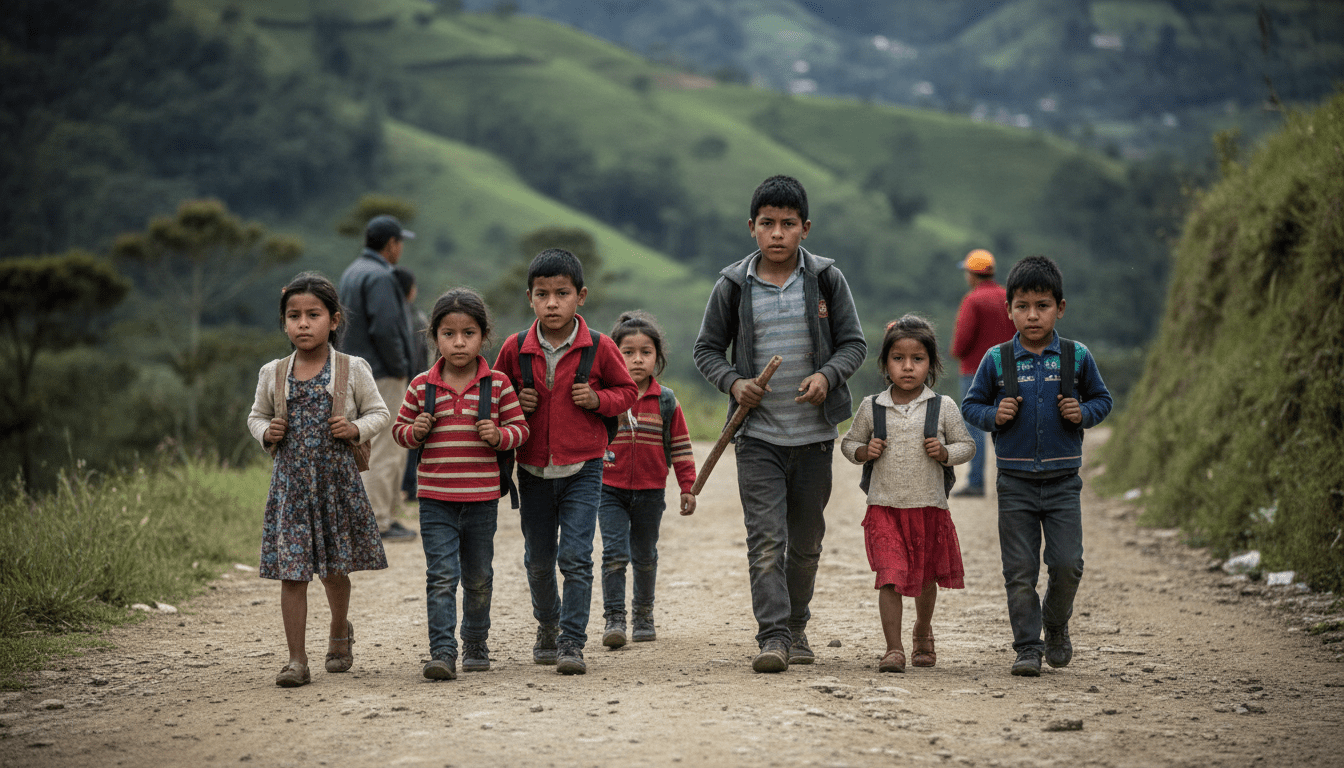
Child recruitment in Colombia escalates as FARC dissidents and gangs vie for territory
Child recruitment in Colombia surges in Cauca as FARC dissidents and armed groups exploit poverty and illegal markets; survivors seek shelter and rehabilitation.
The recruitment of children for armed groups in Colombia has intensified, with the phenomenon particularly acute in the Cauca region where local economies tied to drugs and illegal mining fuel violence. Child recruitment in Colombia now includes forced enlistment, economic coercion and systematic targeting of indigenous youth, according to interviews and aid assessments. Survivors who escaped the ranks describe trauma, loss and a fraught path toward recovery as displacement mounts.
Rising child recruitment in Cauca
Recent field reports and humanitarian monitoring point to a sharp rise in the number of minors recruited by armed actors across Colombia, with Cauca among the worst-affected departments. Analysts estimate that more than 25,000 fighters operate nationally now, nearly double the figure recorded in 2021, and that a substantial share of new recruits are underage. Observers and local NGOs say recruitment is driven less by ideology than by the lure of cash and the collapse of state presence in remote areas.
Witnesses and human-rights delegates warn that recruitment methods include direct coercion, “emotional pressure” on vulnerable adolescents, and offers of small salaries that dwarf local day wages. In many communities, armed groups have supplanted public services and emerged as employers, creating perverse incentives for youth to join.
FARC dissidents and the narco-economy
The dissolution of the main FARC structure in a decade-old peace process did not end armed contestation; splinter factions — commonly called FARC dissidents — continue to fight over routes and revenue streams. Those groups, alongside the ELN and other criminal bands, are now deeply implicated in drug production, trafficking and illegal gold mining. Local leaders say the shift toward a narco-economy has transformed recruitment: money, not politics, is the primary motivator.
Experts interviewed in the field link the growth of these illicit economies to the return of multi‑actor violence. Where multiple groups compete, recruitment of children increases because minors are inexpensive, more pliable and seen as expendable in high-risk operations such as roadblocks, surveillance and bomb deployment.
Deadly attacks and contested corridors
The escalation has produced deadly incidents with civilian tolls. In late April, a powerful roadside explosion on the Panamericana resulted in scores of fatalities and underscored the risks facing towns that lie on key transit corridors. Such attacks are part of a broader pattern of confrontations over territory, which frequently place children in harm’s way as both participants and bystanders. Social-media Pamphlets and threats circulated locally have further heightened fear and constrained movement for residents.
Local ombudsmen and municipal officials describe a climate in which public life is disrupted by frequent violent incidents and where the presence of armed groups directly affects commerce, schooling and access to medical care. The destruction of infrastructure and the normalization of threats leave communities acutely vulnerable.
Impact on Indigenous communities
Indigenous populations in Cauca report devastating consequences as armed actors target territories long inhabited by groups such as the Nasa. Two out of every three forced recruitments in the department involve indigenous children, and community councils estimate hundreds of minors have been seized in recent years. Indigenous leaders characterize the pattern as an attack on their culture and social fabric, warning that recruitment and killings are intended to break collective resistance.
The Nasa and other communities have responded by strengthening local governance, courts and protective bodies such as the Guardia Indígena, a civic guard that relies on traditional symbols of authority rather than firearms. Still, defenders and human-rights delegates say members of these groups, along with spiritual and political leaders, have been killed for their opposition, fueling accusations of ethno‑cultural targeting.
Survivors’ escape and rehabilitation
Personal testimonies from former recruits highlight the human toll behind the statistics. One young woman, taken into fighting ranks at age eleven, still bears a large abdominal scar from an accident under barbed wire and recounts months of hospitalization and lasting psychological wounds. Another youth, recruited as a teenager after promises of pay and support, describes hiding during battles and later fleeing back to his village at great personal risk.
Those who escape depend on a fragile network of community actors, NGOs and limited state programs to rebuild their lives. Organizations such as Benposta and partner agencies provide shelter, schooling and psychosocial care to minors rescued from armed groups, offering routes to reintegration that include democratic schooling and vocational training. Yet capacity is limited compared with the scale of need, and many former recruits continue to struggle with trauma, lost schooling and the threat of re-recruitment.
Calls for protection and political fallout
The surge in recruitment and violence has reverberated through Colombia’s broader political debate, turning security into a central electoral issue as campaigns invoke contrasting approaches to armed actors. Some political figures advocate strengthened military measures, while others defend dialogue-based strategies that aim to address territorial governance and social roots of violence. Human-rights groups and local authorities argue for a mixed response that couples protection, justice and economic alternatives for youth.
Humanitarian agencies stress that reducing child recruitment will require restoring state presence in neglected regions, disrupting illicit funding streams and scaling community-led protection. Without those measures, aid officials warn, the cycle of displacement, recruitment and violence is likely to continue.
The children already taken, and the communities that shelter the survivors, face a long recovery. Preventing further recruitment will depend on tangible investments in education, livelihoods and security — measures that local leaders say cannot wait.
