
Tesla expands Grünheide battery cell production with $250 million investment
Tesla to invest $250M (€210M) to expand Grünheide battery cell production to 18 GWh, hire 1,500 workers, and integrate cell and vehicle manufacturing by 2027.
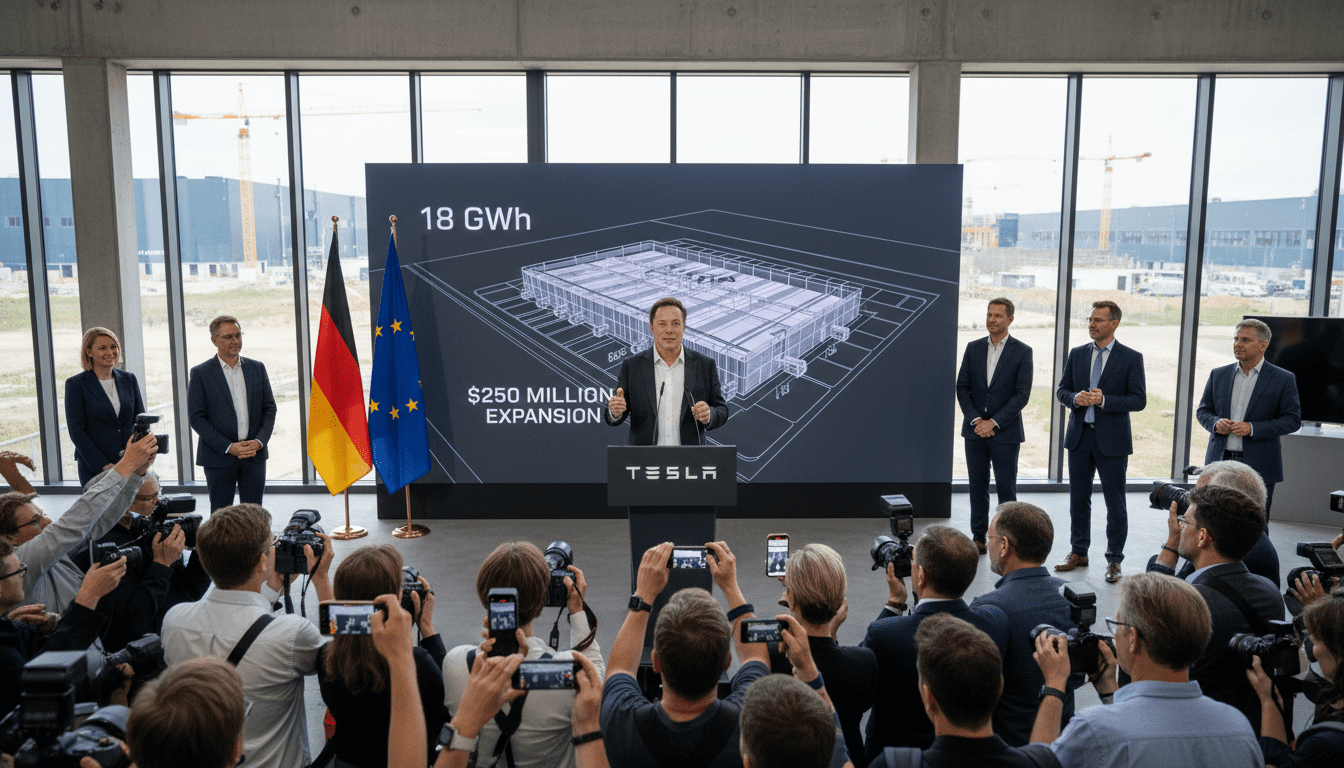
Tesla announced a $250 million investment to expand Grünheide battery cell production, increasing planned annual capacity from 8 GWh to 18 GWh and creating new jobs at the site. The company said the move will require about 1,500 additional workers as it seeks tighter integration of cell manufacturing and vehicle assembly. Tesla framed the expansion as a step to boost supply-chain resilience and centralize production at its German facility.
Investment and capacity increase
Tesla said the additional $250 million (about €210 million) will finance equipment upgrades and production-line expansion at its Grünheide campus outside Berlin. The company’s target for annual cell output rises to 18 gigawatt-hours, more than double the original 8 GWh plan. Executives described the boost in capacity as necessary to support growing European demand and to enable on-site battery-cell integration with vehicle production.
Workforce growth and hiring timetable
The expansion will be accompanied by a substantial hiring push, with Tesla indicating it expects to recruit roughly 1,500 new employees to staff the enlarged cell plant. Company statements and local reporting suggest some hires will be staged over the coming months, with around 350 positions in the battery facility targeted by year‑end. Tesla currently employs about 10,700 people at Grünheide, down from roughly 12,400 two years ago, underscoring the company’s evolving staffing profile at the site.
Production integration planned from 2027
Tesla said it aims to produce battery cells and finished electric vehicles at the Grünheide complex from 2027, creating a vertically integrated manufacturing footprint. The firm characterized such integration as “unique in Europe,” arguing it will reduce logistical complexity and strengthen the resilience of its supply chains. Bringing cell production and vehicle assembly under one roof is intended to shorten lead times and offer greater control over quality and cost.
Automotive output and revised targets
Alongside the cell expansion, Tesla has recalibrated vehicle-production expectations at Grünheide in recent months. The company announced an earlier plan to increase car output by about 20 percent starting in July, which it quantified as roughly 6,000 vehicles per week or about 300,000 units annually. That revised figure contrasts sharply with initial ambitions for the factory to reach up to one million vehicles per year at launch, highlighting a scaled-back trajectory for the site’s auto output.
Local context and community impact
The investment is likely to have immediate local economic effects, both through direct hiring and through contracts with regional suppliers and service providers. Municipal leaders and regional labor advocates have watched Tesla’s decisions closely after fluctuations in workforce levels and production targets. The company’s pledge to add staff to operate the expanded cell lines may ease concerns about job losses, but the phased hiring timetable means gains will be incremental rather than immediate.
Supply-chain resilience and strategic rationale
Tesla emphasized that on-site cell manufacturing will strengthen its European supply chains amid a broader industry push to localize battery production. Executives argue that proximity between cell lines and assembly halls reduces transport dependencies and exposure to cross-border disruptions. For Tesla, the move also aligns with wider industry trends where automakers and battery-makers are investing in domestic cell capacity to meet regulatory pressures and customer expectations for localized EV supply chains.
Operational challenges and previous shortfalls
Analysts note that Tesla has adjusted ambitions at Grünheide several times since the factory’s launch, citing permitting, logistics and labor-sourcing hurdles. The company’s earlier workforce peak of about 12,400 has since fallen, and the latest investments aim to stabilize and reconfigure the plant for long-term production. Local reports indicate that meeting the new cell and vehicle targets will require sustained recruitment and technical ramp-up throughout the second half of the decade.
Tesla’s announcement positions Grünheide as a strategic hub for battery and vehicle production in Europe, but execution will depend on hiring, equipment delivery and regulatory continuity. The company has set a clear timeline for integrated production by 2027, and the $250 million investment will be central to achieving that objective.
Market observers will monitor whether the expanded Grünheide battery cell production can be brought online on schedule and how quickly the new workforce can be trained for cell manufacturing roles. The project underscores the broader industrial shift toward closer alignment of battery and vehicle manufacturing in Europe.
