
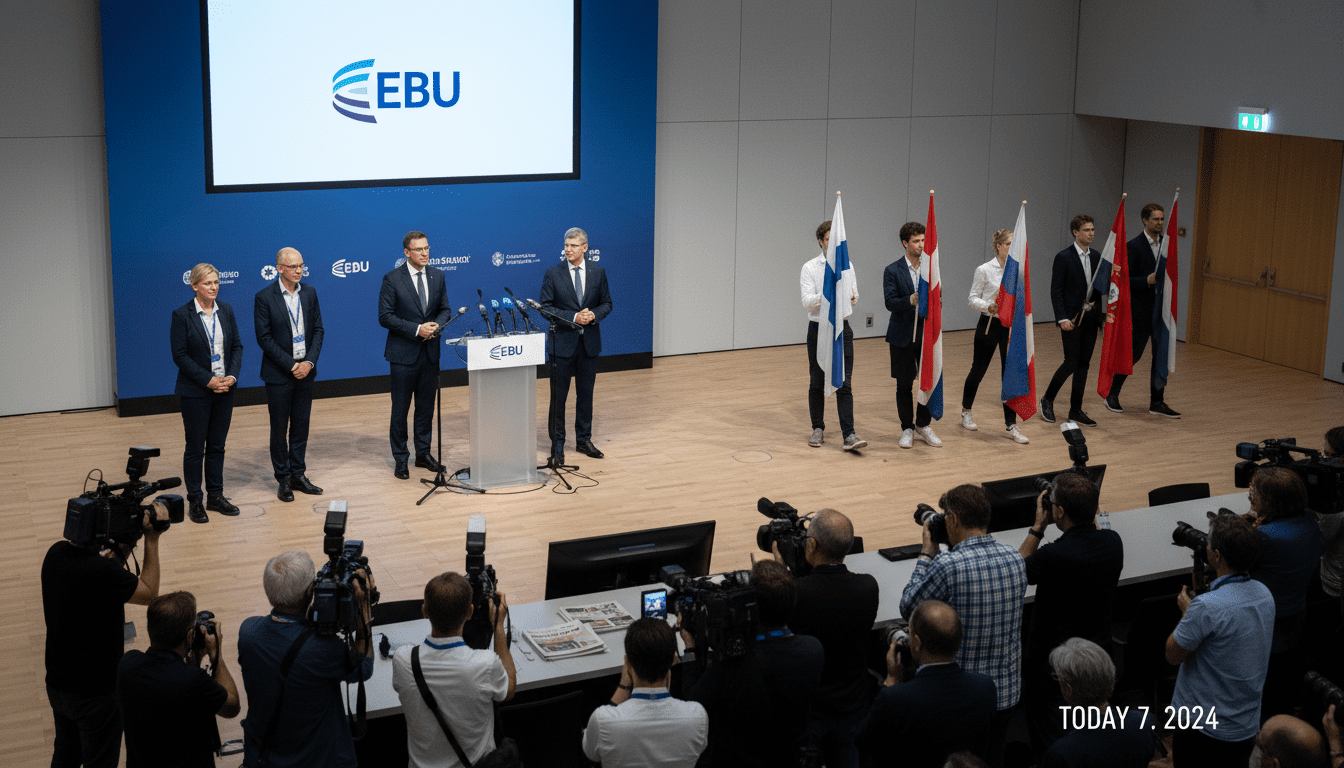
Eurovision 2026 Boycott Escalates as Five Nations Withdraw Over Israel’s Participation
Eurovision 2026 opens in Vienna amid a widening boycott over Israel’s participation; five countries have pulled out while artists and rights groups intensify calls for exclusion.
Eurovision 2026 final set for May 16 in Vienna
The 70th edition of the Eurovision Song Contest culminates with a televised final on May 16 in Vienna, where artists from 35 countries will perform. Eurovision 2026 has become the focal point of a political dispute because Israel, represented this year by singer Noam Bettan with the song “Michelle,” was cleared to compete. The contest, organised by the European Broadcasting Union (EBU), has long allowed non-European broadcasters to participate and this inclusion has reopened debates about the event’s political neutrality.
Five public broadcasters withdraw, citing Gaza civilian toll
In December five national broadcasters representing the Netherlands, Ireland, Slovenia, Spain and Iceland announced they would not participate if Israel competed. Each cited the humanitarian crisis in Gaza and the high civilian death toll as incompatible with their public values and obligations to audiences. Broadcasters described the decision as a principled stand against what they characterised as the instrumentalisation of a cultural event amid ongoing hostilities.
Artists and human rights groups press for a wider boycott
More than 1,000 musicians and cultural workers signed an open letter urging broader boycotts of Eurovision 2026 and accusing the EBU of double standards for excluding Russia while allowing Israel to compete. Human rights organisations, including Amnesty International, publicly criticised the EBU’s refusal to suspend Israel and argued the contest platform could be used to normalise state actions in the occupied Palestinian territories. Signatories to the boycott plea range from former Eurovision winners to contemporary artists who say cultural events cannot be separated from international law and human-rights considerations.
EBU defends decision and emphasises neutrality and process
The European Broadcasting Union has faced sustained pressure but opted in December to permit Israel’s participation after members voted against further exclusion proceedings. EBU officials said the organisation sought to preserve the contest’s neutrality and protect its remit to support public service broadcasters, while implementing additional safeguards. The decision followed internal deliberations and an extraordinary meeting; the EBU framed the outcome as the result of a majority position among its membership rather than an endorsement of any government policy.
Support for Israel’s inclusion and industry pushback
Opposing the boycott, a coalition of industry figures and a number of national officials argued that barring Israel would set a dangerous precedent for cultural isolation. Germany, a key Eurovision backer, publicly stated it would not withdraw if Israel were excluded, citing cultural and historical reasons for inclusion. A pro-Israel initiative also published a letter signed by more than 1,000 entertainment professionals who described Eurovision as an arena for cultural exchange and warned against politicising the contest.
Protests, returned trophies and alternative events ahead of the final
The dispute has spilled into public demonstrations, with protests recorded at recent Eurovision-related events and former winners announcing symbolic returns of trophies in protest. Some artists and civil-society groups have organised parallel concerts and alternative celebrations in several European cities, framing those events as expressions of solidarity with Palestinians. These parallel initiatives underscore a split within the music community and highlight the reputational risk faced by the contest and participating broadcasters.
The coming week will test whether Eurovision 2026 can proceed as a music competition while sustaining significant political controversy. With high-profile boycotts, statements from rights groups and alternative cultural programming already underway, organisers and broadcasters face renewed questions about whether a multinational entertainment platform can remain insulated from geopolitical disputes.
