
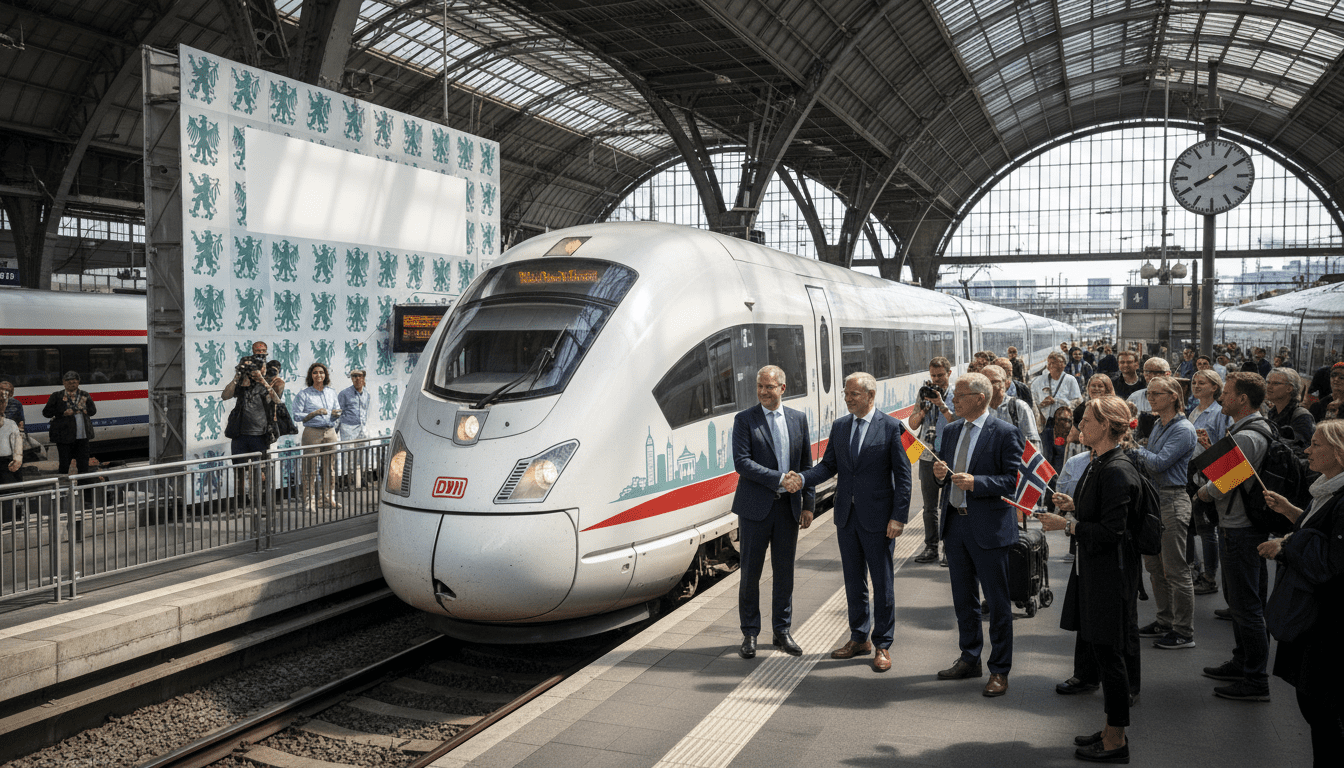
Bahn to launch Berlin to Oslo direct train as aviation faces kerosene strain
Deutsche Bahn announces a Berlin to Oslo direct train while airport groups warn of kerosene shortages and flight disruptions; fuel prices dip, shifting travel choices.
The operator Deutsche Bahn has confirmed plans to introduce a Berlin to Oslo direct train, a move that expands cross-border rail links between Germany and Norway and offers an alternative amid mounting pressure on air services. The announcement arrives as airport associations caution that constrained and costly kerosene supplies risk causing flight cancellations, even as pump prices for road fuel have fallen to a two-month low. The combined developments are prompting transport planners and travelers to reassess options for international journeys across northern Europe.
Operator outlines service and objectives
Deutsche Bahn said the new direct service aims to simplify travel between Germany and Scandinavia by removing transfers and cutting door-to-door journey complexity. Officials described the route as part of a broader strategy to strengthen long-distance and international rail links, improve sustainability in travel, and offer a competitive alternative to short-haul flights. The move aligns with growing EU and national policies encouraging modal shift from air to rail for medium-distance travel.
Route, capacity and expected frequency
The initial plan foresees daily direct departures linking Berlin with Oslo, with intermediate stops at major hubs to balance speed and regional access. Trains will use existing high-capacity corridors where possible and leverage night and daytime services to accommodate both business and leisure passengers. Deutsche Bahn emphasized rolling-stock compatibility and crew cooperation across borders as priorities during the launch phase.
Airports warn of kerosene shortage and operational impact
Industry groups representing airports have voiced concern that tight global kerosene supplies and elevated prices could force carriers to trim schedules or cancel flights, particularly on thinner routes and off-peak services. The airport association highlighted the dual pressure of constrained supply chains and the higher cost of jet fuel, which can make marginal routes financially unviable for airlines operating on thin margins. Those warnings come as carriers evaluate fuel hedging positions, schedule robustness and contingency plans for passenger rebooking.
Fuel price fall and consumer effects
In contrast to aviation fuel dynamics, retail petrol and diesel prices have slipped to their lowest levels in two months, offering motorists modest relief at the pumps. Analysts attribute the drop to lower crude benchmarks and seasonal demand shifts, though they caution that volatility may return if geopolitical or supply-side factors change. The juxtaposition — cheaper road fuel but tight kerosene — could influence modal choices for travelers weighing convenience, cost and environmental impact.
Implications for passengers and ticketing
Transport planners expect the Berlin to Oslo direct train to attract passengers who prioritize reliability and reduced connection risk, particularly as airlines face potential cancellations tied to fuel constraints. Rail tickets may be marketed as a practical substitute for short international hops, with advance bookings, flexible fares and integrated luggage options designed to compete with airline offerings. Passenger groups urged operators to coordinate schedules with local transit and to ensure clear communication about baggage allowances and transfer procedures.
Industry reactions and government context
Rail advocates and some environmental NGOs welcomed the service as an opportunity to cut CO2 emissions and relieve pressure on congested air corridors, while airline representatives cautioned that rail cannot fully substitute for existing air network capacity, especially for long-haul and time-sensitive connections. Government transport agencies said they would monitor the transition and consider incentives that support rail capacity where feasible, balancing market forces with broader climate and mobility goals. The debate reflects an ongoing policy shift in Europe toward integrating transport modes to meet emissions targets without undermining connectivity.
The announcement of a Berlin to Oslo direct train and concurrent signs of stress in aviation fuel markets mark a notable moment for travelers and transport planners alike, underscoring how supply dynamics and policy priorities can reshape route economics and passenger choices. As Deutsche Bahn prepares to roll out the new service and airports manage kerosene challenges, passengers should watch timetable releases and ticketing options and allow extra time for journeys while operators coordinate cross-border operations.
