
Fujifilm Instax Wide 400 review: wider 62×99mm prints with one-button simplicity
Fujifilm Instax Wide 400 delivers 62×99mm instant prints with easy one-button operation, rich color and landscape framing, but mixed low-light performance.
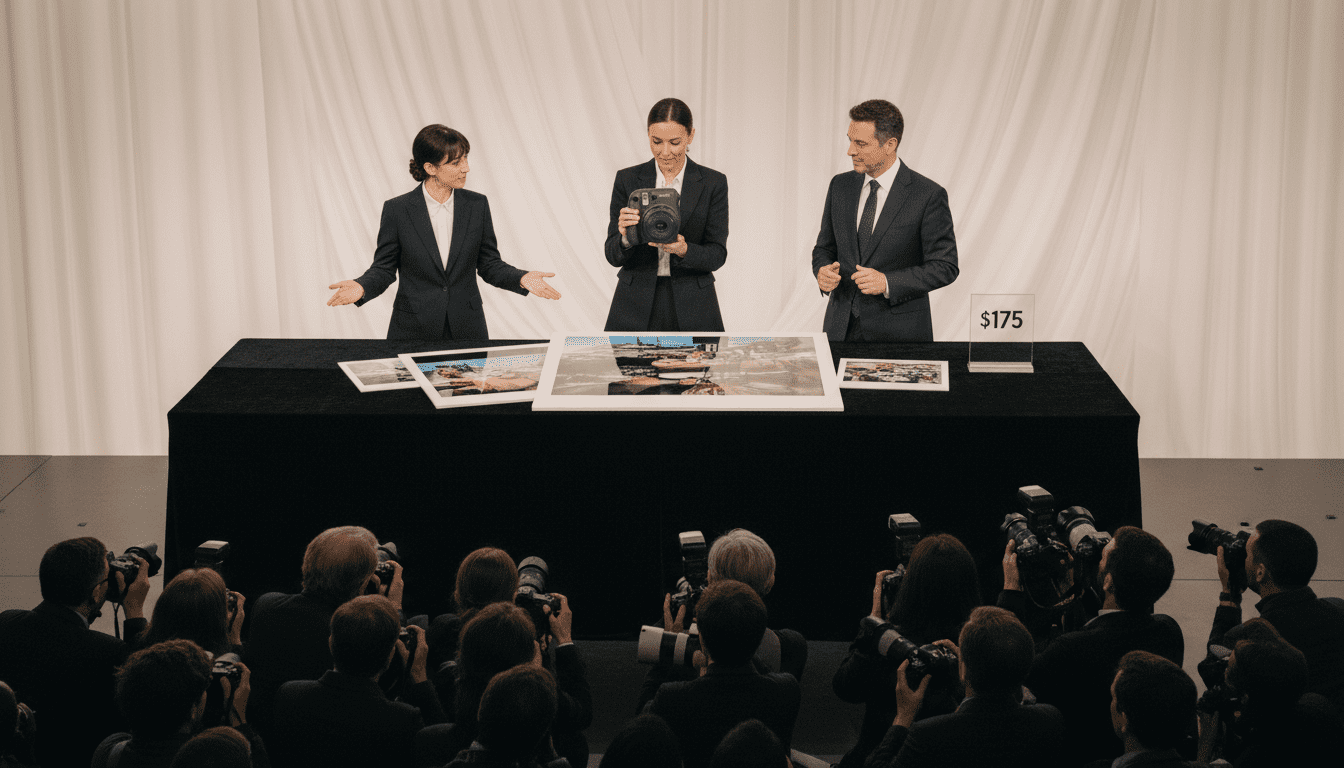
The Fujifilm Instax Wide 400 brings a wider instant-print option to analog photography fans, pairing large 62×99mm prints with a deliberately simple user experience. The Instax Wide 400 is designed to extend the familiar point-and-shoot instant workflow to group shots and landscapes where framing and print size matter most. Priced around $175, the camera emphasizes straightforward operation over manual controls, delivering saturated color and accessible handling for a broad audience.
Design and build
The Instax Wide 400 measures roughly 162 × 98 × 123 mm and weighs about 1.4 pounds, making it noticeably larger than Instax Mini and Square models. The size reflects the wider film format and the internal mechanics needed to produce larger prints, resulting in a camera that feels substantial in hand.
Fujifilm uses a mix of plastic and textured surfaces that balance affordability and durability, and the camera is available in green or jet black finishes. Controls are minimal and tactile, with a rotating lens barrel used to power the unit and select focal ranges, and a twist-lock film door that secures cartridges during transport.
Image quality and print size
The defining feature of the Instax Wide 400 is its print area: 62 × 99 mm gives roughly twice the surface of an Instax Mini print, offering more room for landscapes and group compositions. In good lighting the prints show pleasing saturation, accurate skin tones, and a surprising amount of discernible detail for an instant film process.
Performance can be less consistent in high-contrast scenes and dim light, where shadow and highlight separation tends to compress and distant detail may be lost. The camera’s automatic exposure and flash do a solid job in average conditions, but there is limited scope to compensate for difficult lighting beyond framing and timing.
Controls, modes and handling
Fujifilm keeps the camera’s interface intentionally simple: there are no exposure dials, and most settings are handled by the camera itself. Power and focusing are controlled by rotating the lens; the first position selects a close-up range for subjects between about 0.9 and 3 meters, and a further rotation activates landscape mode for subjects beyond 3 meters.
A one-button shutter and automatic flash make the Wide 400 approachable for users with no photography experience, and a small viewfinder suffices for basic composition. For close-ups the camera ships with a snap-on close-up lens that improves near focus, and a four-step self-timer with audible and visual cues helps with group portraits and tripod-free shooting.
Film options and running costs
Film for the Instax Wide 400 comes in 20-sheet cartridges with standard white borders as well as black frame, metallic and monochrome variants. Each 20-sheet pack costs roughly $25–$28, meaning per-print costs are considerably higher than digital alternatives but comparable to other instant film formats.
The camera includes a back indicator that shows remaining film, simplifying load management for events or outings. While the film price puts a premium on each shot, the larger format and physical output remain the core appeal for buyers seeking tactile, immediate prints.
Portability and public appeal
Because of its larger footprint the Wide 400 is not an everyday pocket camera; most users will want a bag or case for longer outings. The supplied shoulder strap and optional angle-adjustment accessories let you prop the camera on flat surfaces, but the unit’s bulk makes it more of an event or landscape tool than a carry-everywhere device.
Its distinctive look and sizable prints also draw attention in public settings, which can be part of the camera’s charm. During hands-on use the Wide 400 attracted compliments and curiosity, reinforcing that instant cameras often function as social objects as much as imaging tools.
Who should buy the Instax Wide 400
The Instax Wide 400 is best for photographers who want big, immediate prints without fuss — especially for group photos, parties, and scenic shots where a wider aspect matters. Families, event hosts, and creators who value a tactile finished product will find the camera’s simplicity and print size appealing.
If you prioritize low-light control, precise exposure adjustment, or compact portability, other instant formats or digital cameras may be better fits. For users who want a straightforward analog experience and the visual impact of larger instant prints, the Instax Wide 400 represents a clear and accessible option.
The Instax Wide 400 positions itself as a modern, user-friendly way to make larger instant prints with minimal learning curve, offering strong color reproduction and a social, hands-on photography experience while accepting the trade-offs that accompany fixed-automatic exposure and a bulkier form factor.
