
Coalition Seeks New Measures After Bundesrat Rejects 1,000‑Euro Relief Bonus (Entlastungsprämie)
Germany’s coalition seeks alternatives after Bundesrat blocked the 1,000‑euro relief bonus, weighing electricity tax cuts, commuter aid and direct payouts.
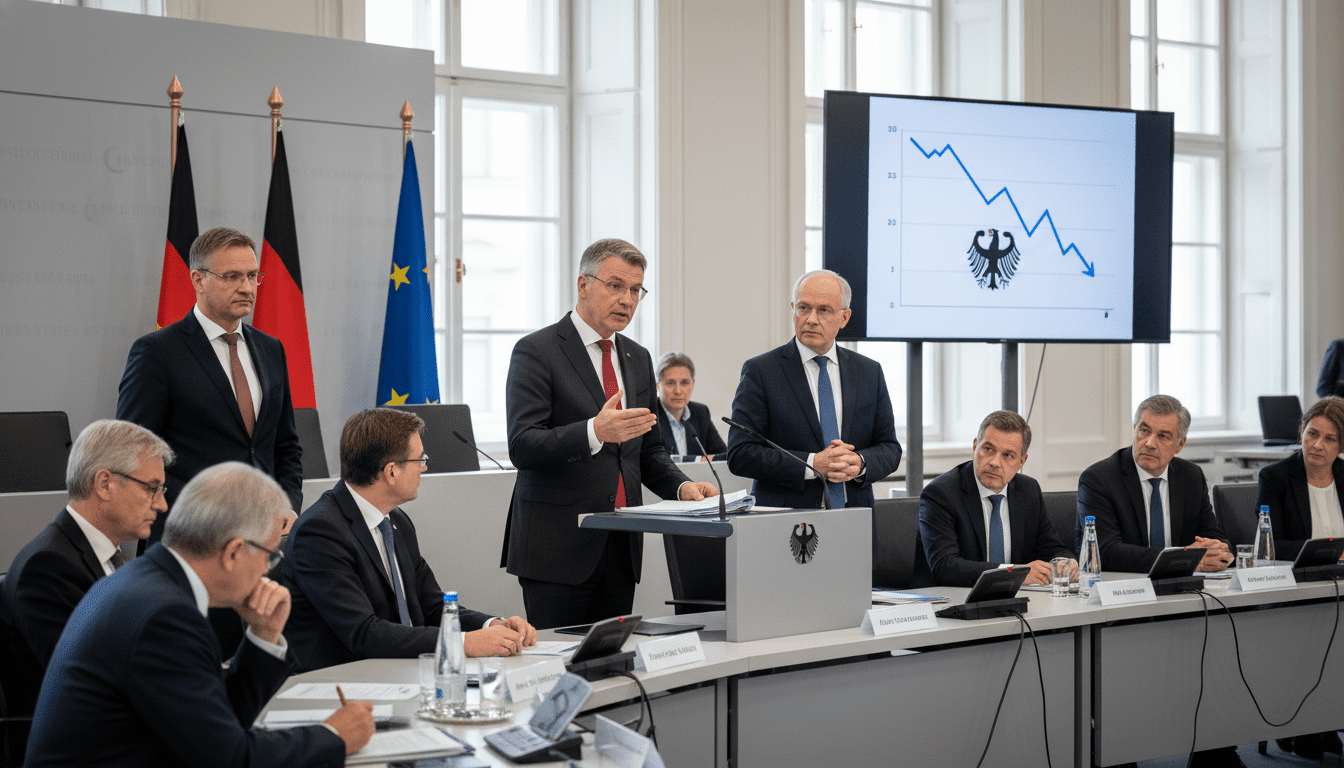
The federal coalition led by Chancellor Friedrich Merz said it will pursue fresh measures to ease household burdens after the Bundesrat on May 8, 2026 rejected the government’s plan for a tax‑ and contribution‑free 1,000‑euro relief bonus (Entlastungsprämie). Chancellor Merz signalled that the CDU‑SPD‑CSU coalition must quickly identify other steps to support citizens facing high energy costs. Finance Minister Lars Klingbeil urged the government to deliver a rapid, tangible signal to households and said talks will include Länder, employers and unions.
Coalition meets to map alternatives
Coalition leaders convened in the party executives’ committee to discuss options and next steps after the setback in the upper house. The meeting focused on measures that can be implemented quickly and with broad political support. Officials emphasized the need to present a coherent package that eases energy and cost‑of‑living pressures without reopening long debates over fiscal rules.
Bundesrat rejection and its immediate impact
The Bundesrat’s vote on Friday, May 8, 2026, vetoed a bill already approved by the Bundestag that would have allowed employers to pay employees a one‑off, tax‑free 1,000‑euro bonus. The chamber of states cited financial strains on regional budgets because the proposed bonus would reduce tax and contribution receipts for Länder and municipalities. The government had proposed offsetting measures mainly through a tobacco tax increase, a revenue stream that would not compensate Länder losses and therefore failed to secure Bundesrat approval.
States and municipalities cite revenue shortfalls
Local governments warned that the relief bonus as drafted would shift costs to Länder and municipalities by cutting their tax bases without adequate compensation. Critics in the Bundesrat argued that the compensation mechanism — limited to higher federal tobacco levies — was insufficient and asymmetric. Conservative finance spokesman Fritz Güntzler described the rejection as a heavy handicap for the government’s broader tax reform plans, saying citizens and firms need concrete relief rather than uncertain promises.
Finance ministry and coalition responses
Finance Minister Lars Klingbeil framed the setback as a prompt to broaden the conversation on relief and to work on pragmatic solutions with regional authorities. He said the coalition must avoid fragmentation and instead move swiftly to reassure citizens that help is coming. Chancellor Merz echoed that commitment, acknowledging the need to revisit the design and financing of measures so they align with federalism and do not unduly burden subnational budgets.
Alternative measures under consideration
Lawmakers and ministers are now exploring a suite of alternatives that could deliver relief more broadly and quickly. Proposals under discussion include a reduction in the national electricity tax, increased commuter allowances for 2026, targeted direct payments through income or vehicle tax filings, and other one‑off transfers. SPD domestic and economic spokespeople suggested that the 1,000‑euro bonus could still play a role within a larger package, but that other avenues might be faster or less costly for regional coffers.
Parliamentary and political stakes for tax reform
The Bundesrat’s move has raised questions about the viability of the government’s larger tax‑reform agenda, since the defeat exposes tensions between federal policymaking and state budgetary concerns. Some coalition MPs warned that neglecting state interests could stall other priorities if the dispute is not settled pragmatically. Parties are likely to intensify negotiations with Länder finance ministers to find an equitable compensation formula that preserves room for relief while protecting subnational revenues.
Voices from the parties and unions
Across the political spectrum, voices urged swift action to alleviate the burden of energy prices on households. SPD economic expert Sebastian Roloff said a one‑off payment remains useful but is not the only option, pointing to tax tweaks and direct payouts as viable complements. Greens parliamentary leader Katharina Dröge called for an immediate cut to the electricity tax, describing it as a simple and equitable step that could be implemented quickly to support families.
The rejection of the Entlastungsprämie has left the coalition confronting a narrow window to produce measurable relief before summer utility bills and other cost pressures weigh on voters. Negotiators in Berlin now face the task of crafting a package that balances speed, fairness and fiscal responsibility while securing approval from the Länder.
