
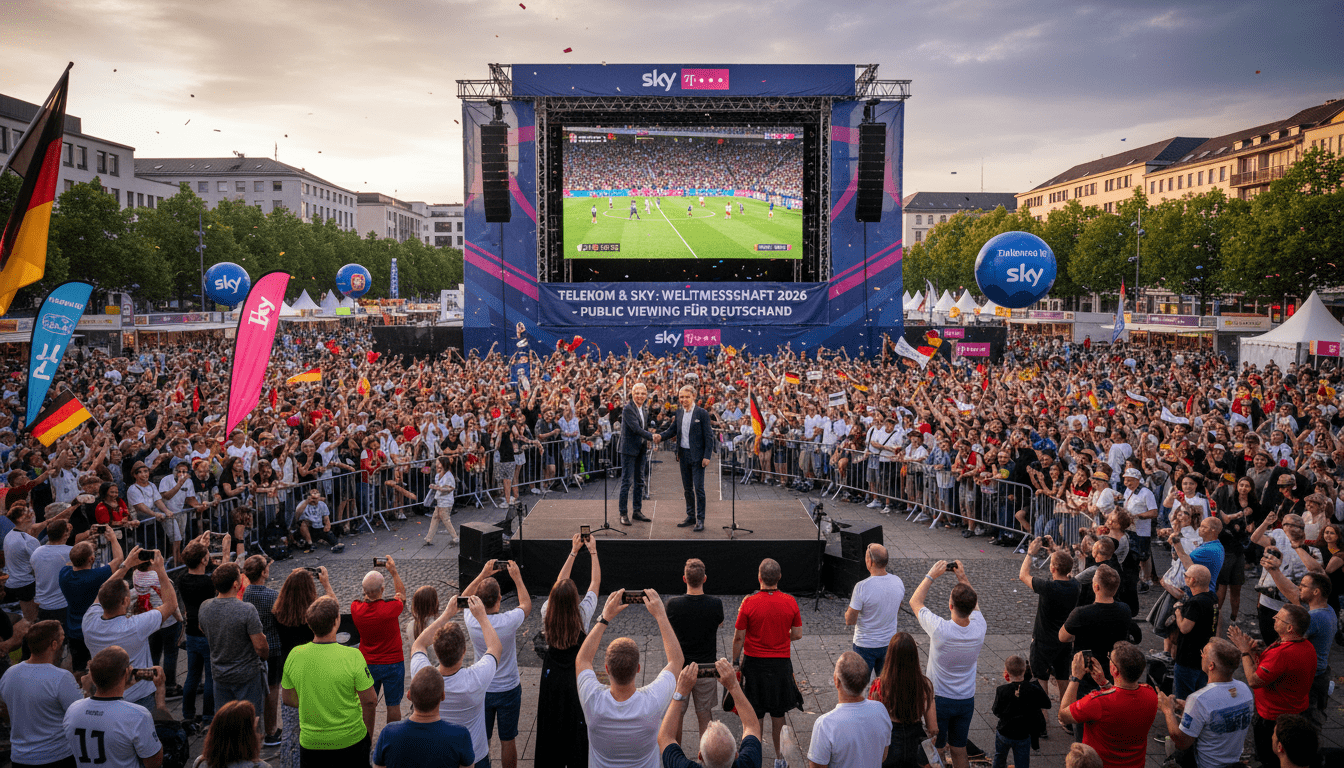
Public viewing in Germany faces patchwork rules as World Cup 2026 approaches
Public viewing in Germany will face local limits despite federal noise exceptions; gastronomy and a Telekom-Sky deal could enable late-night World Cup screenings.
Germany has federal permission to relax nighttime noise rules for World Cup 2026 matches running June 11 to July 19, but implementation is left to local authorities. Public viewing will therefore be uneven: some cities plan events while many municipalities decline to stage fan zones, leaving bars and restaurants as the most likely venues for late matches. The Telekom–Sky cooperation promises technical and licensing routes for hospitality venues to show all 104 tournament games, offering a practical alternative where public fan zones do not appear.
Federal exceptions approved, local authorities retain control
The federal cabinet and the Bundesrat agreed on targeted exceptions to Germany’s standard quiet hours for the tournament, creating a legal pathway for late-night fan events. Those exceptions do not automatically oblige cities to host public viewings; municipal administrations must issue permits and set local conditions.
Local authorities cite noise, safety, and dwindling demand as reasons to limit public fan zones, and many are preparing narrower permissions or none at all. Officials say the decision-making balances residents’ rights with the desire to accommodate supporters, resulting in a patchwork of rules across the country.
Late kickoffs create scheduling strain for German fans
The tournament calendar features 17 different kickoff times, with many matches taking place in North America’s evening hours and translating into late-night starts in Central Europe. The most common German-time kickoff is 21:00 CET/CEST, but a substantial number of fixtures are scheduled around midnight, 03:00 or 04:00, particularly those hosted on the U.S. West Coast.
These timings pose practical problems for supporters who want to attend screenings or fan events, and they raise concerns about school and work absences after very late finishes. Organizers and broadcasters have warned fans that not every match will align perfectly with local expectations for live public viewing.
Timing of Germany’s group and possible knockout matches
Germany’s group-stage schedule includes a 19:00 MESZ kickoff for the opener against Curaçao, and two 22:00 MESZ starts for matches versus Ivory Coast and Ecuador. If Germany tops the group, the round of 32 could be scheduled at 22:30 MESZ, with potential later kickoffs for subsequent knockout rounds depending on television windows and opponent pairings.
Tournament organizers have indicated that semifinal and final matches are planned for 21:00 MESZ, with the third-place game potentially starting at 23:00 MESZ. Fans should therefore expect a mix of reasonably timed and very late fixtures, which will influence where and how supporters can watch.
Major cities opt out of public fan zones
Several large German cities that hosted prominent fan zones at recent European championships are choosing not to set up official fan miles this time. Munich and Nuremberg have said they will not stage central public viewings, and cities such as Cologne, Dortmund, Hamburg, Leipzig, Mainz and Stuttgart have also signaled restraint.
City officials point to logistical costs, lower anticipated public turnout and the proliferation of private viewing options such as beer gardens and hospitality screens. Berlin appears to be an exception, with plans being discussed for a Fanmeile around the Brandenburg Gate, although details and permits are still being finalized.
Restaurants and pubs given selective exemptions with rules
Municipal exemptions are more likely to be granted to licensed hospitality venues than to large open-air fan zones, allowing many bars and restaurants to show matches that begin before or at 22:00 MESZ. Where permissions are granted, authorities frequently impose behavioral and noise restrictions such as bans on drums, horns or amplified public cheering in streets adjacent to venues.
Cities including Mainz and Frankfurt have delayed final decisions on hospitality licensing until closer to the tournament, leaving operators to prepare contingency plans. In parallel, other countries have eased pub closing times for national-team matches, illustrating the patchwork of approaches even within Europe.
Telekom and Sky partnership opens access for gastronomy
Telekom, the tournament’s domestic rights holder, has arranged a cooperation with Sky to enable gastronomy businesses to screen all 104 World Cup matches without additional fees on existing Sky receivers. Under the agreement, Sky supplies the technical infrastructure and facilitates the licensing required for commercial screenings, simplifying the process for many establishments.
Operators without a Sky subscription can access the tournament via temporary offers such as a limited Sky-Gastro-Pass or similar packages, and organizers can apply for FIFA commercial screening licenses through Sky. Telekom will show 44 matches exclusively on its platforms while an arrangement with public broadcasters ARD and ZDF will make 60 games available free-to-air, widening viewing options for patrons and venues.
Fans and venue operators should be prepared for uneven availability of large public events and a heavier reliance on the hospitality sector for live viewing. Public viewing will therefore vary city by city, and many supporters planning to watch Germany’s matches with a crowd should check local permits and venue announcements in the weeks before kickoffs.
